


Chen Mo, curator of the Jiangnan Calligraphy & Painting Museum, stood in the empty exhibition hall, his brow furrowed. In a month, the “A Millennium of Inkstone Whispers—Exhibition of Ancient Chinese Inkstone Art” would open, yet the collection of ancient inkstones, spanning from the Tang to the Qing Dynasty, remained trapped in outdated display cases. The glass glare was so severe that visitors had to press close just to catch a glimpse of the cloud-pattern carvings on Song Dynasty inkstones. The layout was chaotic: despite being arranged chronologically, the cases’ partitions made them look haphazardly stacked. Worst of all, the edges of several Ming Dynasty inkstones had already gathered a fine layer of dust due to poor sealing—hardly fitting for artifacts of such significance.
“These inkstones are living history of scholar’s studios, but right now, they can’t even ‘speak’,” Chen sighed, gazing at his favorite piece: a Ming Dynasty “Fish Leaping Over the Dragon Gate” inkstone. Its intricate carvings, with scales and waves that should have been the exhibition’s highlight, were all but hidden by the old case’s glare.
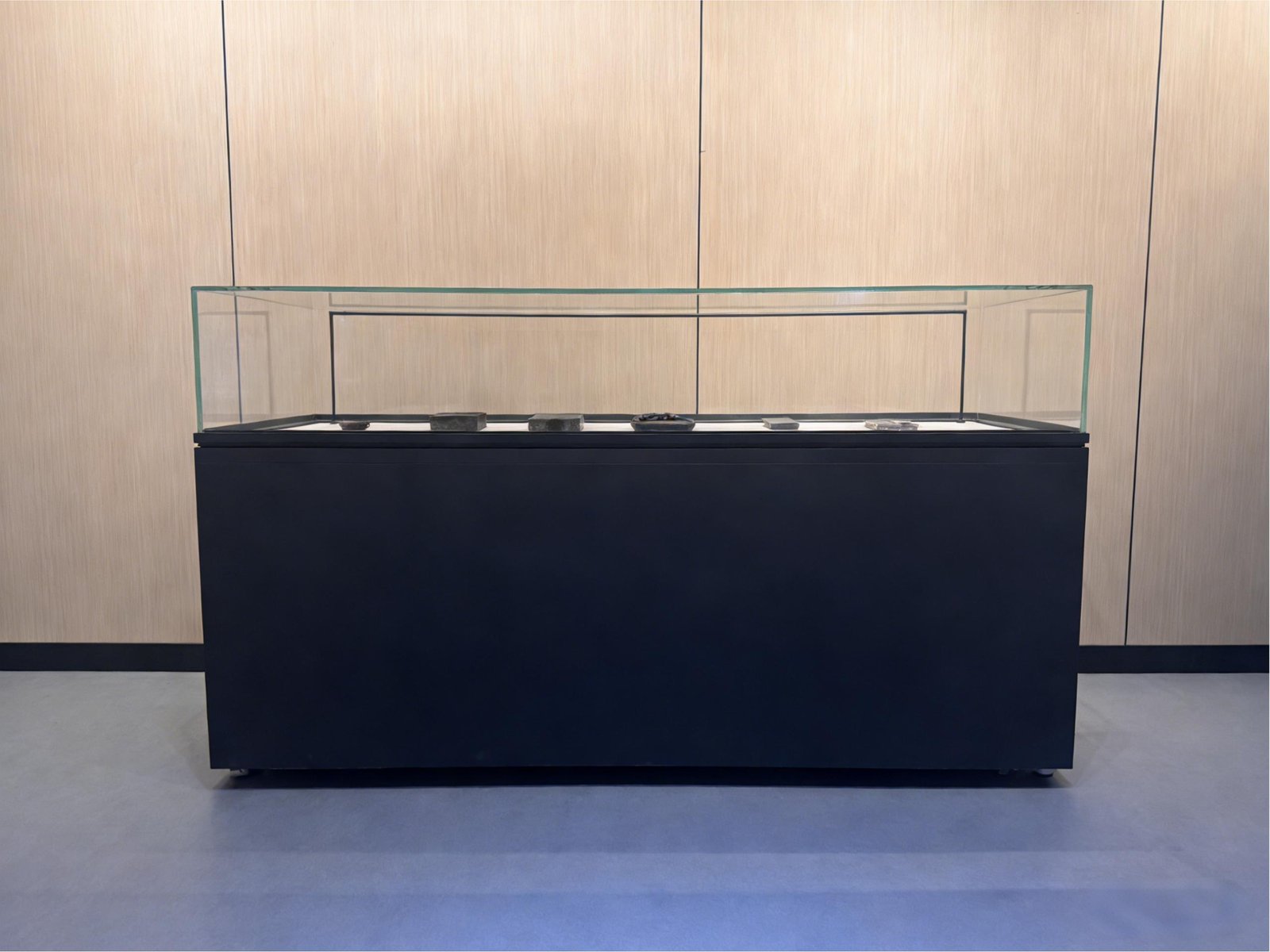
A Custom Journey to “Make the Cases Disappear”
Hoping for a solution, Chen reached out to MUSEOShowcase, a renowned name in the industry. When designer Lin Yu heard his troubles, he pointed to the “Fish Leaping” inkstone and said, “Curator Chen, we’re not building ‘boxes to hold inkstones’—we’re creating stages where they can ‘tell their stories’.”
1. The “Invisible Magic” of Materials
Lin’s team crafted flat cases using ultra-clear low-reflective glass (98% light transmittance, less than 1% reflectivity). When the first case was installed, Chen stood before the Ming inkstone, barely believing his eyes: every scale on the fish, every ridge of the dragon gate, was sharp and clear. Even the “hidden details” once obscured by glare—like the tiny signature in the corner of the inkstone’s pool—were fully visible. “Visitors can finally see the craftsmanship of ancient artisans!” he exclaimed.
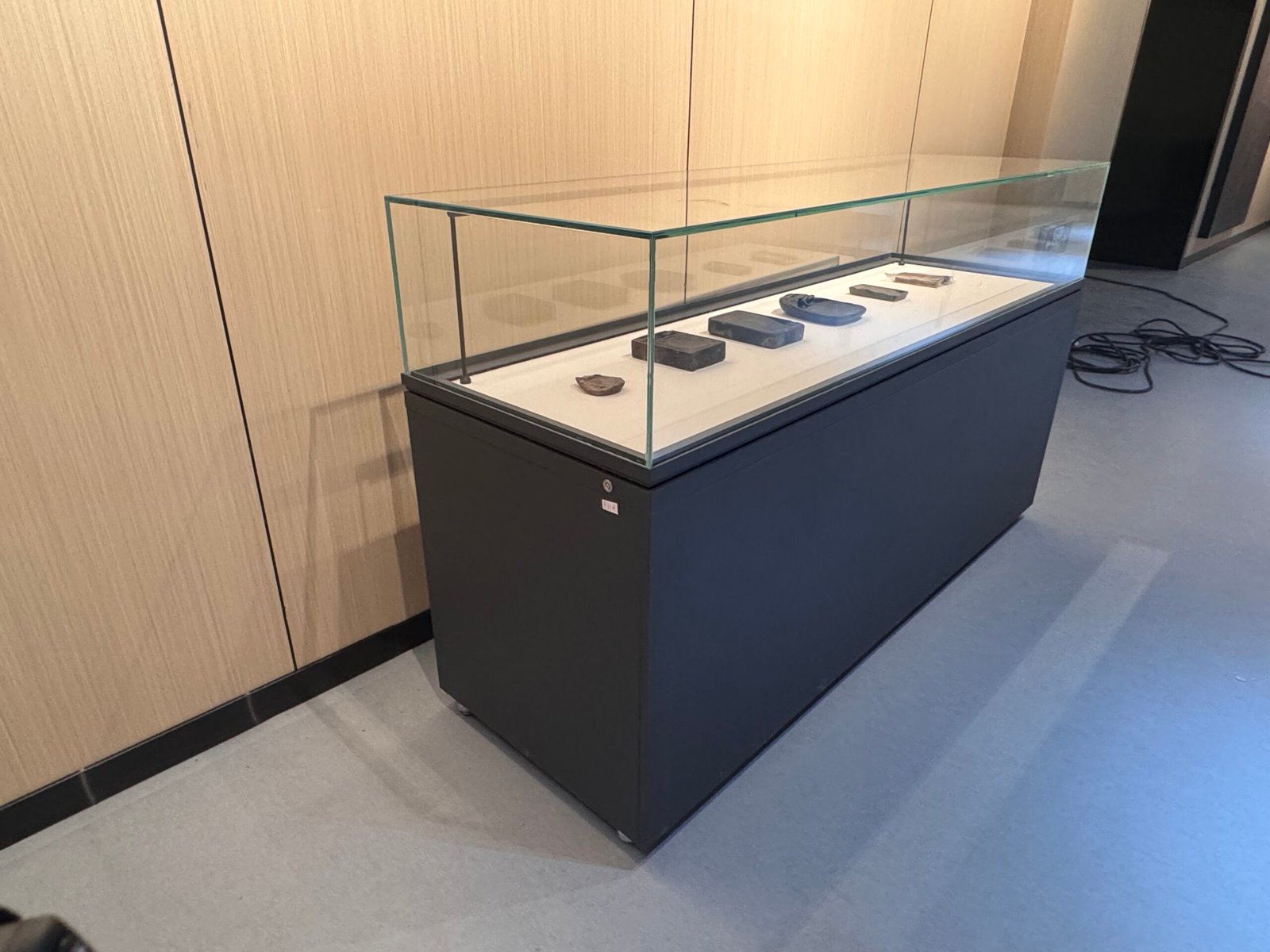
2. The “Invisible Fortress” of Protection
Chen had worried most about temperature and humidity fluctuations damaging the delicate Tang Dynasty pottery inkstones. MUSEOShowcase’s flat cases came with miniature constant temperature and humidity systems, with sealing grades meeting museum standards for first-class cultural relics. “It’s like a ‘microclimate chamber’ for the inkstones,” Lin explained. “No matter if it rains or swelters outside, the cases stay steady at 20°C and 55% humidity.” Watching the Tang inkstones rest safely in their new homes, Chen finally relaxed.
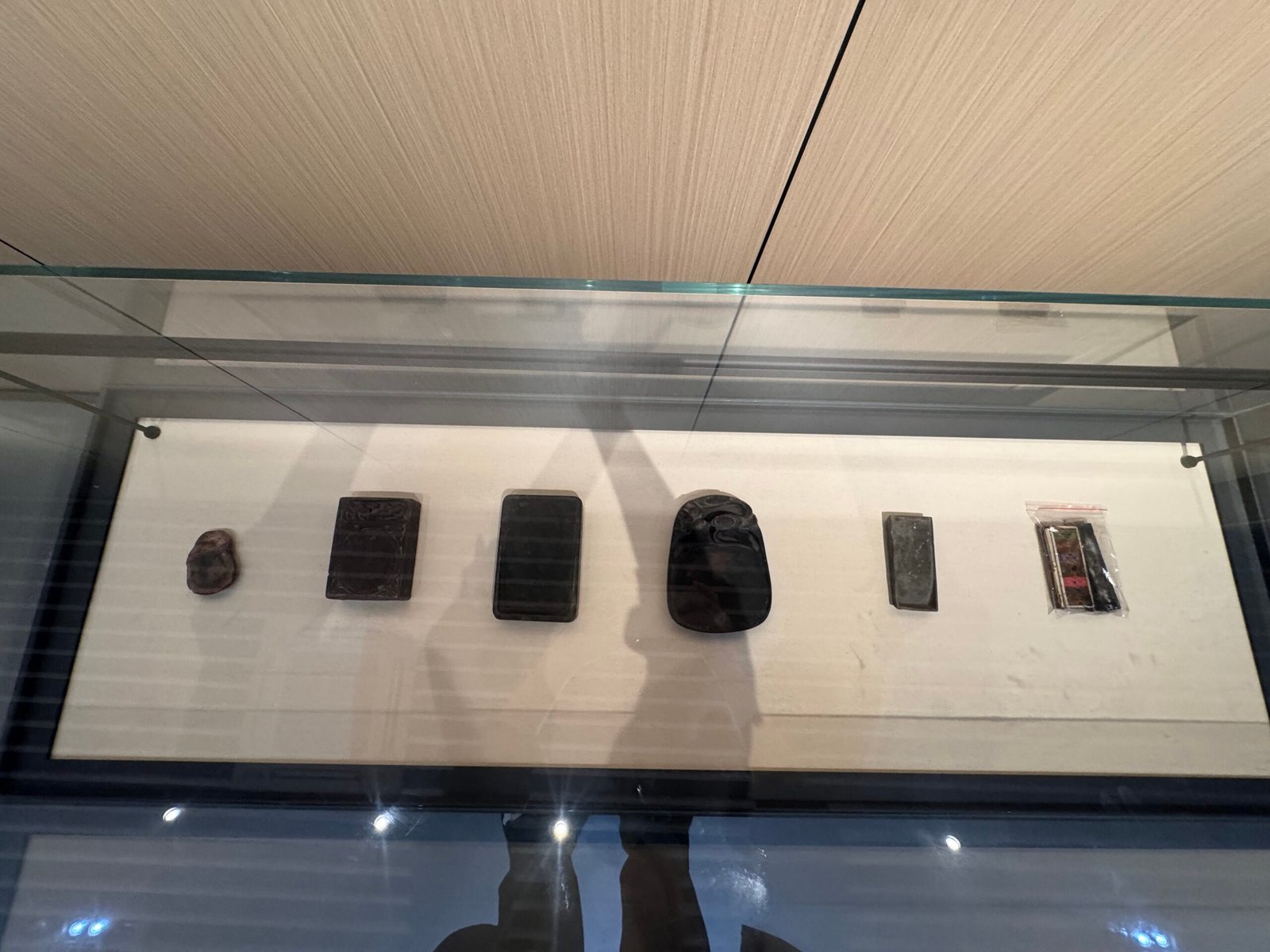
3. The “Linear Narrative” of Layout
To help visitors grasp the “evolution of inkstones,” Lin’s team turned the case layout into a timeline: starting with plain inkstones of the Tang Dynasty (focused on utility), moving to scholar’s inkstones with shallow carvings from the Song Dynasty (the rise of aesthetic value), and ending with themed inkstones with intricate carvings from the Ming and Qing Dynasties (the peak of artistry). Every inkstone’s position and spacing was calculated, letting visitors trace the story of inkstones—from tools to works of art—simply by walking along the cases.
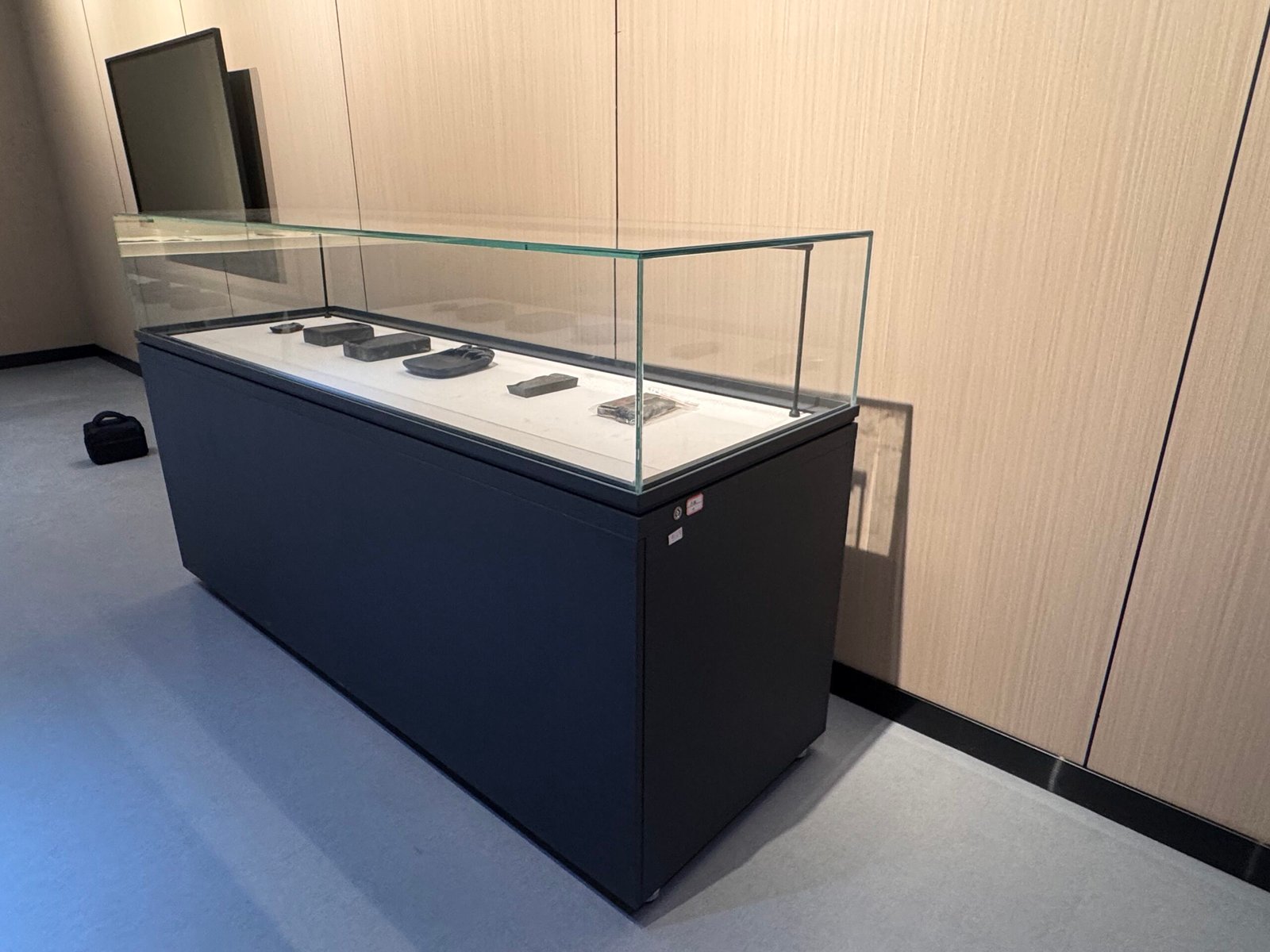
Opening Day: When Inkstones “Spoke”
On opening day, Chen watched a white-haired elder lean over a case, zooming in on the carving details of a Qing Dynasty inkstone with his phone. “This craftsmanship is just like the one passed down in my family! So this is where it came from…” A young visitor marveled at the sequence of inkstones: “I never knew—inkstones didn’t get more ornate overnight. They grew from useful to beautiful, step by step!”
Standing in the corner, Chen watched the “invisible” flat cases cradle those “millennium-old whispers.” He suddenly understood: great display cases are never attention-stealing stars—they’re the best partners, helping artifacts “speak.” In that moment, through MUSEOShowcase’s cases, the textures, craftsmanship, and history of these ancient inkstones were speaking clearly to every willing listener.