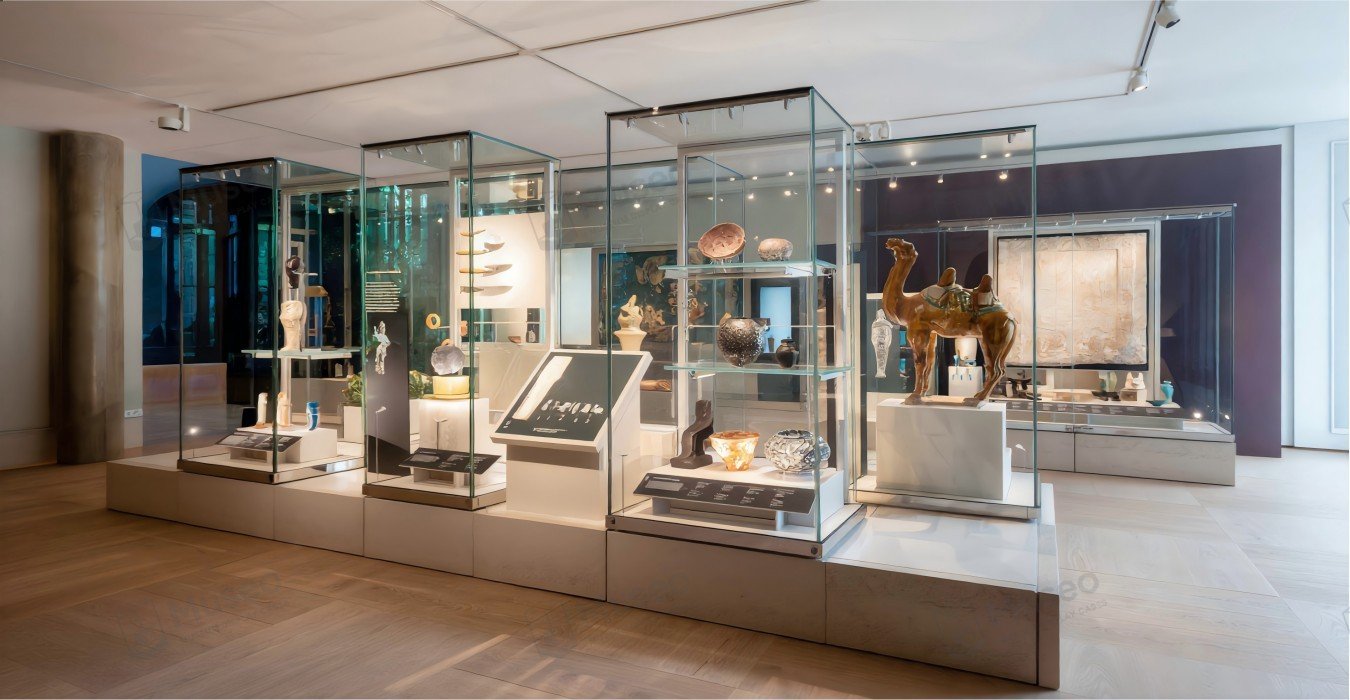
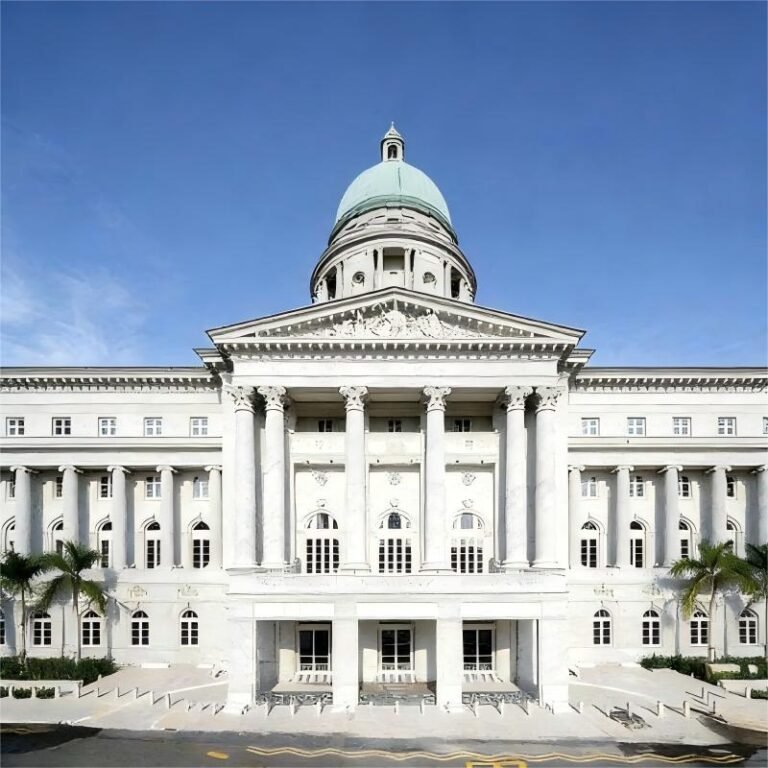
The museum’s exhibition is centered on the core mission of “making art accessible to everyone.” Through thematic curation, it unfolds around four grand chapters: “How objects were used,” “How they were made,” “Who once owned them,” and “Where they came from.” It leads visitors to follow the routes of object circulation and transmission, connecting the historical landscapes of six major civilizations from around the world.
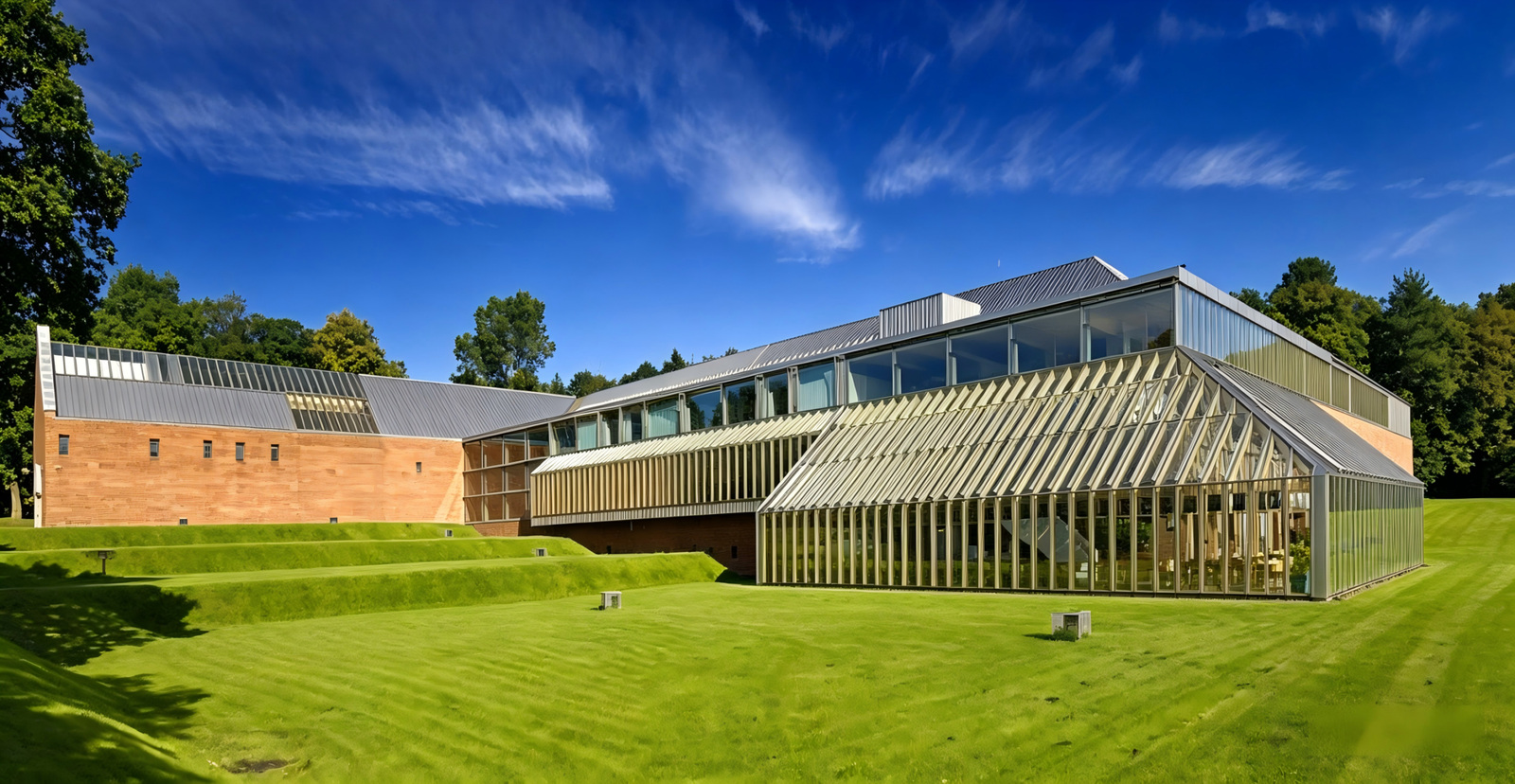
The Burrell Collection had long suffered from roof leaks, poor air tightness, and uncontrolled temperature and humidity. It was also restricted by the special regulations governing Scotland’s Category A listed buildings, which prevented conventional renovation. To reverse the sharp decline in visitor numbers and achieve the goal of “creating the most accessible museum in the world,” an investment of £68.25 million was made, and the museum closed in 2016 to launch the “Burrell Renaissance Project.” The renovation required expanding exhibition space by 35% without compromising the original architectural character, and customising new museum display cabinets for a large number of previously unseen artefacts.
After completing the customisation and renewal of the museum display cabinets, the Burrell Collection has developed a comprehensive plan centred on the vision of “creating the most accessible museum in the world,” covering content innovation, community engagement, sustainable operations, and digital experiences. This includes introducing cross‑disciplinary events such as fashion shows to connect with contemporary audiences, and deepening community inclusion programmes like the “Resident Storyteller” and dedicated quiet hours for sensory‑sensitive visitors.
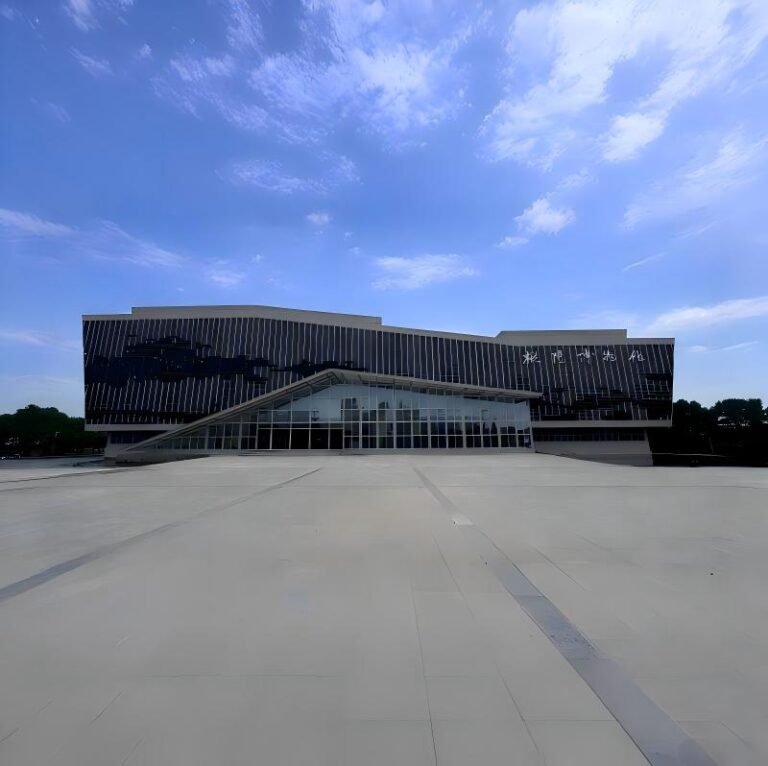
The Burrell Collection in the United Kingdom has a total floor area of approximately 13,000 square metres. It has four floors in total (including the basement, ground floor, mezzanine gallery, and first-floor studios/education area). The collection comprises 9,000 fine and decorative art objects.
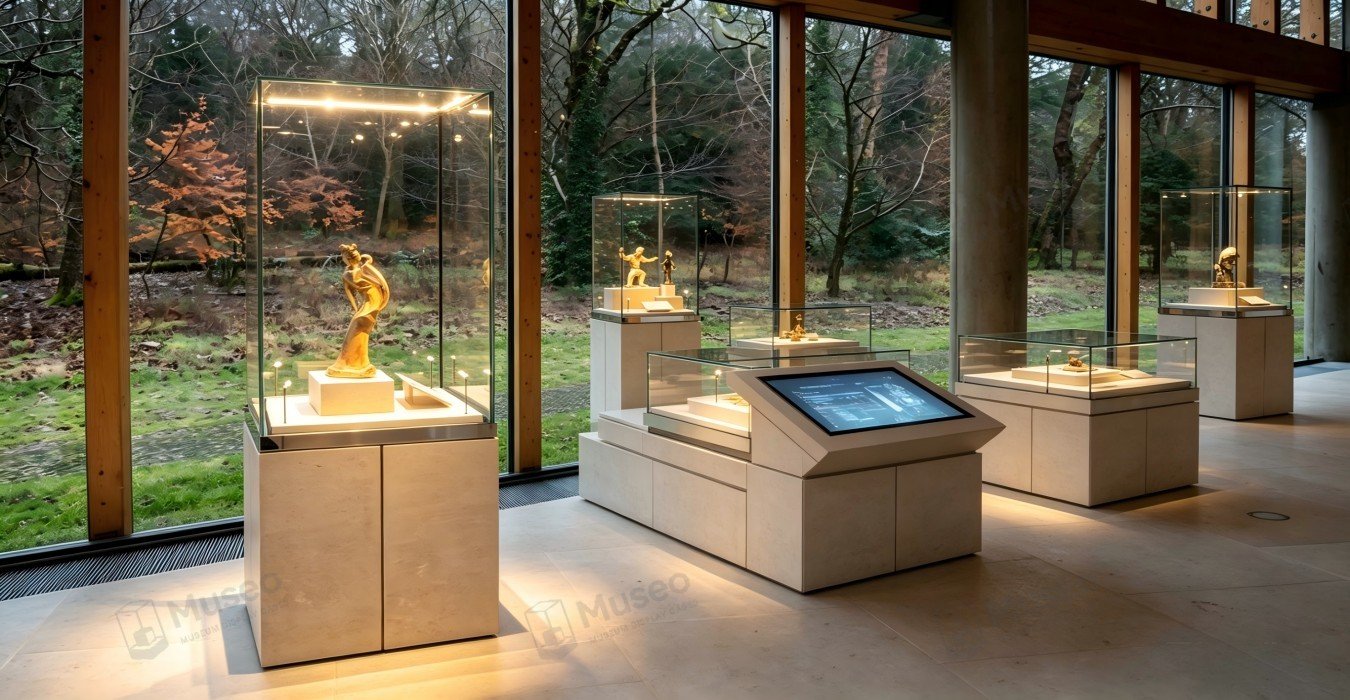
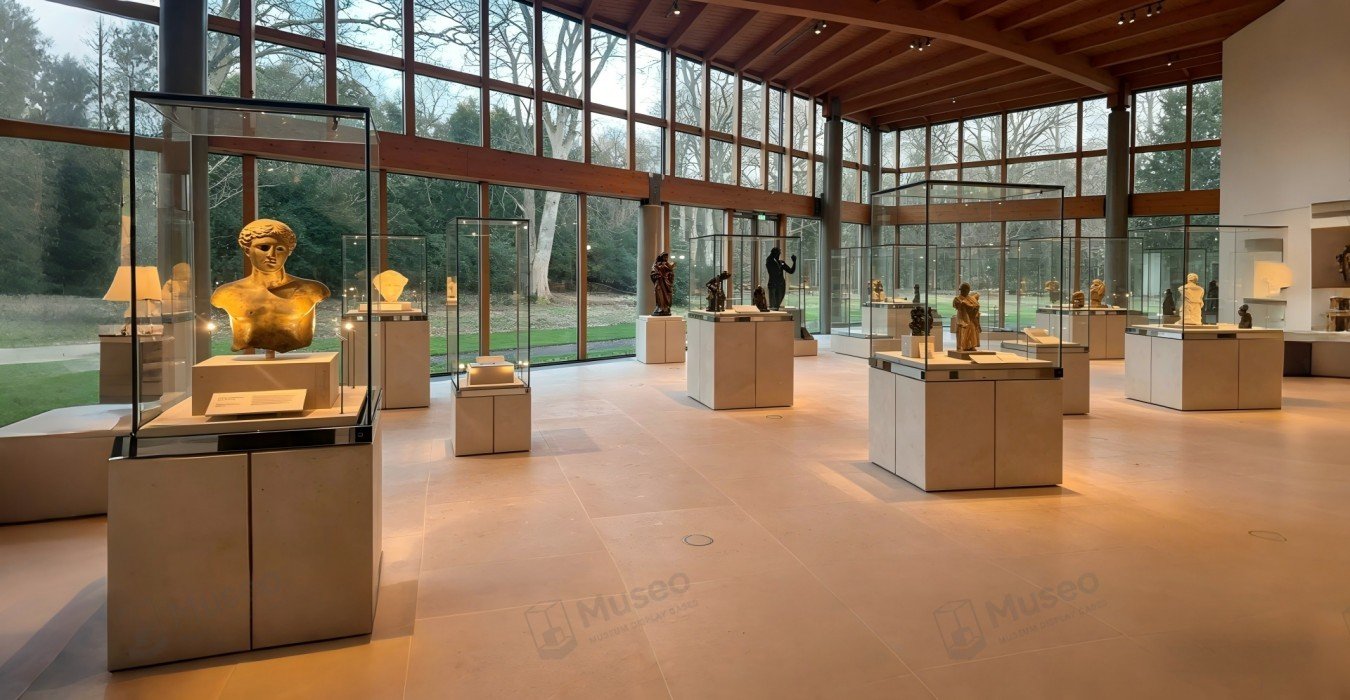
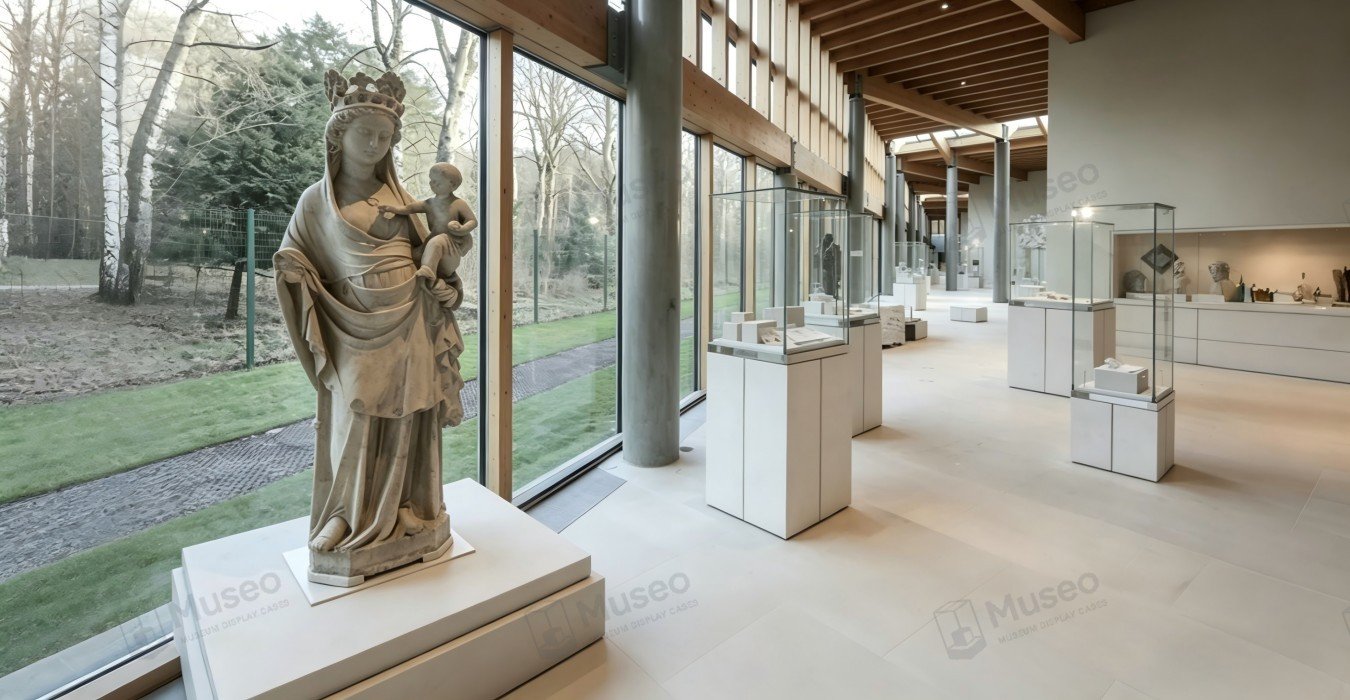
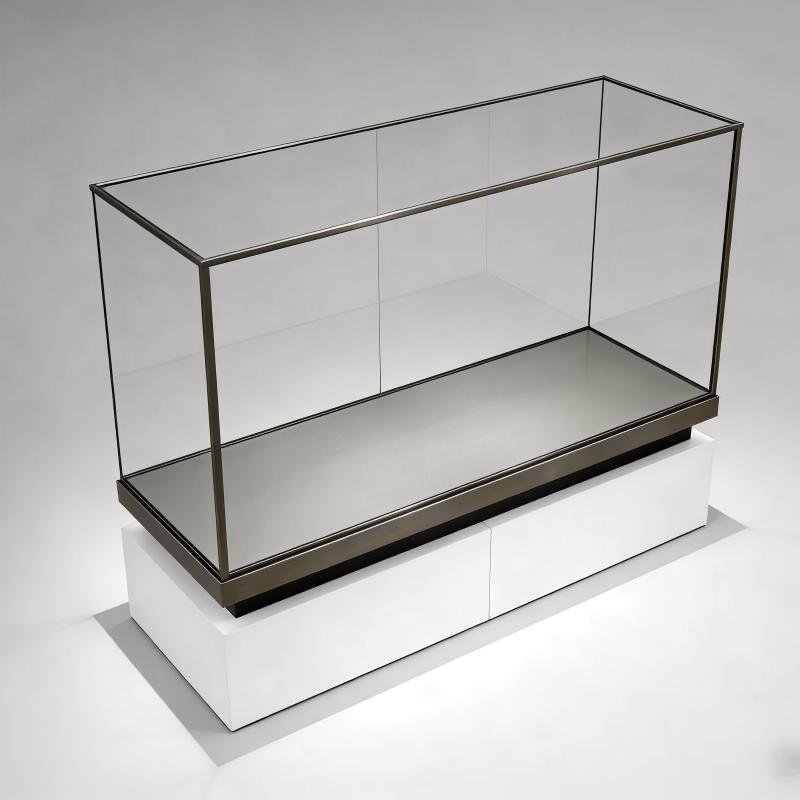
For small sculptures, we used top‑view museum display cabinets. These cases allow visitors to observe details up close. They feature a stone veneer and steel structure, providing load‑bearing capacity and moisture resistance. The viewing panels are made of low‑reflective ultra‑clear laminated glass, offering high light transmission and UV protection.
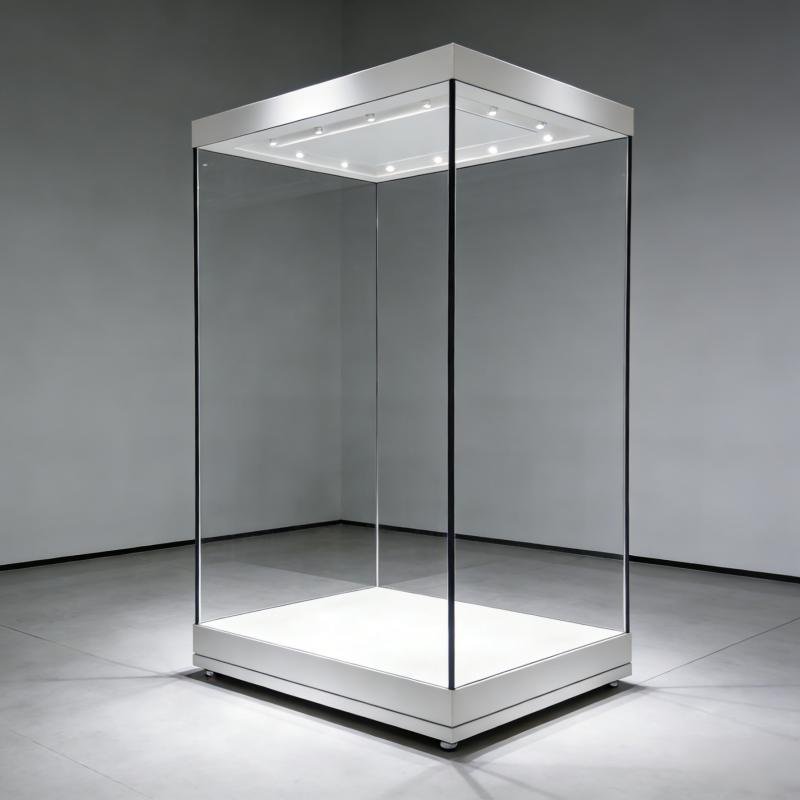
For classical sculptures and archaeological fragments, we used freestanding high museum display cabinets. This four‑sided transparent design enables a 360‑degree view of the sculpture’s details and form. Finished with a limestone veneer and steel structure, the case is stable, load‑bearing, moisture‑resistant, and abrasion‑proof. The low‑reflective ultra‑clear laminated glass panels ensure high light transmission and UV protection.
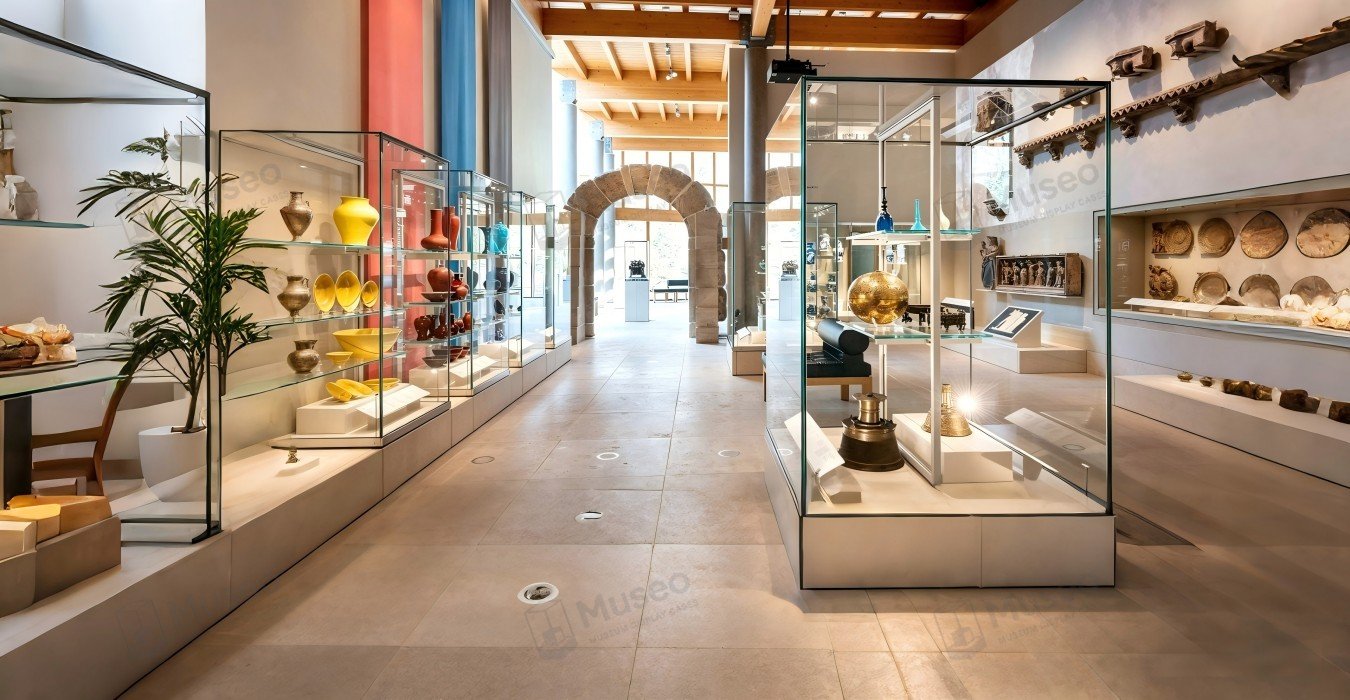
Display Case Types: To meet the diverse display requirements of different artifacts, we produced over 70 museum quality display cases in 10 different types for the museum. These include top‑view display cases, freestanding high display cases, niche‑style continuous display cases, and others.
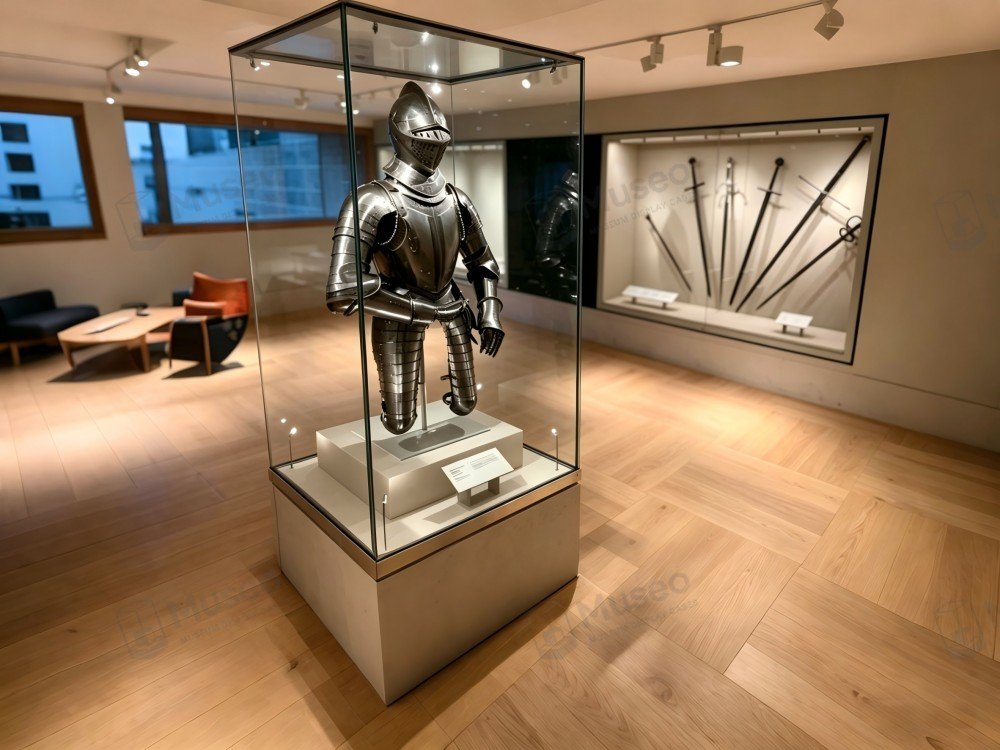
For knight armor, we used a freestanding high museum quality display case. This type of case is ideal for displaying a single core exhibit from a 360‑degree perspective without blind spots. It features an aluminum alloy frame, which is rust‑resistant, corrosion‑resistant, and has strong load‑bearing capacity. The viewing panels are made of low‑reflective ultra‑clear laminated glass, offering high light transmission and UV protection.
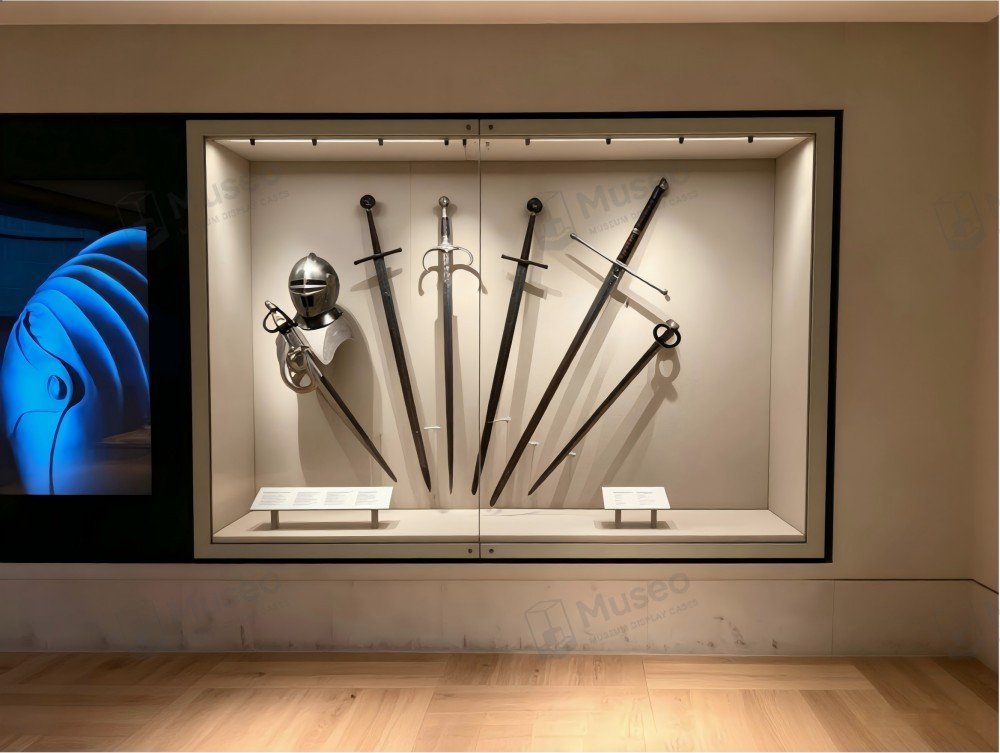
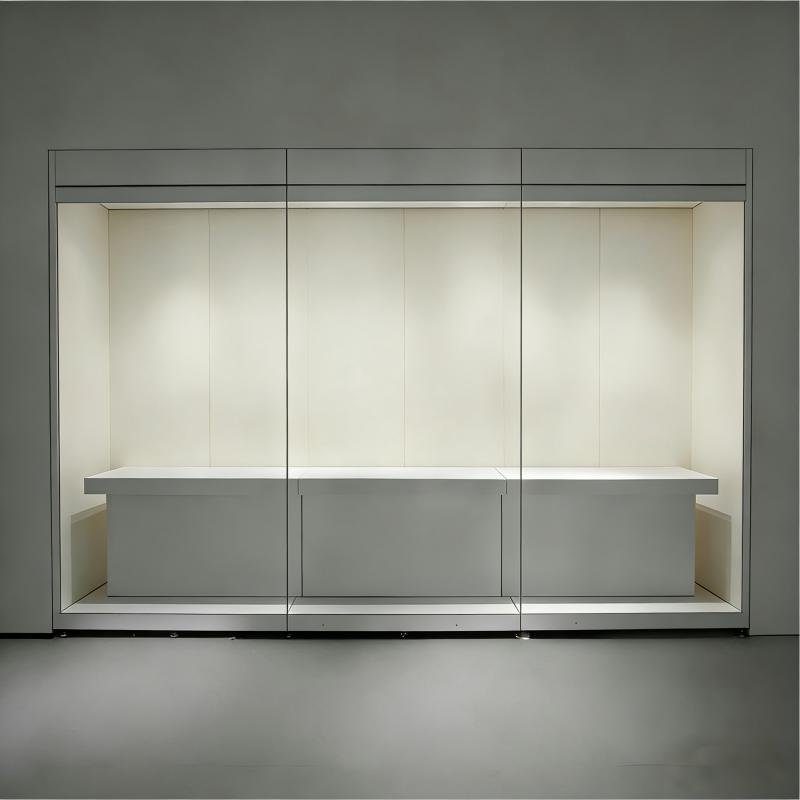
For cold weapons and armor components, we used niche‑style continuous museum quality display cases. These cases are suitable for displaying a series of exhibits along a wall. The aluminum alloy frame is fixed to the wall, providing strong load‑bearing capacity. The low‑reflective ultra‑clear laminated glass ensures high light transmission and UV protection.
Send an inquiry → Discuss requirements → Provide quotation → Pay deposit → Conceptual design → Drawing work → Production → Quality inspection → Packaging → Pay balance → Shipment.
2. Can you provide a quotation based on our drawings?
Yes, we can provide custom manufacturing services and quotations according to your requirements.
3. Are you a factory, and where is your factory located?
Yes, we are a factory entity specialized in manufacturing museum display props for years. Our factory is in Guangzhou City, Guangdong Province—you’re welcome to visit us for inspection!
4. Can we make a sample for quality inspection before placing an order?
Sample orders are acceptable, with sample fee and shipping costs to be borne by you
5. How long is the production lead time after placing an order?
After order confirmation, production is usually completed within 35 working days, with the exact timeline subject to order quantity.
6. What are the safest payment terms and the deposit ratio?
We support secure payment methods: T/T (Telegraphic Transfer) and Alibaba International Station Trade Assurance. A 50% deposit is required, and the balance must be paid before shipment.
7. Can we arrange quality inspection before shipment?
Certainly! Your QC personnel or third-party agencies are welcome for on-site inspection. We have our own quality inspection system before packaging to ensure product quality; if you’re unavailable for on-site checks, we can provide inspection reports as required.
GET IN TOUCH
GET IN TOUCH
Contact us, get the quotation sheet, and learn about more news and information
Our customized high-quality museum display cabinets, focused on relic protection, professional exhibition and collection/space adaptation, offer safe, long-lasting carriers for cultural heritage to clearly convey historical value.
Fast Delivery
Our customized museum display cabinets, optimized with prefab core modules, rapid design & streamlined production/installation, deliver in 1 month, upholding museum-grade relic protection & exhibition standards for urgent needs.
After-Sales Service
Our museum display cabinet after-sales service builds a system covering routine guarantees and provides after-sales service by professional teams within 7-24 hours after delivery.