Copenhagen Museum
Copenhagen City, Denmark 2020.6
The core theme of the Copenhagen Museum’s exhibition is “Copenhagen’s urban history and the transformation of civic life.” Spanning a thousand years from the Viking Age to the present, the exhibition vividly presents this historical trajectory—from a coastal fishing village to a modern international metropolis—through archaeological artifacts, historical models, and multimedia interactive technology. It also deeply explores “what it means to be a Copenhagener” and the symbiotic relationship of shared destiny between the city and its residents.
After relocating from its original site to a historic preserved building on Storm Street in the city center, the Copenhagen Museum faced immense challenges: limited space in the new venue, an aging building structure, complex circulation across multiple exhibition floors, and a highly fragmented collection centered on “urban history and civic life.” To seamlessly integrate highly sensitive archaeological artifacts—such as a 600‑year‑old ship’s keel and medieval bones, which are prone to carbonization and deterioration—with modern digital multimedia, while strictly protecting the historic building’s wall structures, the museum urgently needed to bring in a professional display case manufacturing team with world‑class capabilities in comprehensive microclimate control, in‑situ non‑standard customization for historic buildings, and a design that balances Nordic minimalism with high‑level security. This team would be responsible for fully upgrading and customizing the museum’s approximately 1,200 square meters of exhibition space with modern museum quality display cases.
Following the completion of our custom museum quality display case project, the Copenhagen Museum plans to fully activate the new venue’s functions as an “urban cultural living room” and an “international exchange hub,” leveraging this state‑of‑the‑art artifact protection and modular display case system. With this system, the museum will not only achieve high‑frequency, zero‑damage digital rotation of tens of thousands of archaeological artifacts from its collection but also establish a model for revitalizing historic districts across Europe, using the new Storm Street venue as a base. Moreover, thanks to the display cases meeting the high standards required for international loan exhibitions, the museum will collaborate with top city history museums in London, Amsterdam, and other global cities to launch high‑profile transnational touring exhibitions of precious artifacts. In this way, this thousand‑year‑old historic building will truly become a modern, eco‑friendly cultural landmark that bridges the past and the global future.
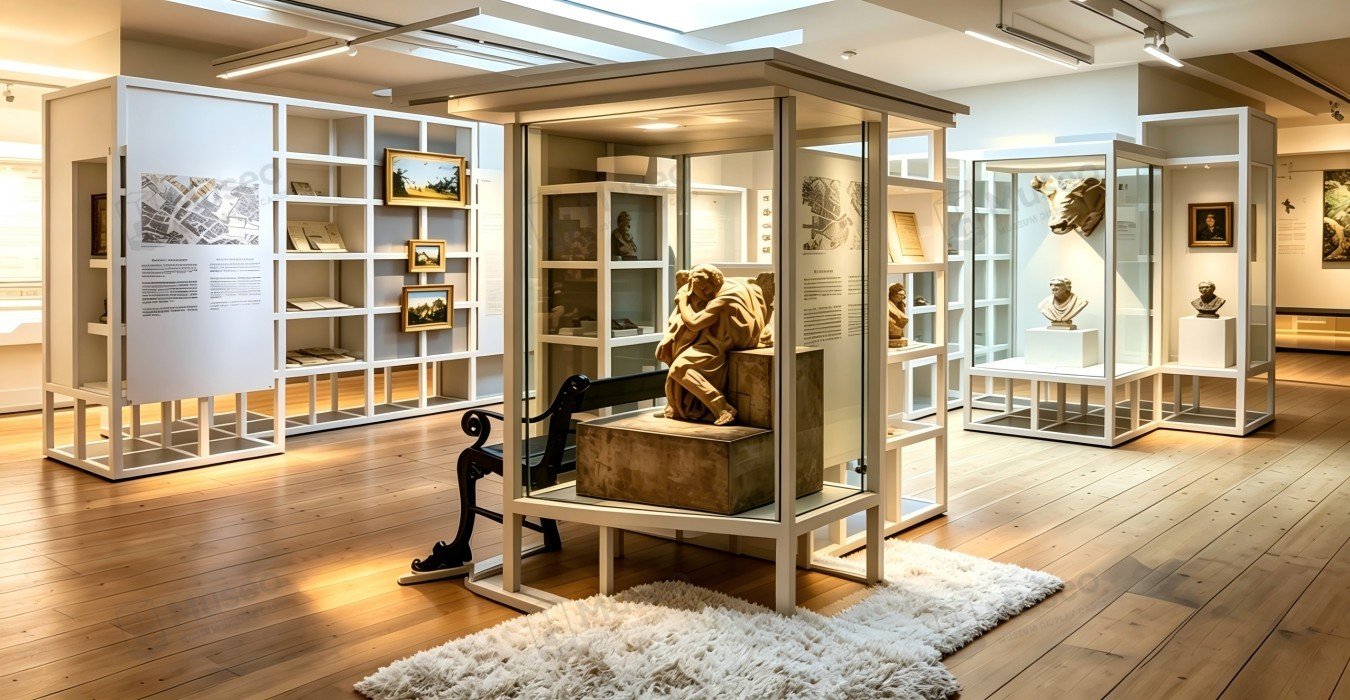
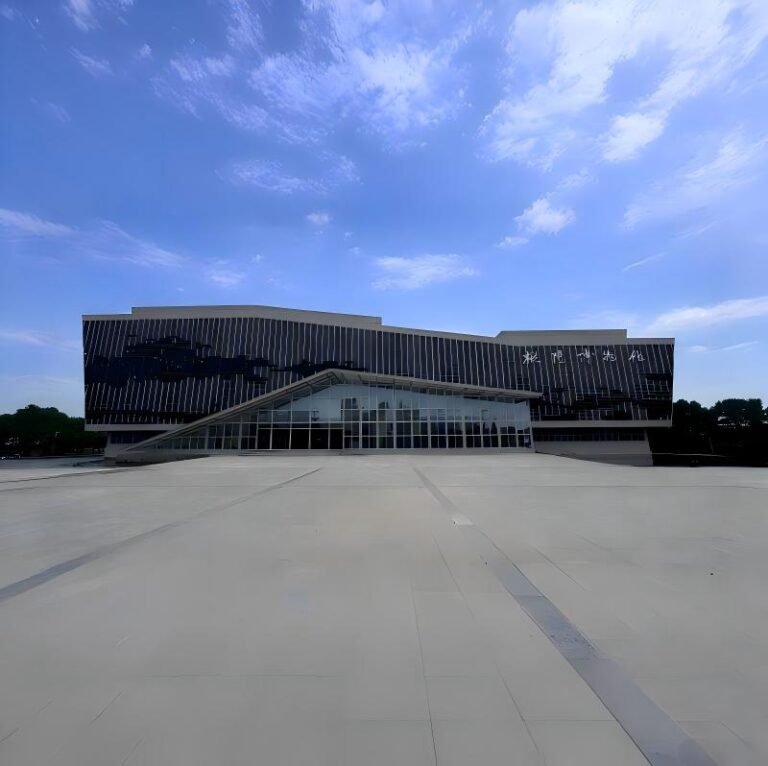
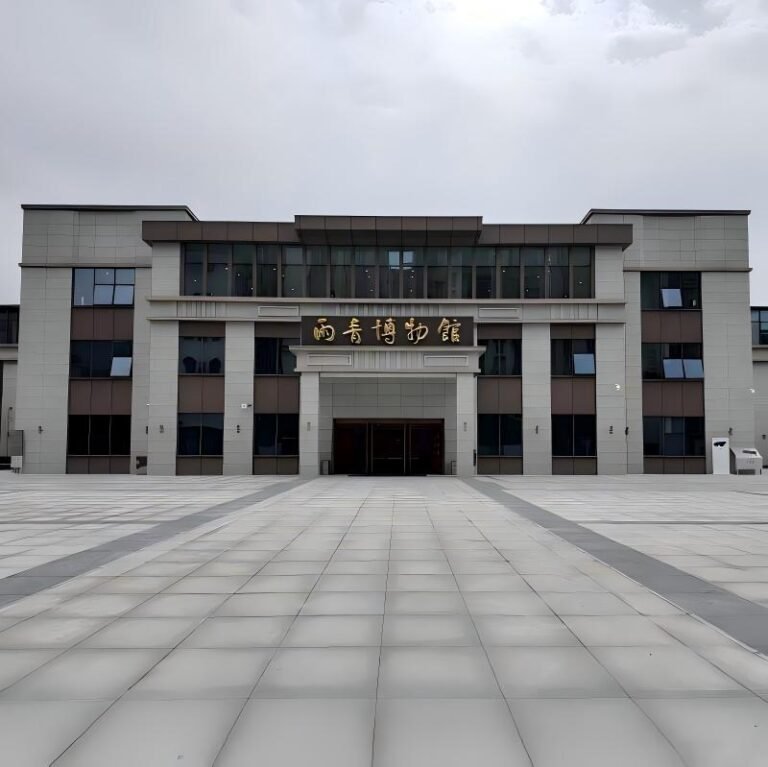
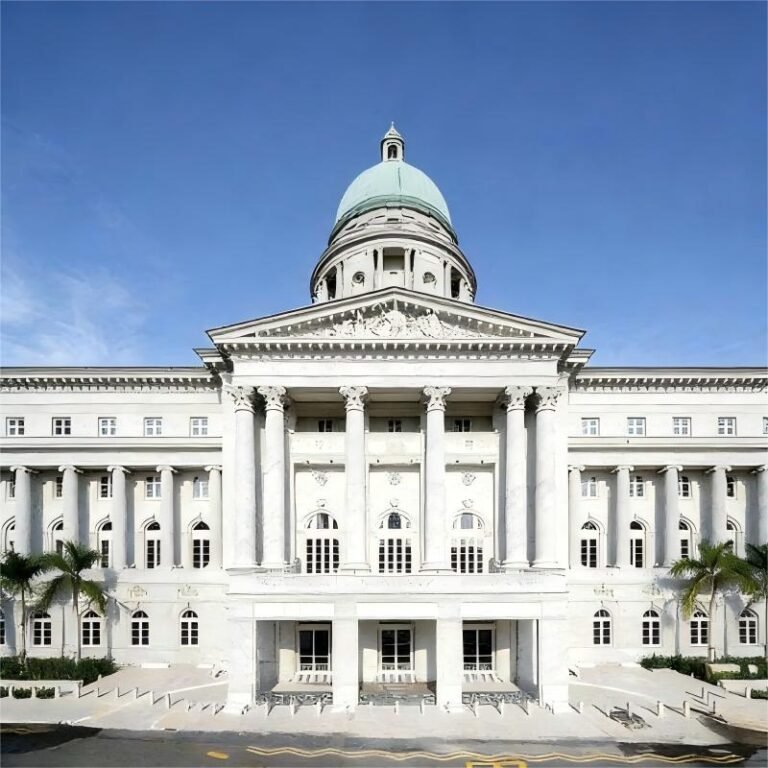
The Copenhagen Museum has a total floor area of 3,200 square meters and is located in a historic building in the city center that was originally converted from a public guardianship institution. The building comprises four levels in total, including the basement and three floors above ground (the basement houses the reception area and cloakroom, while the three above-ground floors contain exhibition galleries and office areas, with the core permanent exhibition distributed across two of those floors). The permanent exhibition displays over 400 extremely precious core historical artifacts, such as a 600‑year‑old ship’s keel, medieval warrior remains, and Viking‑era bone combs.
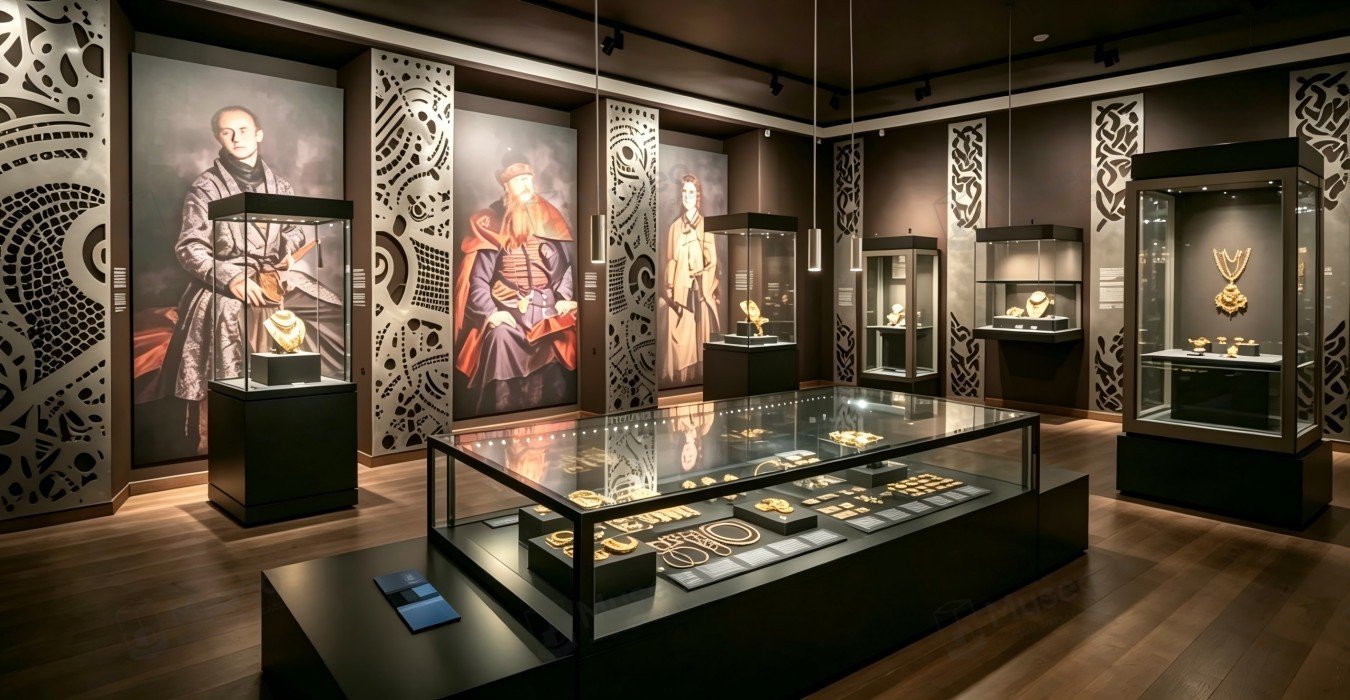
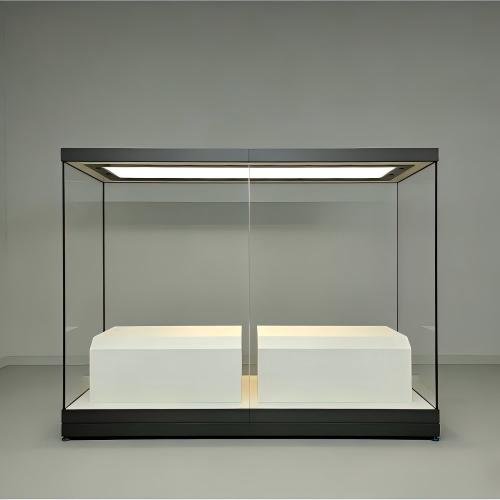
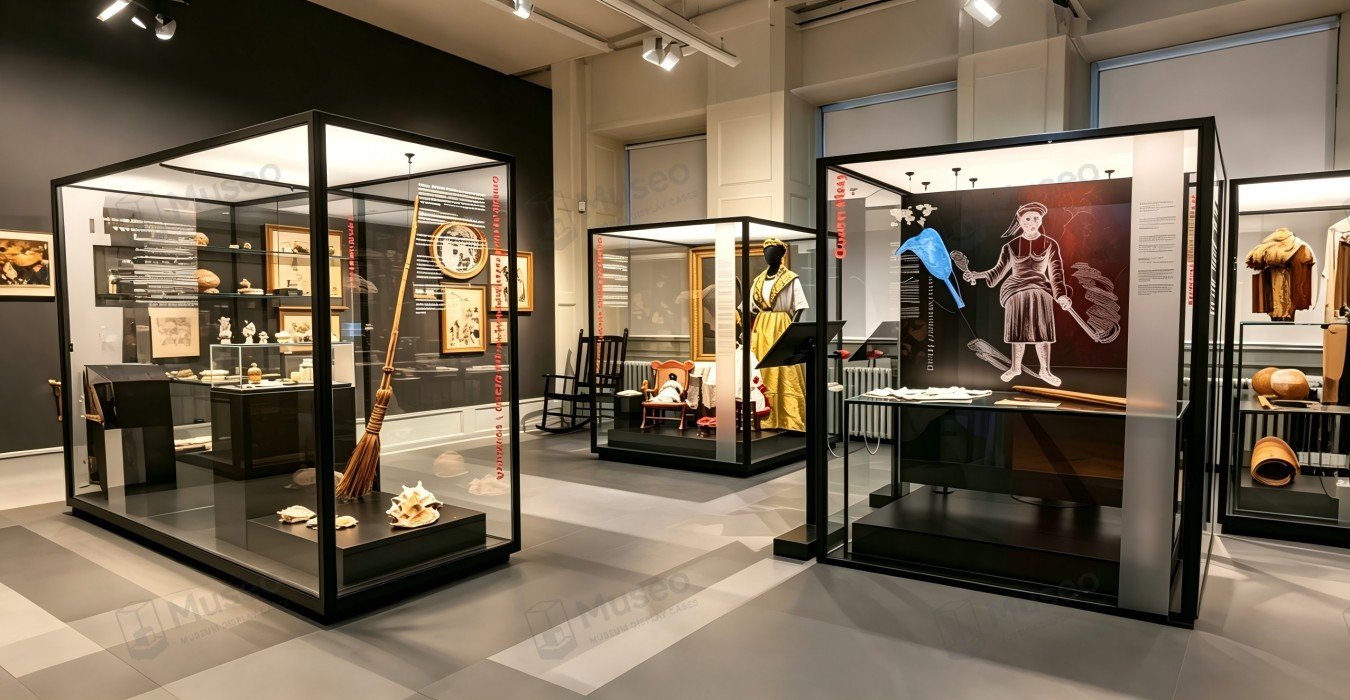
For the prehistoric Nordic gold jewelry, we adopted central island flat museum quality display cases. These museum quality display cases offer a large horizontal surface, allowing the complete set of excavated gold ornaments to be displayed all at once, thereby organizing the sequence of the collection.
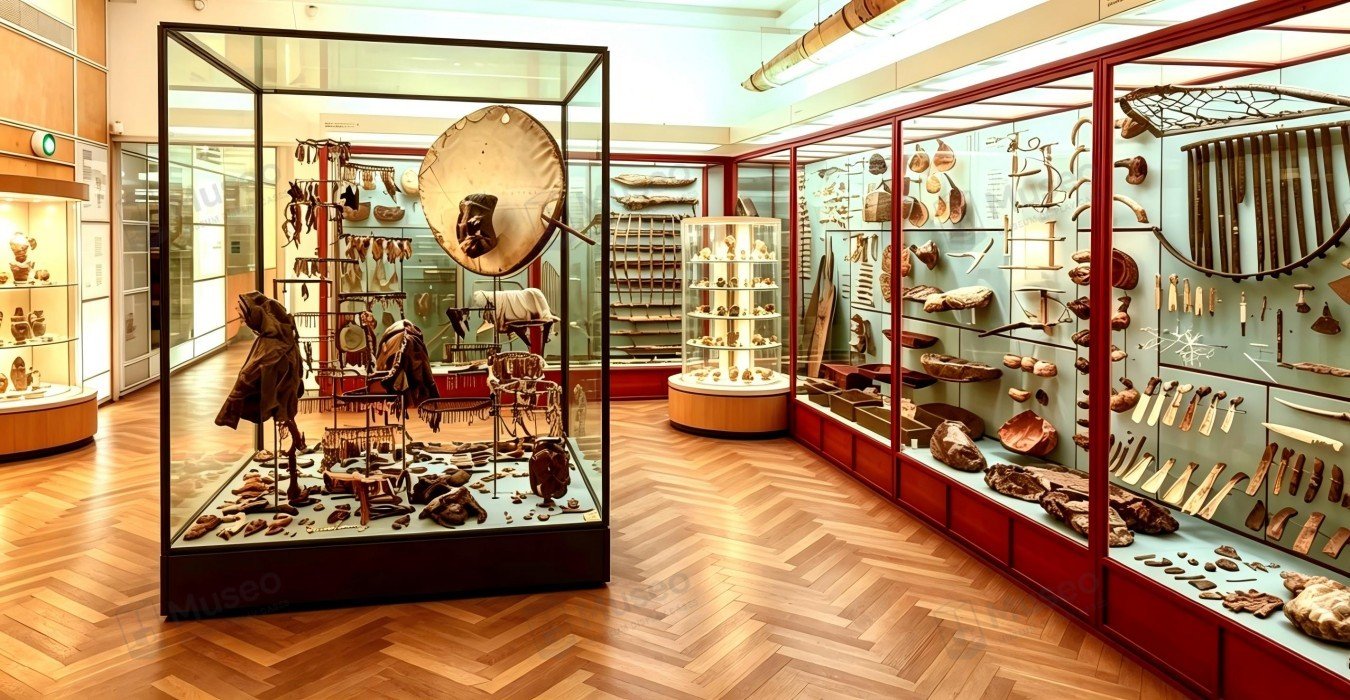
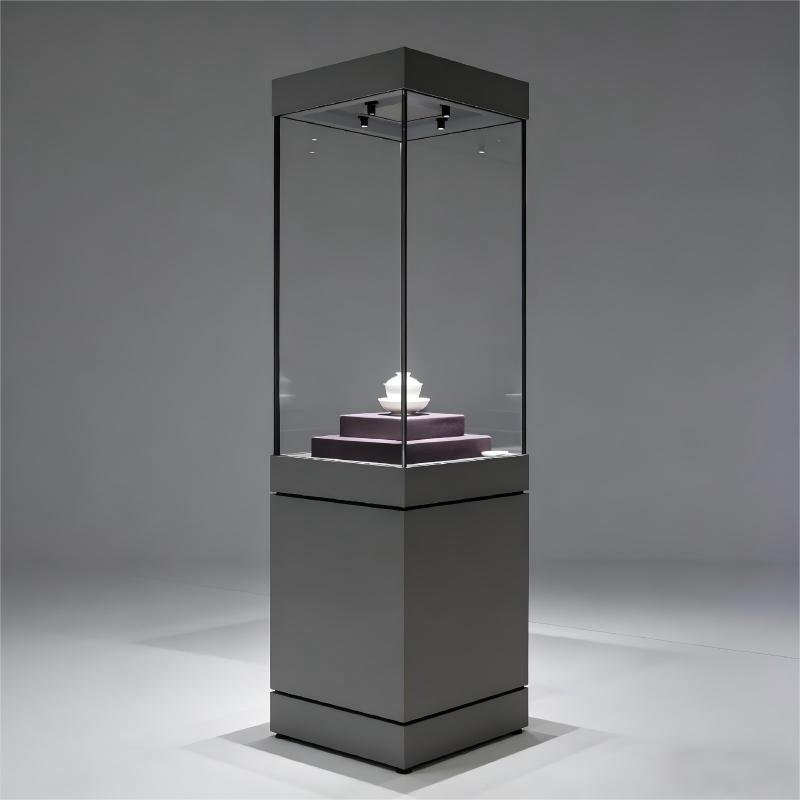
For the folk artifacts, we used independent island museum quality display cases. Encased entirely in ultra-clear, fully transparent glass on all four sides, these museum quality display cases are equipped with a constant temperature and humidity system to stabilize the internal environment, preventing the artifacts from becoming moldy or brittle.
Display case types: To accommodate the display requirements of different artifacts, we produced over 40 display cases across 8 different models for the museum. These include central island flat display cases, independent island display cases, and others.
“Throughout our cooperation with your company, our deepest impression is: professional, meticulous, and trustworthy. The over 40 display cases you customized for us exceeded our expectations in every way – from the brushed texture of the metal frames and the clarity and low reflectivity of the glass, to how well the cases blend with the Nordic minimalist style. In particular, the lighting system inside the cases, with its precise color temperature and even illumination, perfectly presents the details of over 400 core artifacts. The tight seam gaps, the concealed design of the locks, and the finishing of every welding spot and chamfer all reflect an extremely high level of craftsmanship. The project was completed in just three months from start to delivery, and your team remained highly responsive throughout: multiple remote meetings in the early stage to adjust the micro‑climate control solutions, strict adherence to heritage conservation procedures during on‑site installation – carefully protecting floors, walls, and even temperature and humidity conditions. When minor on‑site dimensional adjustments were needed, your team never made excuses but promptly provided solutions and worked overtime to complete them. In the end, the project was delivered on time and received high recognition from both our curatorial team and the board of directors. We will certainly name your company as our first‑choice partner for all future exhibition projects.”
— Exhibition Department, Copenhagen Museum
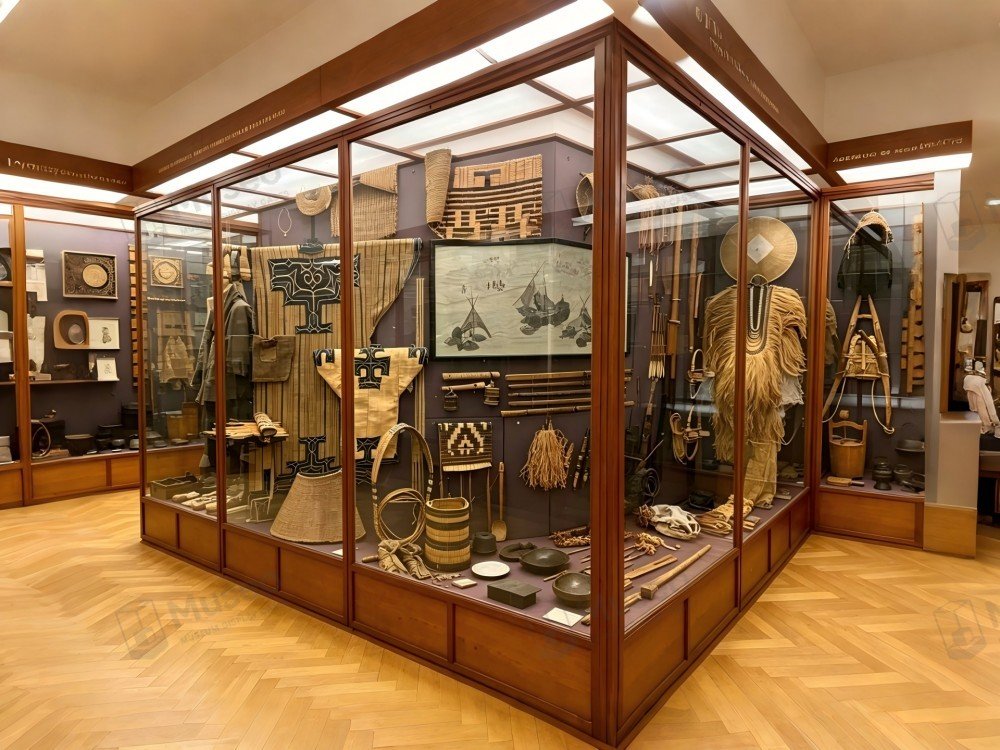
For Precious For the indigenous folk artifacts, we used corner wall-mounted exhibition display cabinets. These exhibition display cabinets maximize the use of corner spaces in the exhibition hall, and the multi‑tiered, three‑dimensional layout allows complete sets of artifacts to present a full picture of tribal life.
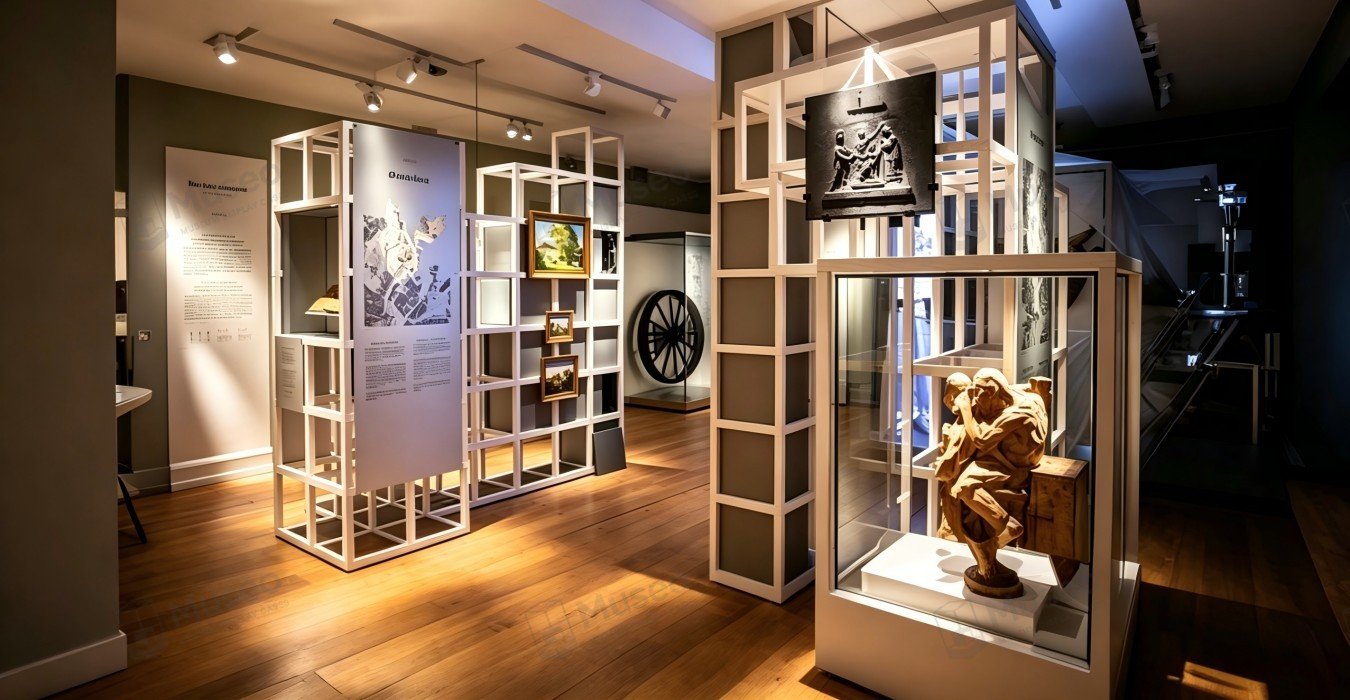
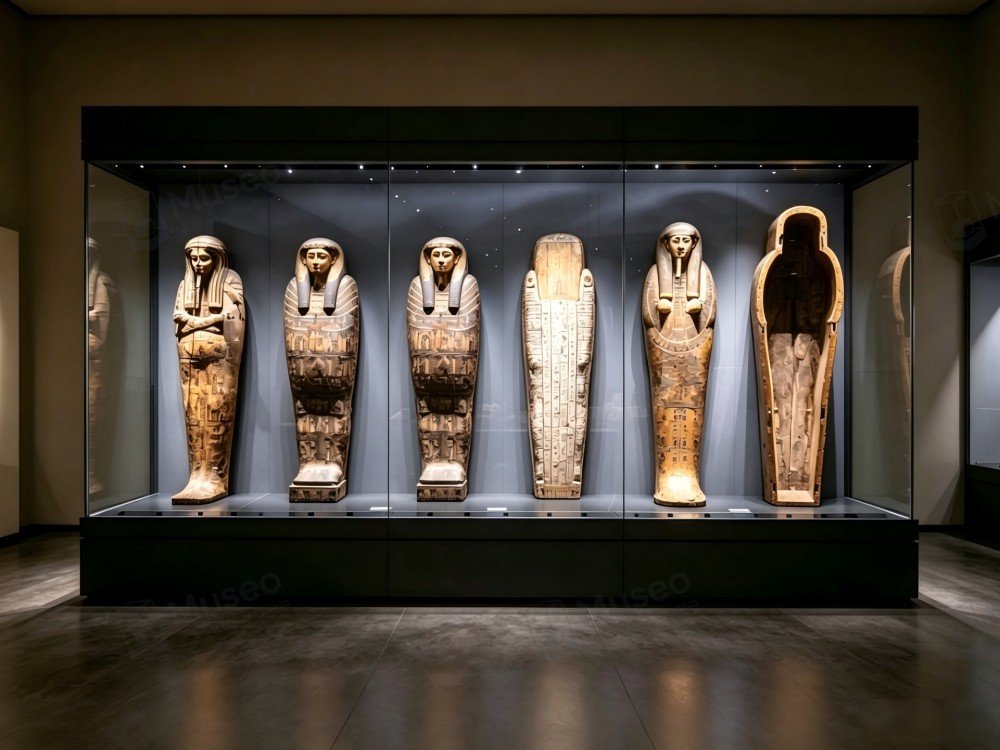
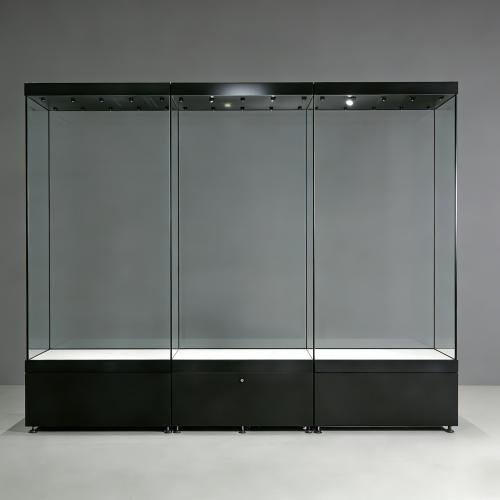
For the ancient Egyptian funerary artifacts, we adopted wall‑mounted, combined independent flat‑base exhibition display cabinets. These exhibition display cabinets feature a fully sealed structure paired with a constant temperature and humidity system to stabilize the internal environment of the cases.
علب عرض المشروع
الأسئلة الشائعة
1. كيف نعمل معك؟ (عملية الطلب)
إرسال استفسار ← مناقشة المتطلبات ← تقديم عرض أسعار ← تقديم عرض أسعار ← دفع العربون ← دفع العربون ← التصميم النظري ← أعمال الرسم ← الإنتاج ← فحص الجودة ← التغليف ← دفع الرصيد ← الشحن.
2. هل يمكنك تقديم عرض أسعار بناءً على رسوماتنا؟
نعم، يمكننا تقديم خدمات التصنيع المخصصة وعروض الأسعار وفقًا لمتطلباتك.
3. هل أنت مصنع، وأين يقع مصنعك؟
نعم، نحن كيان مصنع متخصص في تصنيع دعائم عرض المتاحف لسنوات. ويقع مصنعنا في مدينة قوانغتشو بمقاطعة قوانغدونغ - نرحب بزيارتنا للتفتيش!
4. هل يمكننا عمل عينة لفحص الجودة قبل تقديم الطلب؟
طلبات العينات مقبولة، على أن تتحمل أنت رسوم العينة وتكاليف الشحن
5. ما هي مدة مهلة الإنتاج بعد تقديم الطلب؟
بعد تأكيد الطلب، عادةً ما يكتمل الإنتاج في غضون 35 يوم عمل، ويخضع الجدول الزمني الدقيق لكمية الطلب.
6. ما هي شروط الدفع الأكثر أماناً ونسبة الإيداع؟
نحن ندعم طرق الدفع الآمنة: T/T (التحويل البرقي) وضمان التجارة الدولية لمحطة علي بابا الدولية. مطلوب إيداع مبلغ 50%، ويجب دفع الرصيد قبل الشحن.
7. هل يمكننا ترتيب فحص الجودة قبل الشحن؟
بالتأكيد! نرحب بموظفي مراقبة الجودة أو وكالات الطرف الثالث للتفتيش في الموقع. لدينا نظام فحص الجودة الخاص بنا قبل التعبئة والتغليف لضمان جودة المنتج؛ إذا لم تكن متاحًا لإجراء فحوصات في الموقع، يمكننا تقديم تقارير الفحص حسب الحاجة.
تواصل معنا
اتصل بنا، واحصل على ورقة الأسعار، وتعرف على المزيد من الأخبار والمعلومات