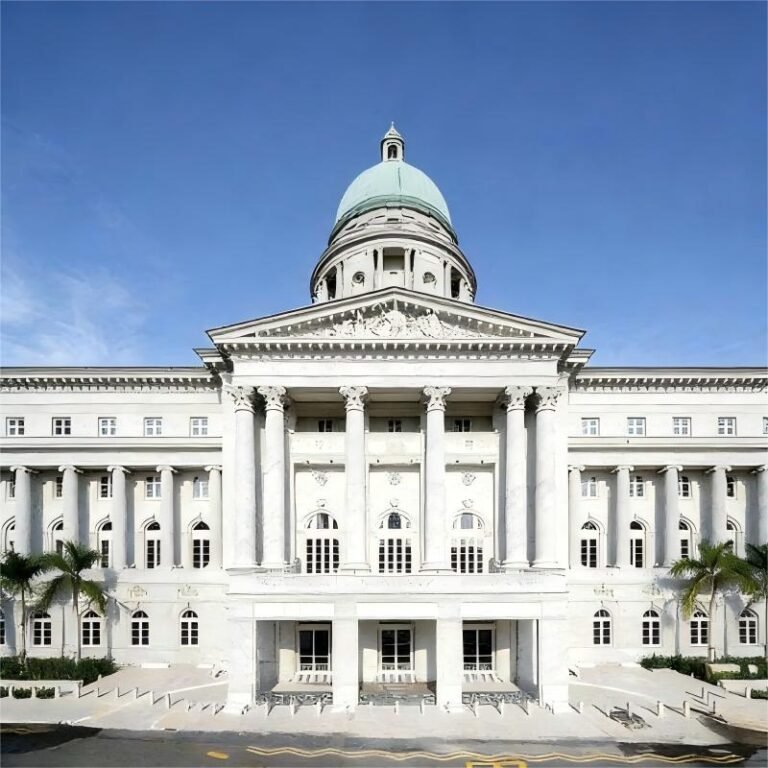
Natural History Museum of Denmark
Copenhagen,Denmark 2025.6
The core exhibition theme of the Natural History Museum of Denmark can be summarized as:”The Symbiotic Evolution of Earth’s Life and Natural History.”
First, From Stardust to Life – presenting the grand narrative from the Big Bang and the formation of Earth to the explosion of biodiversity, emphasizing the evolution of Earth as an integrated system.Second, focusing on the mutual influence between human civilization and the natural environment, exploring a sustainable future in the context of climate change and species extinction.Finally, leveraging over 14 million natural history specimens accumulated across 400 years, showcasing the scientific spirit of “research” and “exploration” through modern technology.

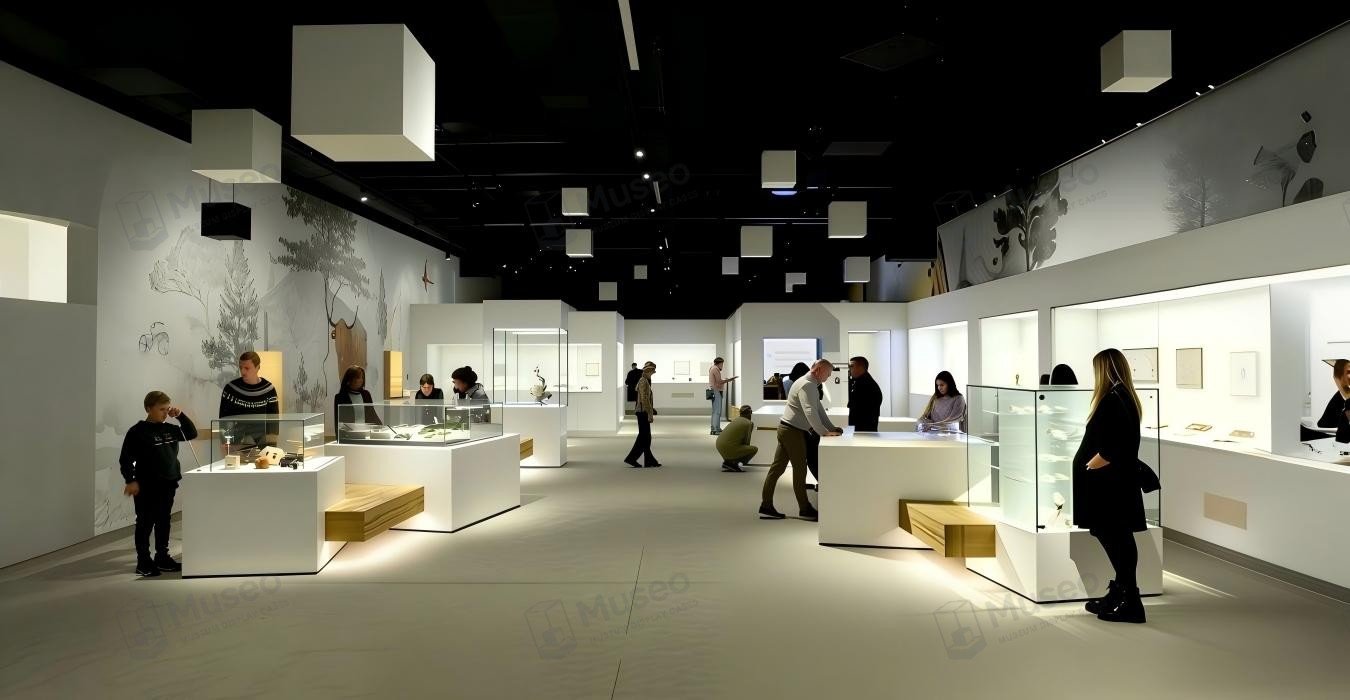
The Natural History Museum of Denmark is undergoing the most significant transformation in its 400-year history. To consolidate its scattered rare collections of zoology, geology, and botany, the museum has launched a costly new building project. As the museum houses a large number of environmentally sensitive organic specimens as well as oversized paleontological fossils, the existing display equipment could no longer meet modern museum requirements for preservation and exhibition. Therefore, our company was invited to participate in the custom redesign of its display case system.
After we completed the project, the Natural History Museum of Denmark has the following plans for the future: First, integrated display – for the first time, presenting the complete evolutionary chain of Earth’s geology, plants, and animals under one roof. Second, equal emphasis on research and public education – the museum style display case design not only serves visitors but also provides convenient maintenance and research access, allowing scientists to observe specimens at any time. Finally, achieving sustainability goals – using low‑energy lighting and air control modules.
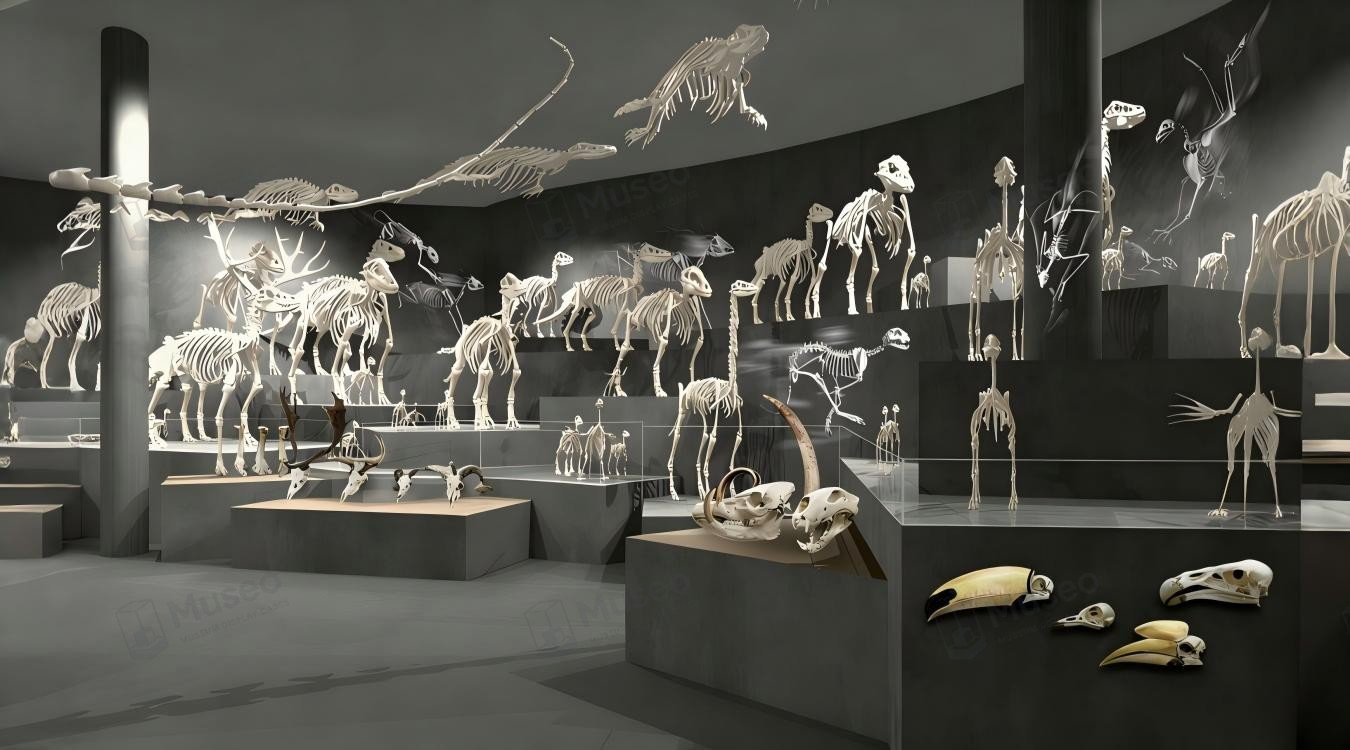
The Natural History Museum of Denmark has a total building area of 30,000 square meters, comprising historic above‑ground structures and multi‑level underground dark‑environment exhibition halls (the underground spaces being inspired by geological formations). The museum holds over 14 million precious specimens, including skins, bones, insects, fossils, minerals, meteorites, and more.

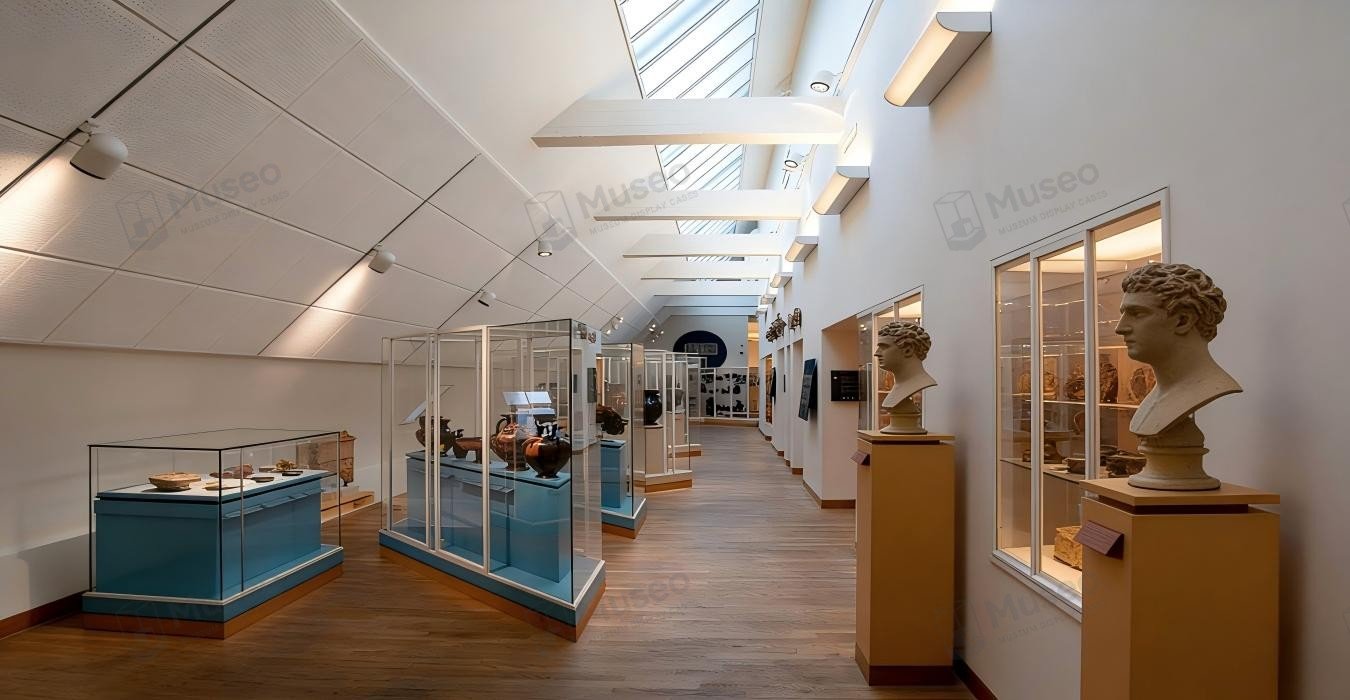
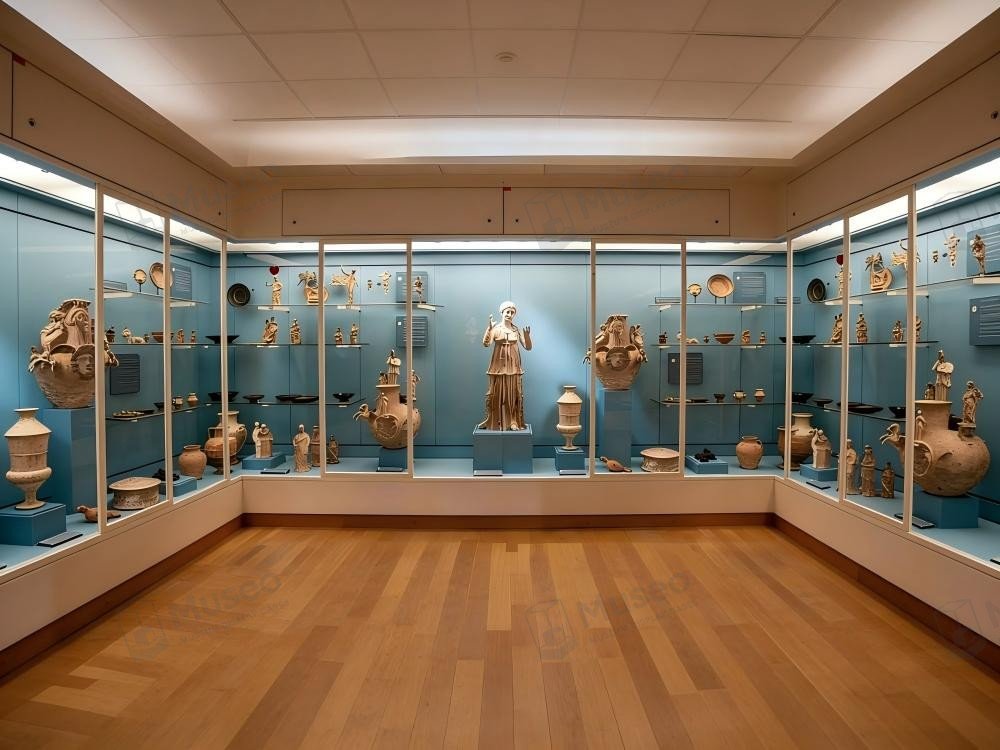
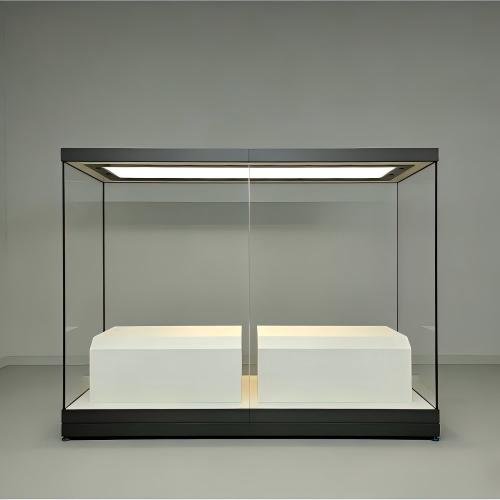
For ancient Greek pottery, we used independent glass museum style display case. With a three‑sided or fully glass design, visitors can observe the details of the pottery from multiple angles. The low‑reflective glass significantly reduces glare, allowing viewers to clearly appreciate the colours and decorative patterns of the artefacts.
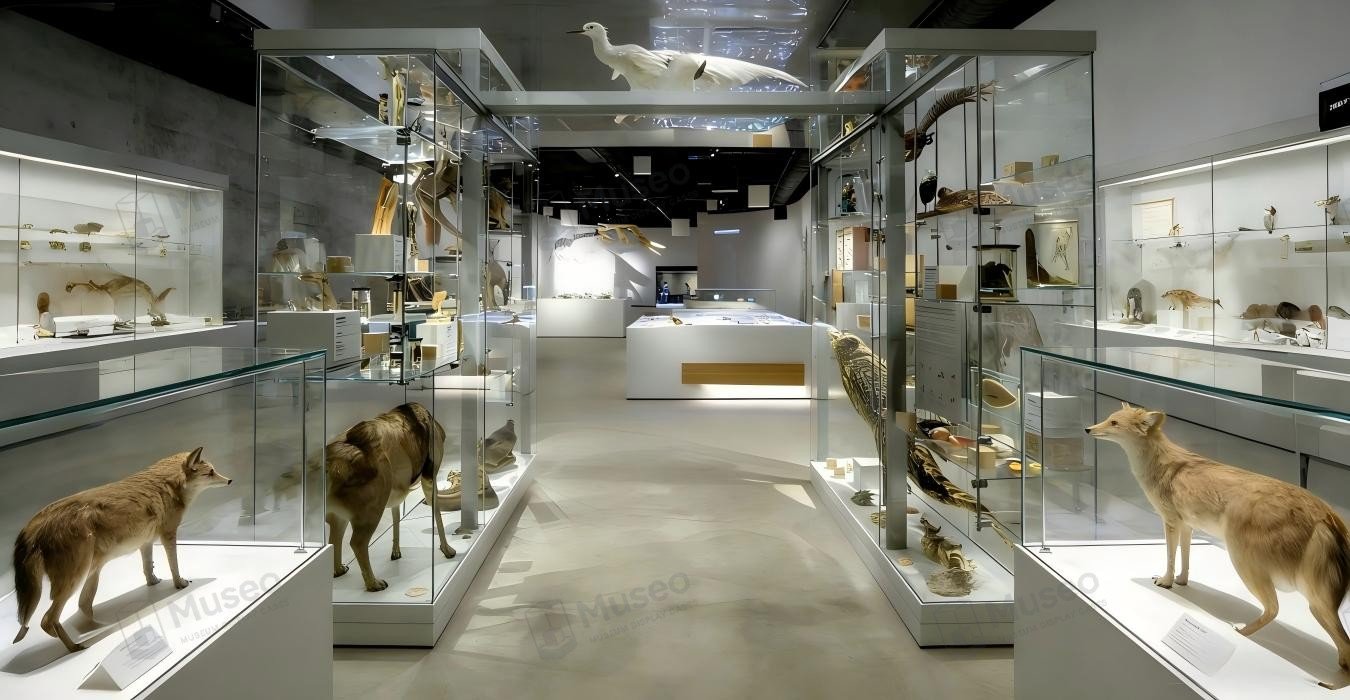
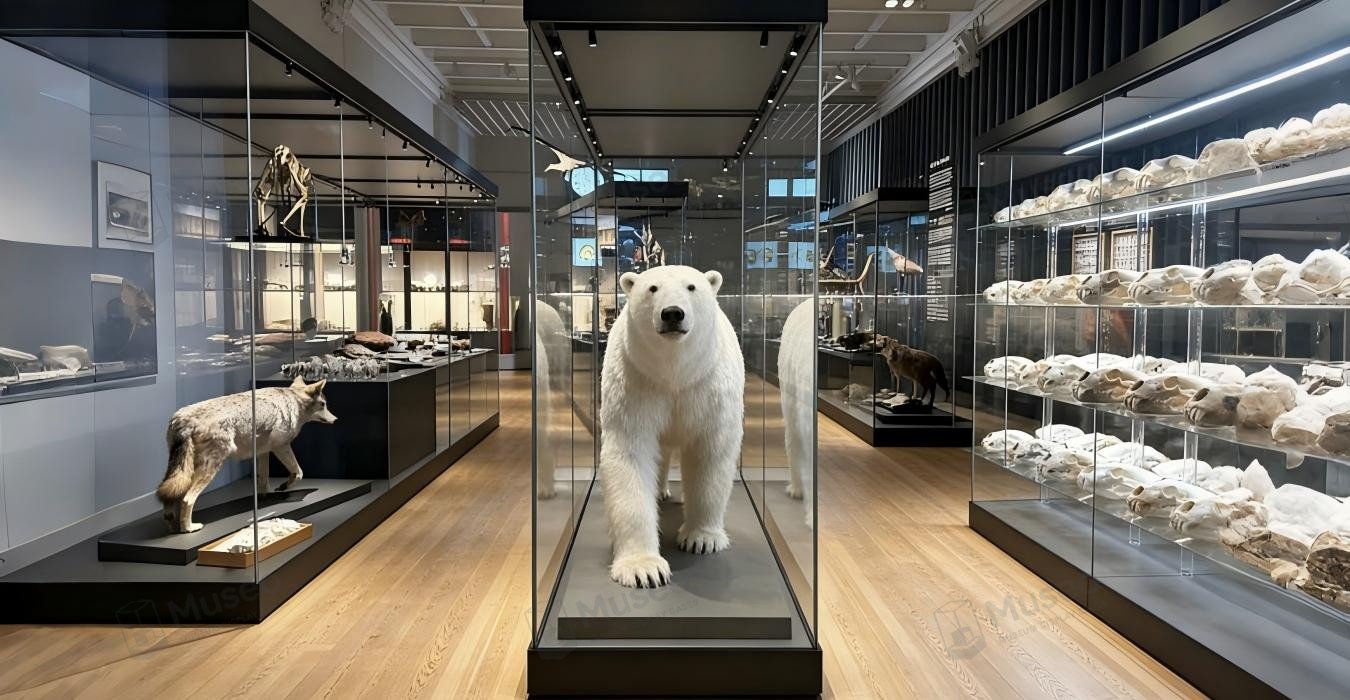
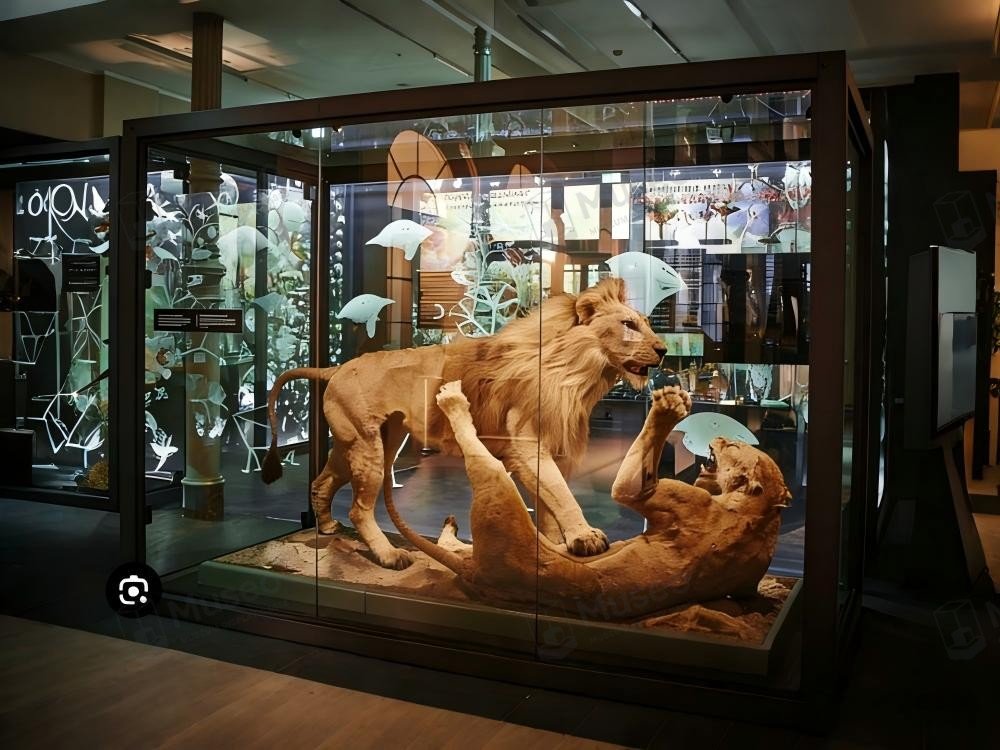
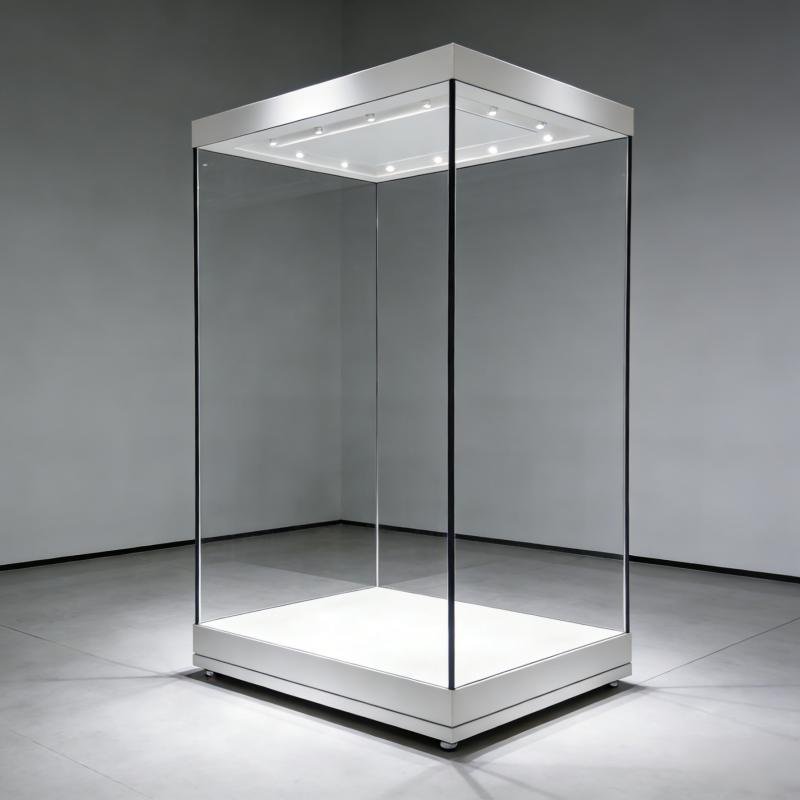
For animal specimens, we used independent panoramic tall museum style display case. Enclosed entirely with low‑reflective glass, they provide a 360° unobstructed view of the specimens, faithfully restoring the animals’ true forms. The sealed structure blocks dust, pests, and harmful gases, preventing contamination and corrosion of the specimens.
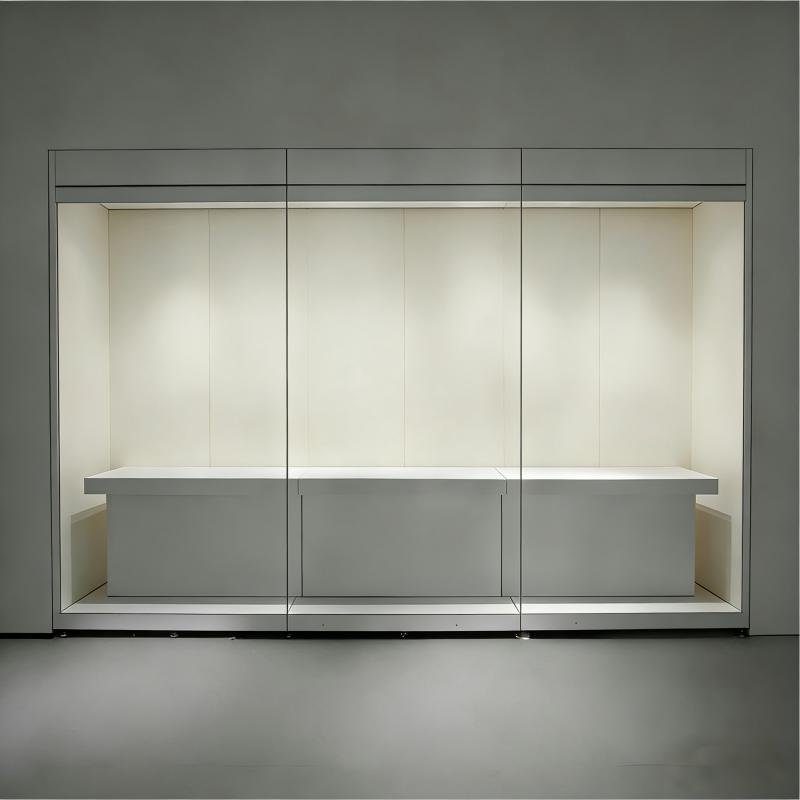
Display case types: To meet the diverse display requirements of different artifacts, we produced over 70 display cases across 13 different models for the museum, including fully enclosed glass museum exhibit cases, panoramic glass museum exhibit cases, and more.
For taxidermy specimens, we adopted fully enclosed glass display cases. The fully enclosed cubic structure, made of high-strength low-reflection glass and a metal frame, offers a 360° unobstructed view, allowing visitors to observe the specimens from multiple angles. It also accommodates the dimensions of large specimens and meets the requirements of contextual display.
For ancient Greek pottery artifacts, we adopted panoramic glass wall cases. These cases feature a design with low-reflective tempered glass and a white metal frame, providing a complete view of all artifacts inside. With multi-layer adjustable glass shelves and custom blue display stands, the artifacts are arranged in a layered manner based on their dimensions and display logic, highlighting the key large pieces.
علب عرض المشروع
الأسئلة الشائعة
1. كيف نعمل معك؟ (عملية الطلب)
إرسال استفسار ← مناقشة المتطلبات ← تقديم عرض أسعار ← تقديم عرض أسعار ← دفع العربون ← دفع العربون ← التصميم النظري ← أعمال الرسم ← الإنتاج ← فحص الجودة ← التغليف ← دفع الرصيد ← الشحن.
2. هل يمكنك تقديم عرض أسعار بناءً على رسوماتنا؟
نعم، يمكننا تقديم خدمات التصنيع المخصصة وعروض الأسعار وفقًا لمتطلباتك.
3. هل أنت مصنع، وأين يقع مصنعك؟
نعم، نحن كيان مصنع متخصص في تصنيع دعائم عرض المتاحف لسنوات. ويقع مصنعنا في مدينة قوانغتشو بمقاطعة قوانغدونغ - نرحب بزيارتنا للتفتيش!
4. هل يمكننا عمل عينة لفحص الجودة قبل تقديم الطلب؟
طلبات العينات مقبولة، على أن تتحمل أنت رسوم العينة وتكاليف الشحن
5. ما هي مدة مهلة الإنتاج بعد تقديم الطلب؟
بعد تأكيد الطلب، عادةً ما يكتمل الإنتاج في غضون 35 يوم عمل، ويخضع الجدول الزمني الدقيق لكمية الطلب.
6. ما هي شروط الدفع الأكثر أماناً ونسبة الإيداع؟
نحن ندعم طرق الدفع الآمنة: T/T (التحويل البرقي) وضمان التجارة الدولية لمحطة علي بابا الدولية. مطلوب إيداع مبلغ 50%، ويجب دفع الرصيد قبل الشحن.
7. هل يمكننا ترتيب فحص الجودة قبل الشحن؟
بالتأكيد! نرحب بموظفي مراقبة الجودة أو وكالات الطرف الثالث للتفتيش في الموقع. لدينا نظام فحص الجودة الخاص بنا قبل التعبئة والتغليف لضمان جودة المنتج؛ إذا لم تكن متاحًا لإجراء فحوصات في الموقع، يمكننا تقديم تقارير الفحص حسب الحاجة.
تواصل معنا
تواصل معنا
اتصل بنا، واحصل على ورقة الأسعار، وتعرف على المزيد من الأخبار والمعلومات