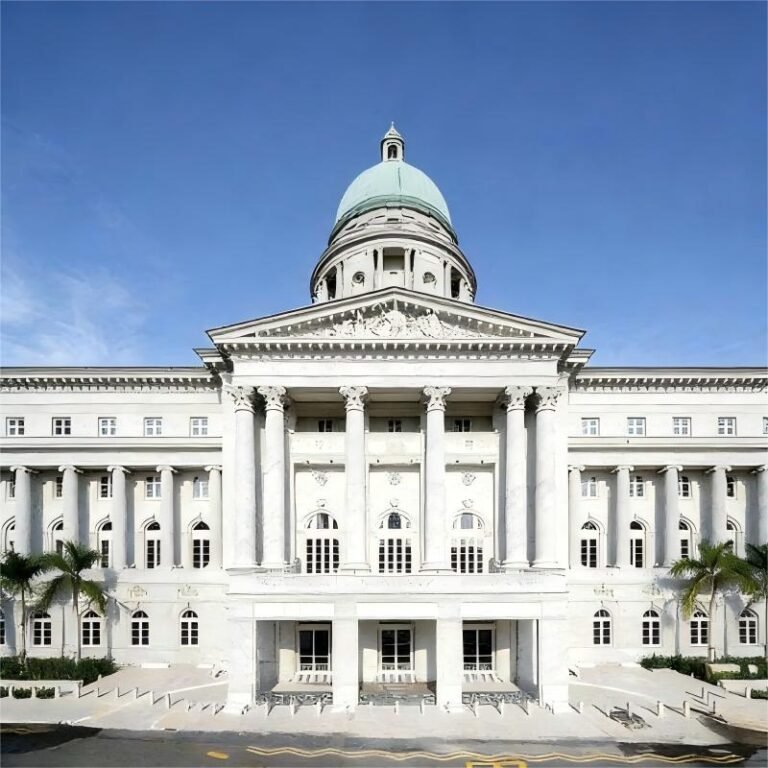
Ordos Museum
Ordos City, China 2025.1
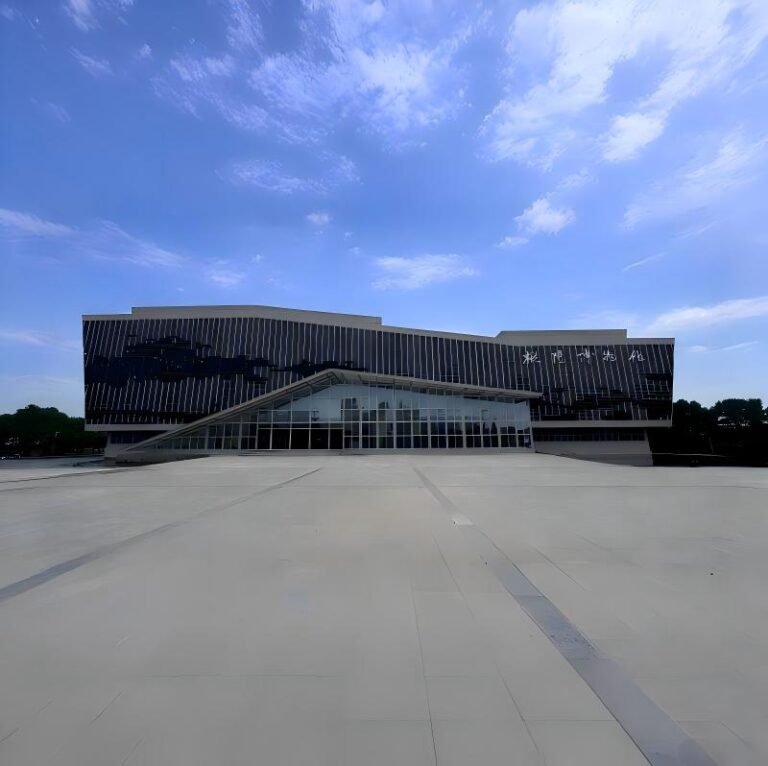
This museum chronicles the ancient and vast grassland civilization of Ordos. The entire structure is majestic and solemn, integrating historical significance with technology. It embodies the profound and extensive nature of Ordos’s history and culture, while also symbolizing the spirit of the Ordos people to carry forward the legacy and forge ahead into the future with continuous innovation.
In 2005, when Ordos City was planning the entirely new Kangbashi New Area on what was originally Gobi wilderness, the municipal government commissioned MAD Architects to design the Ordos Museum for this new urban district. This museum serves both as a tribute to the natural landscape that was soon to be replaced by the urban landscape, and as a symbol of the profundity and resilience of the grassland civilization. The future plans for the Ordos Museum (including the Ordos Museum) are clear and well-defined, as it strides forward towards the goals of becoming a “research-oriented museum” and a “museum without walls.”
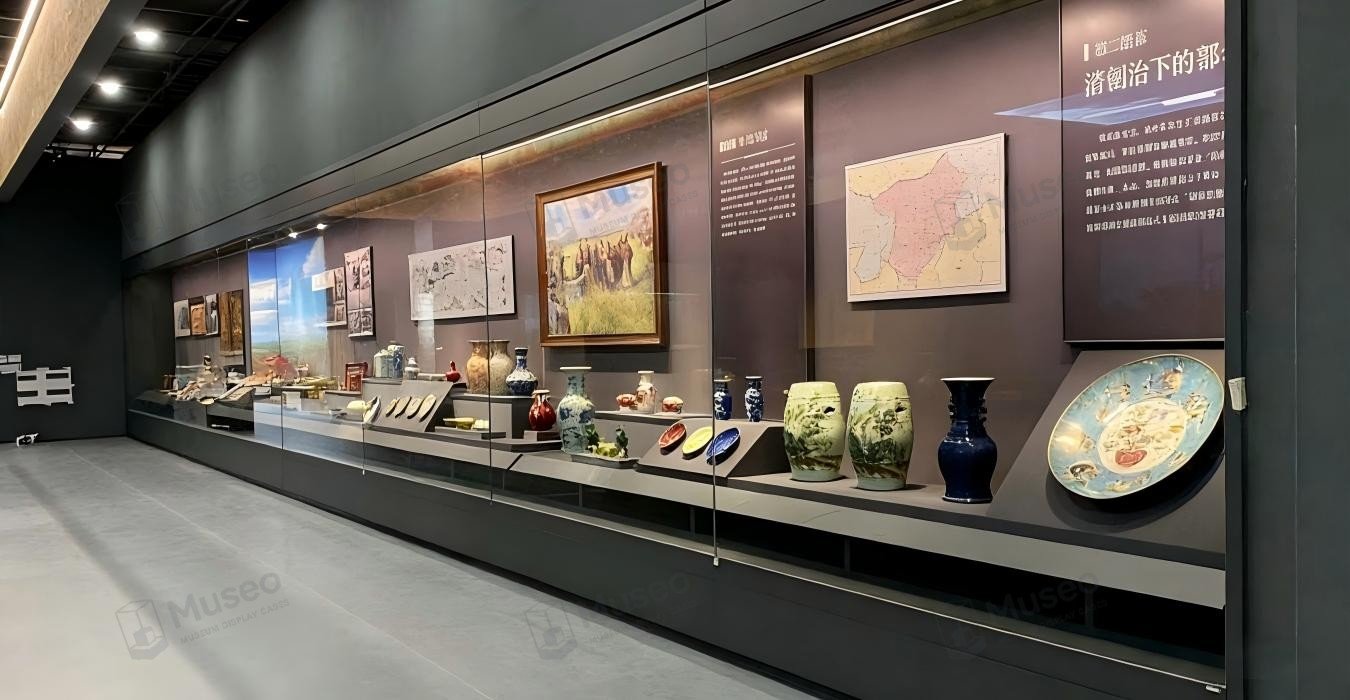
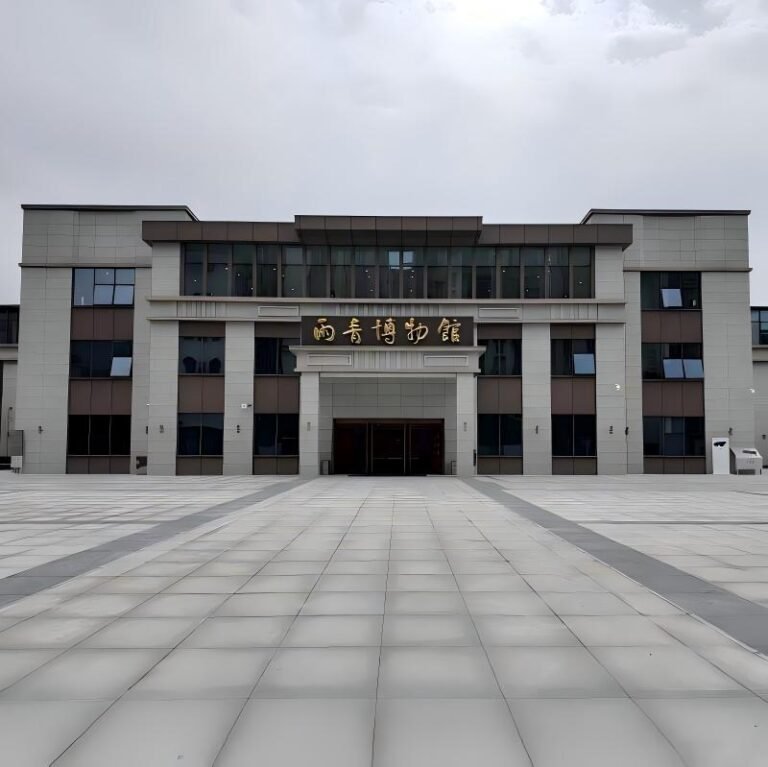
The Ordos Museum covers an area of 27,760 square meters. The building features one underground floor and four above-ground floors, with certain sections rising to eight floors. The museum currently houses 7 professional exhibition halls (totaling 15,000 square meters), with permanent exhibits including the Ordos Paleontological Fossil Exhibition, Ordos Ancient History Exhibition, Mongolian History and Culture Exhibition, and Through the Lens: Witnessing Ordos——Urban Memory Collection Exhibition. It is equipped with an academic lecture hall (seating 280 people), an underground parking lot, and over 70 offices and meeting rooms.
Our Design Philosophy: We provided a comprehensive, customized solution tailored to its core exhibition requirements:
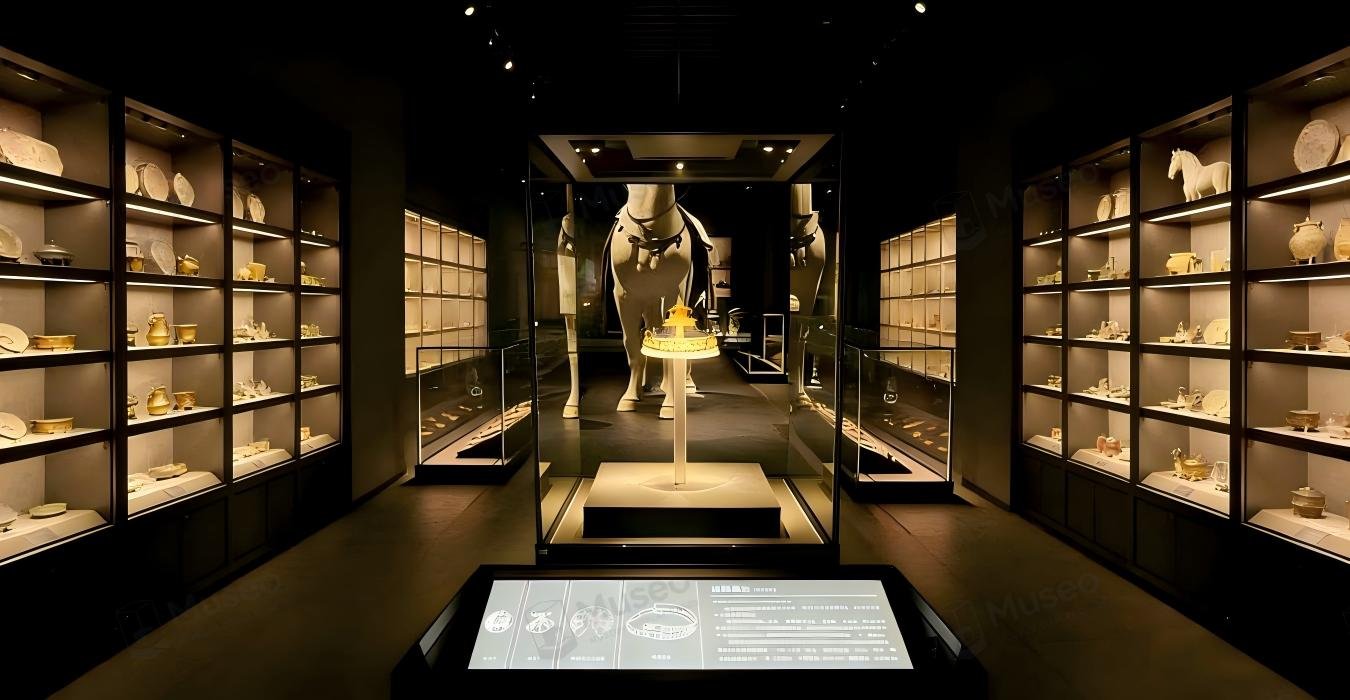
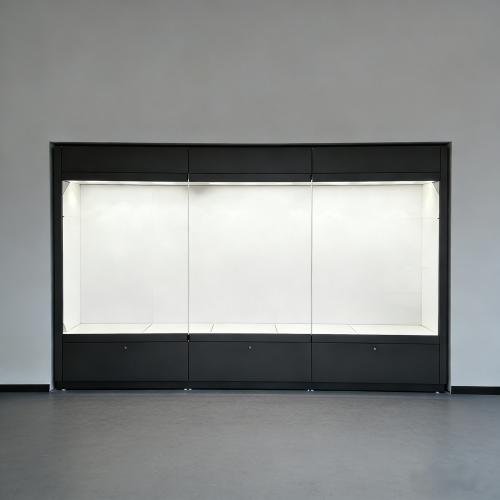
For systematically displaying a large number of artifacts arranged chronologically or by category—such as series of bronzes and pottery—we provide wall-mounted display cases to offer a continuous and expansive view.
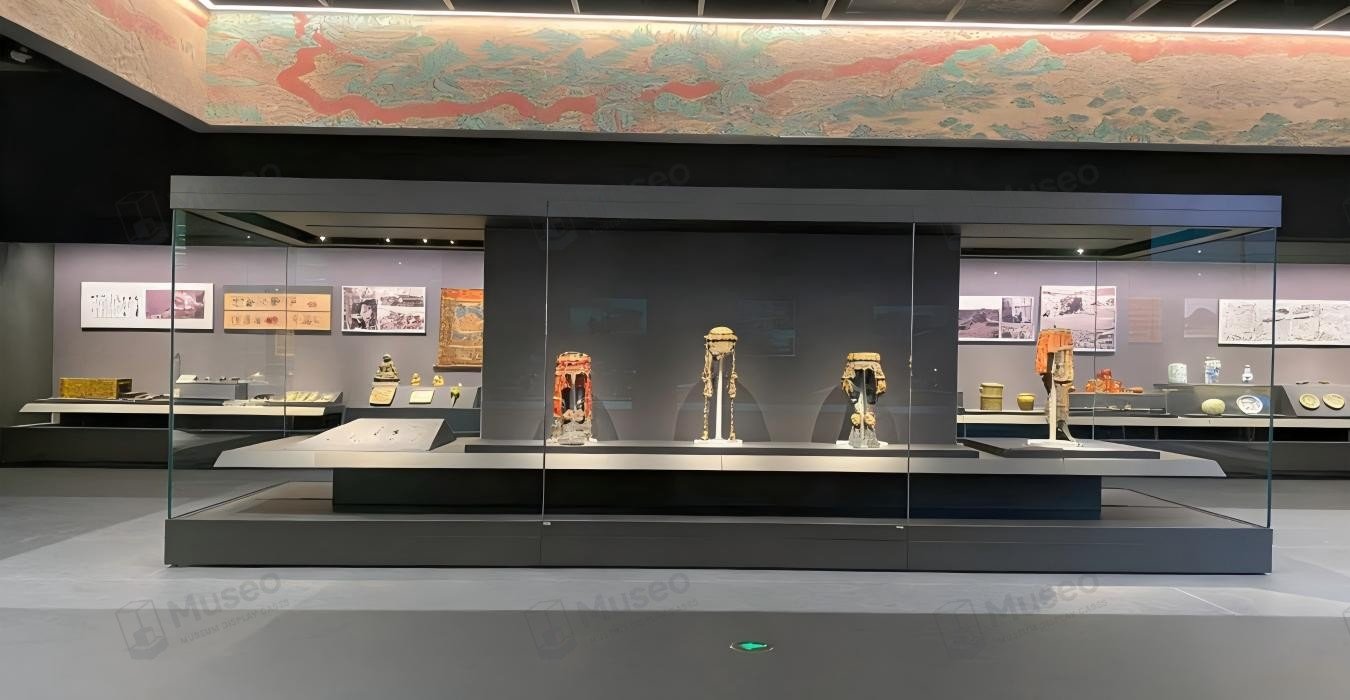
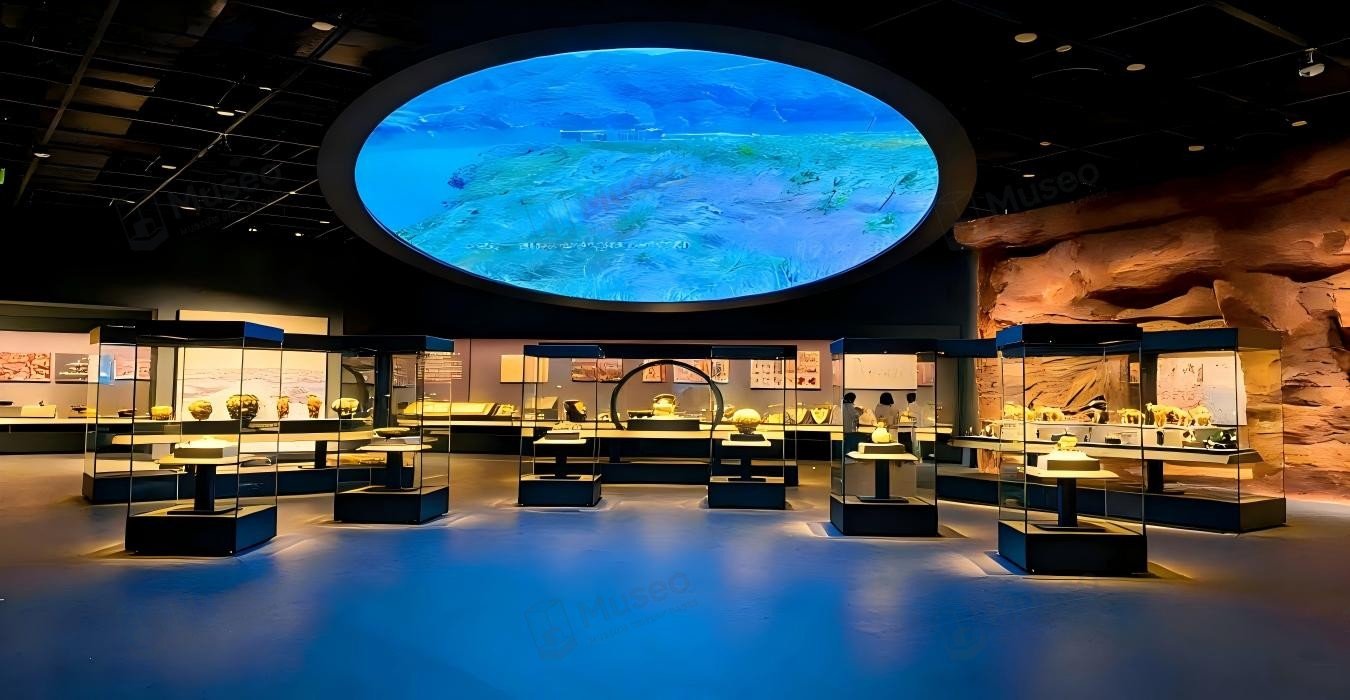
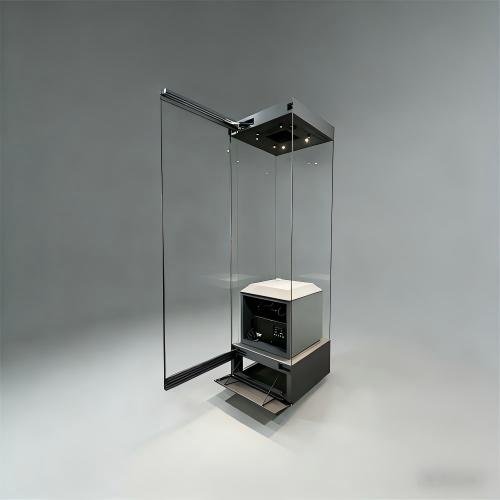
For treasures like the Gold Crown with Eagle Top, which are the museum’s most prized possessions or highly representative artifacts, we provide central independent display cases. This design makes them the visual focal point of the space and allows visitors to appreciate them from a 360-degree angl
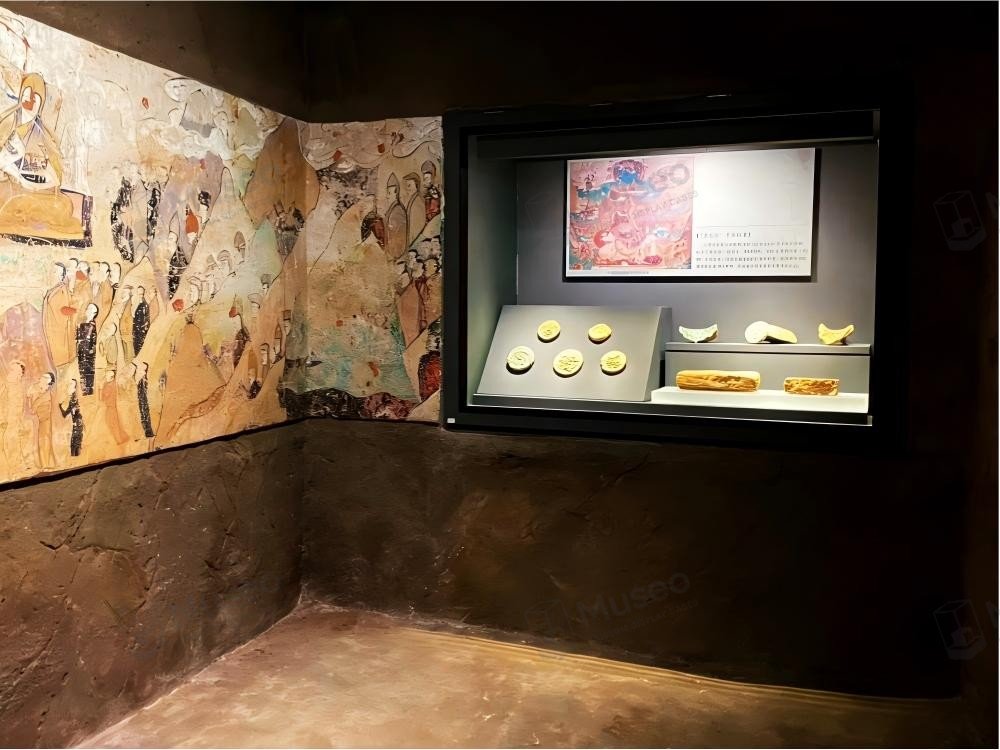
For small, exquisite artifacts that require a specific background or a semi-private viewing space, we provide recessed niche display cases.
For artifacts like the Ordos bronzes, which are small in size but feature exquisite patterns, we provide overhead viewing cases that allow visitors to observe the details up close from above.
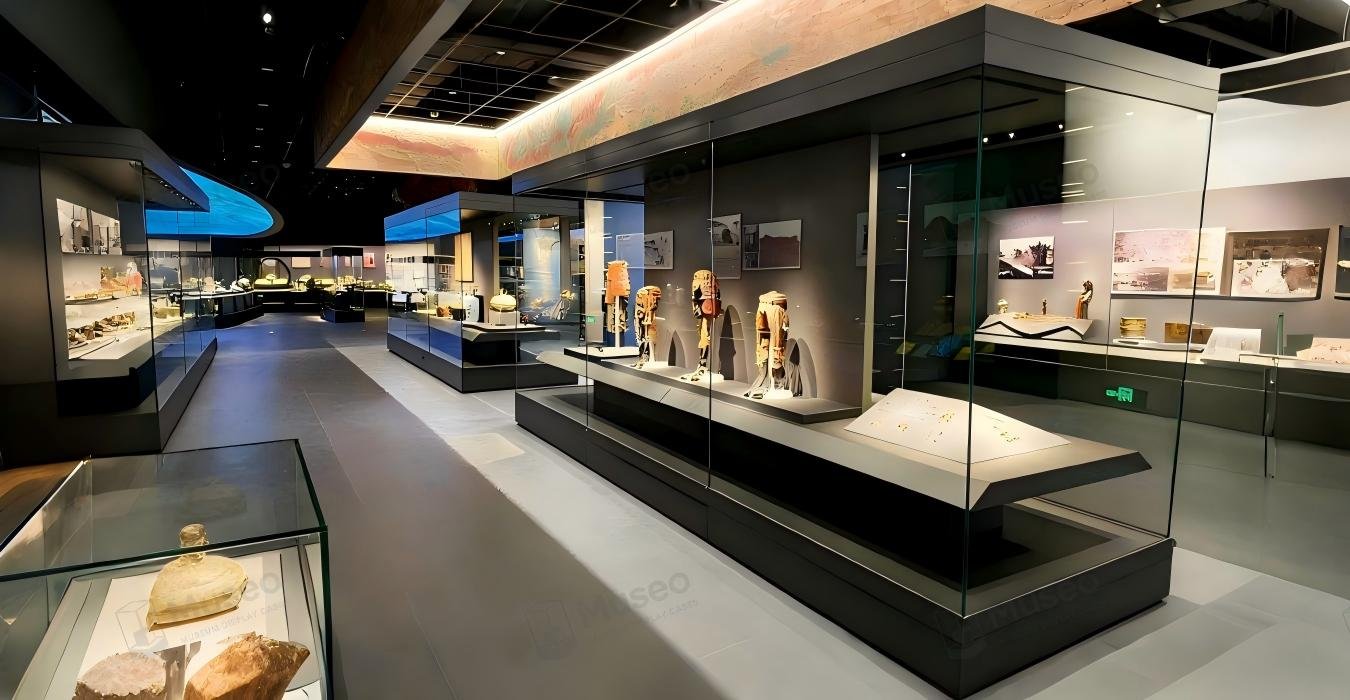
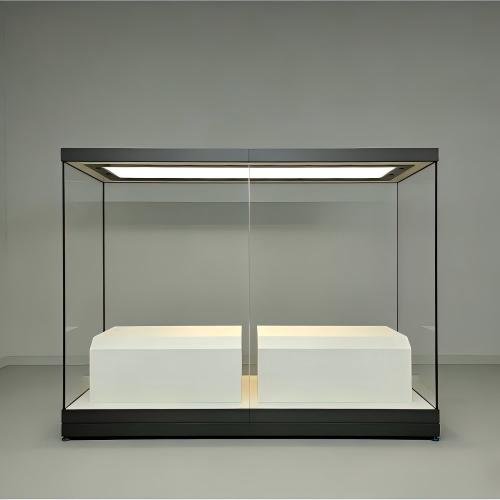
Exhibit Case Types: To meet the diverse display needs of various artifacts, we have equipped the museum with over 70 display cases across 16 different models. These include large wall-mounted cases, central independent cases, recessed wall cases, top-viewing cases, and custom-shaped cases tailored for special artifacts,etc.
Spatial Layout: To achieve the effect of “making the exhibit cases invisible and directing all focus to the artifacts themselves,” we have adopted a cutting-edge “wall-less + island-style” layout. This approach breaks down the visual barriers of traditional museums, creating a transparent and open space where the artifacts appear as “islands” floating on the river of history, allowing visitors to appreciate them unobstructed from every angle.
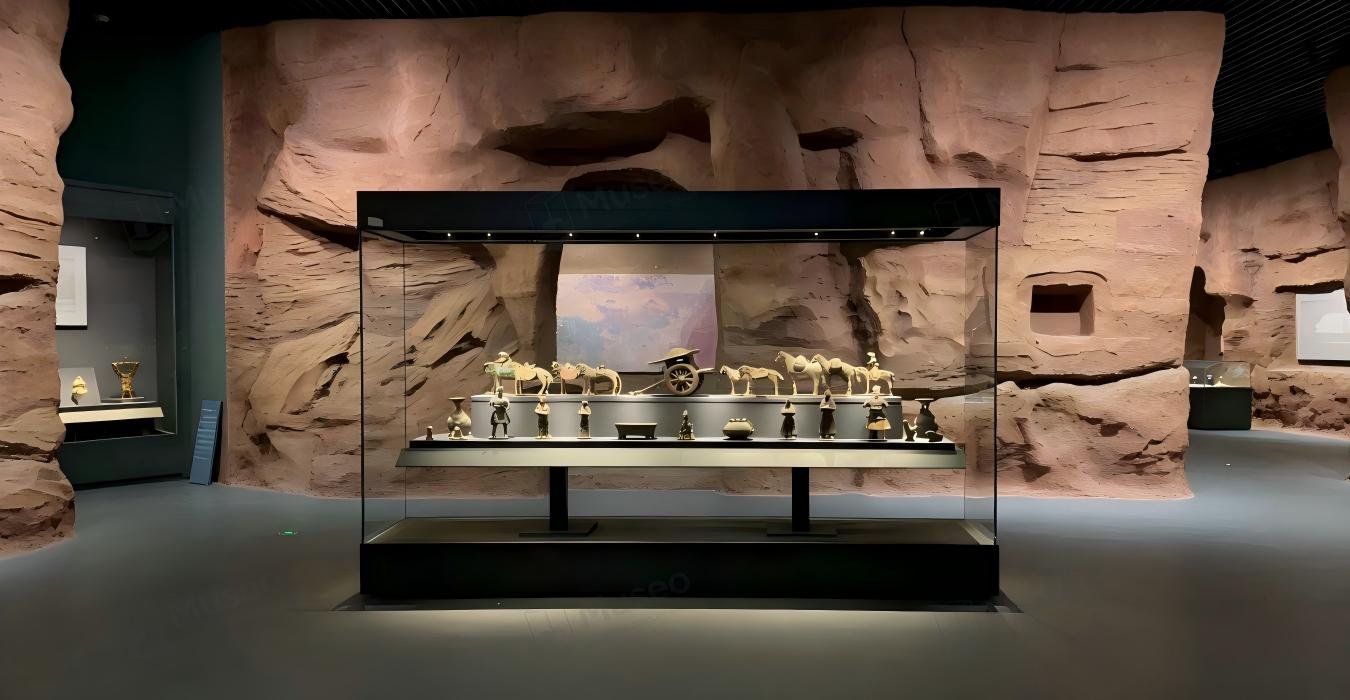
For ceramic or pottery funerary objects, we have adopted recessed niche display cases. This sealed cases control temperature and humidity, isolating the exhibits from dust and harmful gases to slow down their aging. The use of UV-resistant glass and directed lighting meets viewing needs while preventing light damage to the artifacts.
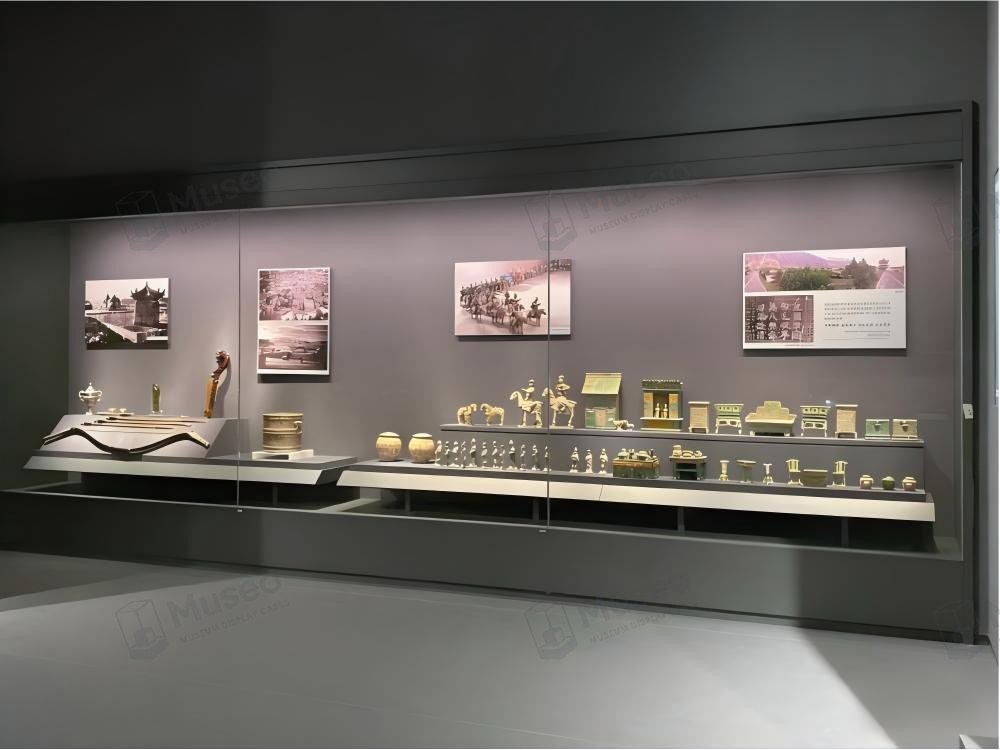
For clusters of miniature pottery or bronze funerary objects, we have adopted long, wall-mounted display cases. Designed in response to the dry climate and significant temperature fluctuations characteristic of Ordos, this cases are built on the core logic of “sealing plus constant temperature and humidity,” effectively balancing exhibition impact with the preservation needs of the artifacts.
علب عرض المشروع
الأسئلة الشائعة
1. كيف نعمل معك؟ (عملية الطلب)
إرسال استفسار ← مناقشة المتطلبات ← تقديم عرض أسعار ← تقديم عرض أسعار ← دفع العربون ← دفع العربون ← التصميم النظري ← أعمال الرسم ← الإنتاج ← فحص الجودة ← التغليف ← دفع الرصيد ← الشحن.
2. هل يمكنك تقديم عرض أسعار بناءً على رسوماتنا؟
نعم، يمكننا تقديم خدمات التصنيع المخصصة وعروض الأسعار وفقًا لمتطلباتك.
3. هل أنت مصنع، وأين يقع مصنعك؟
نعم، نحن كيان مصنع متخصص في تصنيع دعائم عرض المتاحف لسنوات. ويقع مصنعنا في مدينة قوانغتشو بمقاطعة قوانغدونغ - نرحب بزيارتنا للتفتيش!
4. هل يمكننا عمل عينة لفحص الجودة قبل تقديم الطلب؟
طلبات العينات مقبولة، على أن تتحمل أنت رسوم العينة وتكاليف الشحن
5. ما هي مدة مهلة الإنتاج بعد تقديم الطلب؟
بعد تأكيد الطلب، عادةً ما يكتمل الإنتاج في غضون 35 يوم عمل، ويخضع الجدول الزمني الدقيق لكمية الطلب.
6. ما هي شروط الدفع الأكثر أماناً ونسبة الإيداع؟
نحن ندعم طرق الدفع الآمنة: T/T (التحويل البرقي) وضمان التجارة الدولية لمحطة علي بابا الدولية. مطلوب إيداع مبلغ 50%، ويجب دفع الرصيد قبل الشحن.
7. هل يمكننا ترتيب فحص الجودة قبل الشحن؟
بالتأكيد! نرحب بموظفي مراقبة الجودة أو وكالات الطرف الثالث للتفتيش في الموقع. لدينا نظام فحص الجودة الخاص بنا قبل التعبئة والتغليف لضمان جودة المنتج؛ إذا لم تكن متاحًا لإجراء فحوصات في الموقع، يمكننا تقديم تقارير الفحص حسب الحاجة.
تواصل معنا
اتصل بنا، واحصل على ورقة الأسعار، وتعرف على المزيد من الأخبار والمعلومات