


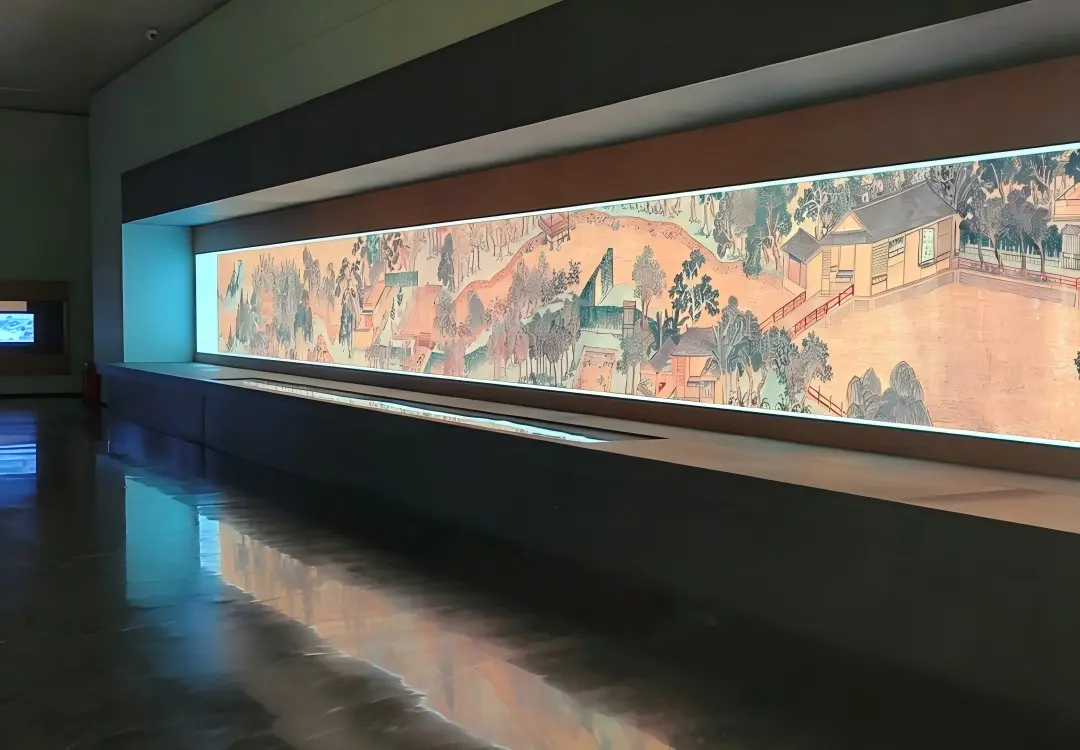
Most museum directors I sit with start the conversation at aesthetics. Fair enough – an exhibition display case has to look the part. But walk past the renderings and a vitrine is really an environmental isolation chamber bolted to a security barrier, and the engineering tolerances decide whether an artifact survives the loan or comes back to the lending institution chemically altered. This article walks through how we specify a museum exhibition display case when the brief calls for both immersive storytelling and conservation-grade performance.
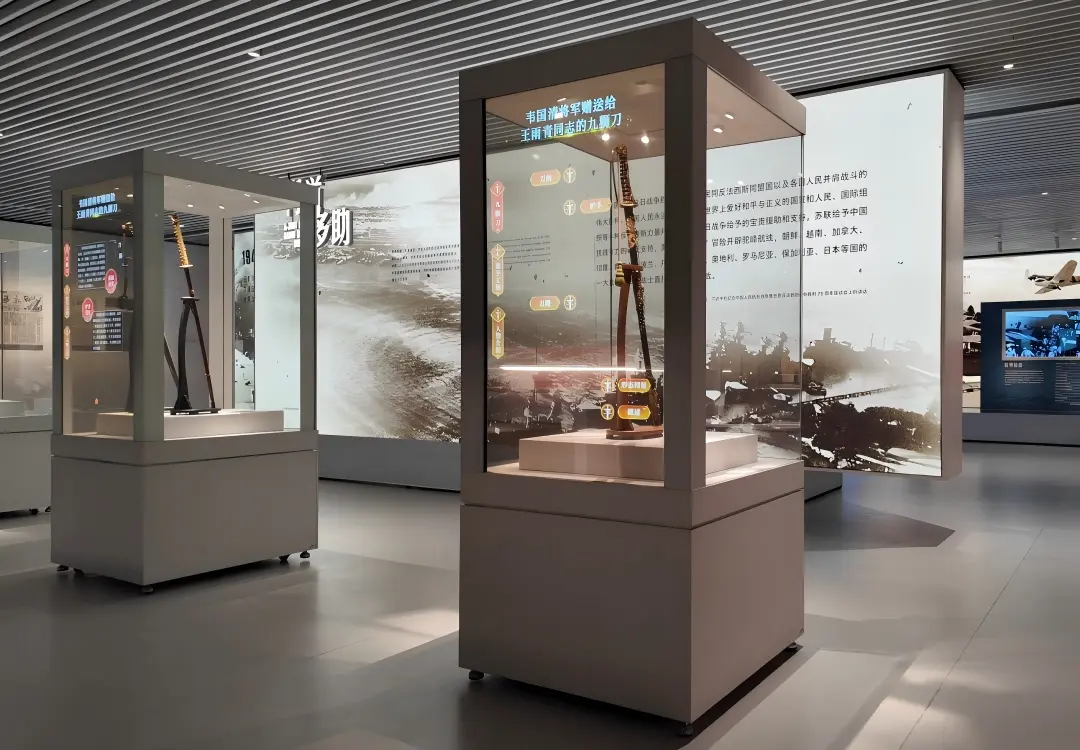
Why Do Museum Exhibition Display Case Failures Start at the Frame, Not the Glass?
I’ll be blunt: I have refused to quote wall-mounted and freestanding vitrines built on generic extruded aluminum without structural steel corner reinforcements. Large-format glass carries a continuous static load, and without precision-mitered profiles and butt-joint welding at the corners, joints gap within 18-24 months. Once the joint opens, the gasket loses compression and your Air Exchange Rate climbs – quietly, invisibly, and expensively.
Thermal stress compounds this. A gallery that runs 22 °C by day and 18 °C overnight cycles the frame every 24 hours. Cheap alloys fatigue. We specify 6063-T6 aluminum with internal steel reinforcing at every cantilever, and we re-check weld flatness at 0.2 mm tolerance after the cooling pass. If a supplier’s spec sheet doesn’t mention alloy temper, walk away – that omission tells you everything about how seriously they take exhibit design.
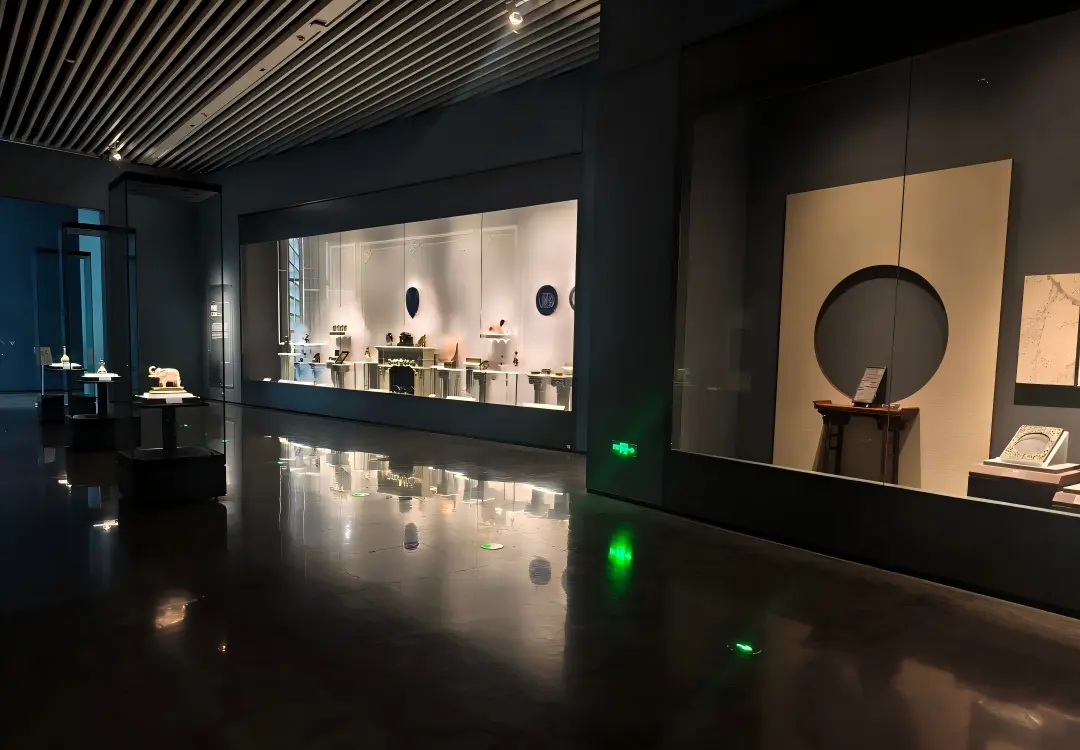
How Does Low-Iron Anti-Reflective Glass Transform the Museum Experience for Visitors?
Standard float glass has a green cast from iron content – subtle to the eye, fatal to a curator trying to render true pigment on a medieval manuscript. We mandate ultra-clear low-iron laminated glass, paired with dual-sided magnetron-sputtered anti-reflective coatings that drop reflectance from roughly 8% to under 1%. The result is the “glassless” look that lets museum visitors read physical artifacts rather than their own reflection.
For safety and burglar resistance, the laminate matters as much as the substrate. Multi-layer PVB or SGP (SentryGlas) interlayers hold the fracture matrix intact under impact, so a vandalism attempt doesn’t shower glass onto the object case. On fine art exhibitions we additionally specify interlayers that filter over 99% of UV below 380 nm. This is the kind of glass spec that earns a lending institution’s confidence – and the kind we build into every Museo vitrine that leaves our floor. Good exhibit labels and printed graphics stay legible; pigments don’t drift; the exhibition space reads true.
What Does It Take to Hold a Microclimate Inside a Museum Exhibit Vitrine?
For organic artifacts – lacquered wood, ancient textiles, parchment – relative humidity drift is the real adversary. The metric that matters is Air Exchange Rate (AER). A conservation-grade case targets AER below 0.1 per day, meaning under 10% of the internal volume exchanges with ambient air over 24 hours.
Getting there is a gasket problem as much as a glass problem. We seat continuous EPDM or neutral silicone profile gaskets into CNC-machined structural channels – no butt-joined foam tape, no aging rubber that compression-sets within a decade. Beneath the perforated display deck, the plinth houses either passive silica gel cassettes (conditioned to a target RH) or an active microclimate HVAC module that purges and re-humidifies without breaking the seal.
One failure mode curators underestimate is VOC off-gassing. Unstable paints, MDF, and adhesives release organic acids that tarnish silver and embrittle paper. Every internal material – pedestal, fabric, mount, interpretive text substrate – should pass Oddy testing. I have seen a beautiful vitrine ruined by an off-the-shelf graphic panel; the test costs a fraction of what the artifact damage costs. Trends shaping modern exhibit design push toward more interactive elements, but the chemistry has to come first.
Can an Integrated Projection Free-standing Case Bring an Exhibit’s Story to Life Without Breaking the Seal?
Modern exhibition design increasingly asks for digital interactivity inside the physical vitrine. The trick is keeping heat and electronics out of the artifact chamber. Our approach is to isolate optoelectronic components in a separate thermal compartment, with cable pass-throughs sealed by airtight gland fittings.
Lighting follows the same logic. Fiber-optic systems or ultra-low-UV LED track fixtures sit in a top light box behind micro-prismatic diffusers, so thermal radiation stays outside the display volume while beam-shaping stays precise. For exhibits that need dynamic narrative overlays – 3D renderings, contextual diagrams, augmented-reality annotations – an علبة إسقاط مدمجة قائمة بذاتها projects through high-transmission glass onto or around the artifact. Curators get the engaging content; the microclimate stays sealed.
For projects where the brief calls for layered storytelling on top of a sealed object case, we typically specify an علبة إسقاط مدمجة قائمة بذاتها – it lets the design team overlay interpretive content, audio guides, and self-guided kiosk interactions without adding a single heat source inside the chamber. That is how you turn a simple object into a memorable experience without compromising the conservation mission.
How Should Exhibit Design Handle Security, Accessibility, and Design Development from Concept to Completion?
A display case that needs four technicians and a socket set to open is a maintenance bottleneck. We specify pantographic hinges, gas struts, or electro-mechanical opening on freestanding vitrines so a single curator can cycle a large door safely. Locks are concealed Abloy cylinders behind steel access panels, paired with dual-sensor intrusion alarms – vibration plus magnetic contact.
Accessibility isn’t optional. Glass sightlines, pedestal heights, and angled graphic panels follow ADA guidance so wheelchair users and children get the same view as standing adults. Accessibility and inclusivity aren’t bolt-ons; they shape the design process from the first sketch. Modular internal mounting tracks let the design team reconfigure object supports and signage between exhibitions without touching the perimeter seal.
Internally, the workflow runs CAD modeling, finite element stress analysis on cantilevers, and a physical mock-up before any production cut. Every vitrine leaves the floor after pressure-decay leak testing, optical inspection, and mechanical cyclic testing on motorized components. That is the design development discipline Museo brings when our engineering team consults directly with exhibition architects, general contractors, and curators – from initial drawing review through final on-site installation. For cultural institutions serious about their educational mission, that continuity from concept to completion is what turns a vitrine into an engaging museum experience that holds up across many museum visits.
FAQs
How is the Air Exchange Rate (AER) in a museum exhibition display case measured and verified?
We verify AER on the factory floor using tracer-gas decay testing (CO2 or helium) or pressure-decay testing. A conservation-grade vitrine typically achieves AER of 0.1/day or lower – under 10% volume exchange with ambient air over 24 hours.
What glass specification prevents UV degradation in fine art exhibitions?
Ultra-clear low-iron laminated glass with specialized PVB or SGP interlayers blocking over 99% of UV below 380 nm, paired with UV-free LED lighting. This combination preserves pigments and organic materials across long loan periods.
Can interactive touchscreen elements or projection be integrated without compromising the vitrine seal?
Yes – digital components are housed in isolated thermal compartments outside the artifact chamber. Cable pass-throughs use airtight gland seals, and projection reflects through high-transmission glass so electronics never heat the microclimate.
What is the difference between active and passive microclimate control in museum vitrines?
Passive systems use conditioned silica gel or saturated salt solutions in a drawer beneath the display deck to buffer RH. Active systems use automated electronic HVAC or dehumidifier units that continuously monitor and regulate interior RH to an exact setpoint.
How do modular pedestals and structural design affect long-term gallery maintenance?
Modular pedestals and standardized internal mounting tracks let curators reconfigure display heights, background panels, and object supports for new exhibitions without replacing the main structural vitrine or breaking its perimeter environmental seal.