


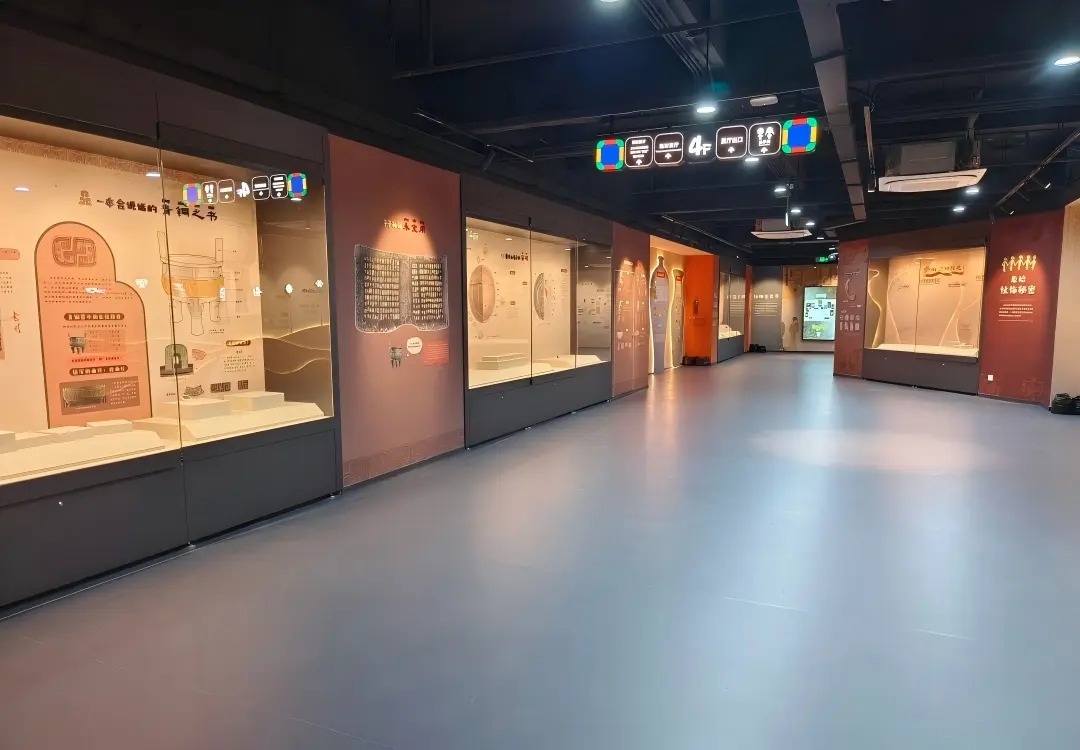
We get called in, usually after the damage is done. A registrar opens a brand-new vitrine and finds a bronze coin streaked with green powder – the brochantite of bronze disease. Or a textile conservator notices the silk on a Tudor gauntlet has gone brittle inside what was sold as a “museum-quality” enclosure. In nearly every case, the root cause is the same: the cabinet was specified by an architect who treated it as furniture, not as a sealed, inert microclimate vessel.
A true museum gallery display case is engineering, not joinery. Let me walk through where commercial cabinets fail and what our workshop does differently.
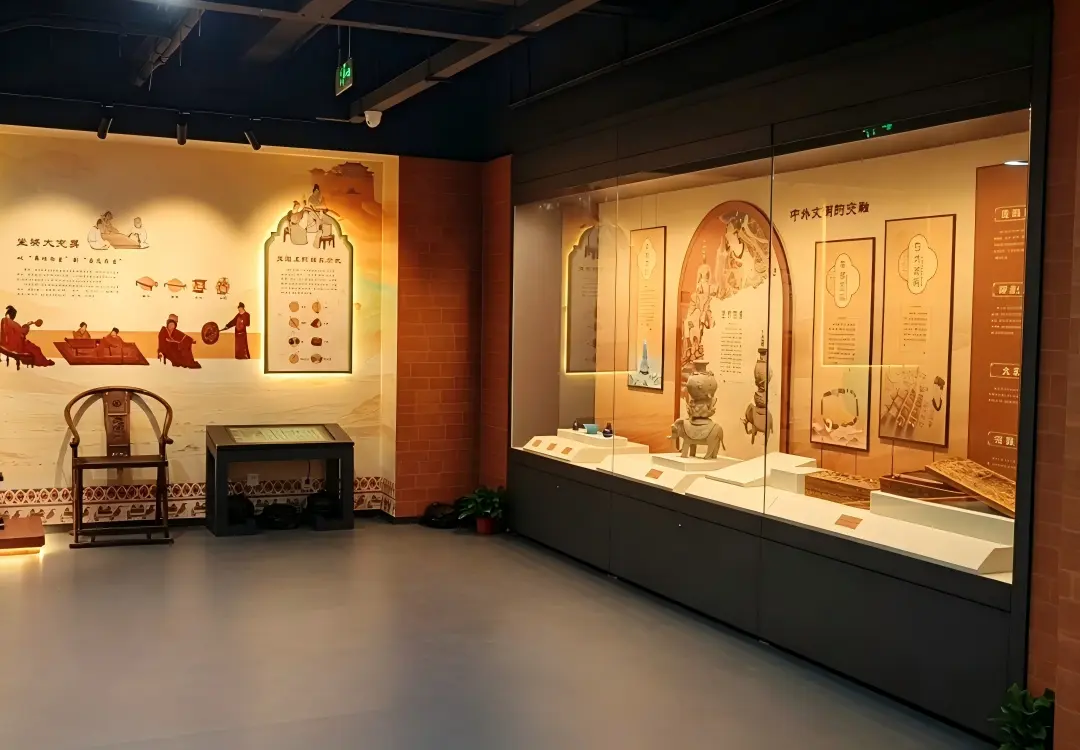
Why Do Commercial Display Cabinets Fail the Oddy Test While Museum-Quality Cases Pass?
Off-gassing. That is the silent killer. Standard MDF, construction adhesives, and off-the-shelf latex paints bleed Volatile Organic Compounds – formaldehyde, acetic acid, aldehydes – into the sealed envelope. Inside a trapped volume with no air exchange, those VOCs concentrate until they induce bronze disease, lead carbonate formation, and irreversible textile yellowing.
Every substrate entering our exhibit envelope goes through Oddy testing: copper, lead, and silver coupons are sealed in vials with the candidate material at 60°C for 28 days. Only materials returning zero surface alteration are cleared for internal use. Structural frames are extruded aluminum alloys with zero-VOC powder coatings or anodized finishes – never raw steel, which rusts in the buffer zone.
For recessed installations against masonry walls, we isolate artifacts from wall-borne moisture using fully inert steel back-plates and zero-emission structural adhesives. The Minimalist Recessed Wall-Mounted Tall Cabinet is one such configuration – engineered for galleries that need flush architectural integration without sacrificing the seal. After butt-joint welding of the frame, we re-check weld flatness to 0.2 mm planarity before any gasket goes in; a weld that looks flat to the eye can still leak at the corners under micro-compression.

How Does Air Exchange Rate Govern Artifact Preservation in Museum Display Case Design?
The single metric that separates a conservation-grade enclosure from a shop fitting is the Air Exchange Rate – the fractional volume of case air exchanged with the gallery over 24 hours. Commercial vitrines typically register 1.0 to 3.0 AER per day. At that leakage, your silica gel buffer is fighting a losing battle against every RH swing the HVAC system throws at it.
Museum-grade spec demands AER below 0.1 per day. To hit that, we run continuous EPDM or silicone extruded compression gaskets, mechanical micro-compression locks, and structural frame tolerances milled to +/-0.5 mm. A properly sealed museum gallery display case prevents the sudden RH spikes that warp wooden carvings, cockle parchment, and craze oil paintings.
Inside that sealed volume, passive microclimate regulation happens through sub-floor or side-wall cassettes loaded with pre-conditioned Art-Sorb or silica gel. The cassettes use micro-perforated vents so curators can recondition the buffer without breaching the display chamber or exposing artifacts to security risk. I will be blunt: if your supplier quotes a single AER number without a documented gasket-compression spec and tolerance trace, that number is aspirational, not measured.
What Glass Specification Delivers an Unobstructed View Without Sacrificing Conservation?
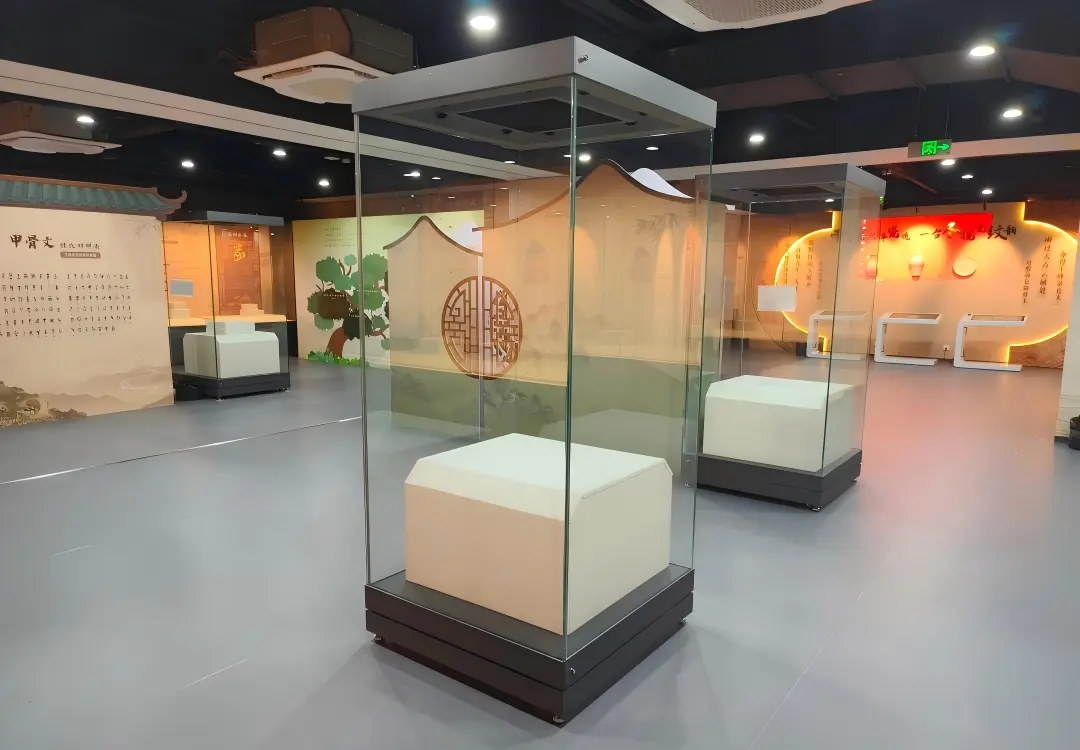
Glass is where most projects compromise – and where I refuse to. Standard float glass carries an iron tint that greens artifact color and drops visible light transmission. We specify low-iron float (iron content below 0.015%) with multi-layer magnetron-sputtered anti-reflective coatings. Visible light transmission lands above 98%, residual reflectance below 1%. The glazing effectively disappears to the visitor.
For security and UV filtration, the glass is laminated (4.4.2 or 5.5.2) using PVB or EVA interlayers with UV blockers. That interlayer eliminates over 99% of ultraviolet below 400 nm, arresting the photolytic degradation that fades pigments and embrittles organic fibers. In a flush-fit Minimalist Recessed Wall-Mounted Tall Cabinet, the laminated glazing also delivers EN 356 anti-burglary resistance, delaying forced entry without breaking the minimalist aesthetic. We verify transmission and reflectance against EN 410 on every glazing batch – a coating that tests fine in the lab can drift if the sputtering chamber was contaminated that week.
How Do Integrated Lighting Systems Prevent Photolytic Damage in Gallery Displays?
Thermal radiation is a continuous threat that curators underestimate. Halogen and incandescent sources pump infrared into the enclosure, raising internal temperature and desiccating organic materials.
We externalize the heat. LED engines delivering CRI/Ra of 98 or higher – with R9 above 90 to render deep reds in period textiles – are housed in separate technical compartments beneath the plinth or in the light attic. Heat sinks and drivers sit outside the artifact chamber, so there is zero ambient heat transfer. Motorized zoom spotlights and DALI or 0-10V dimming let curators hold lux at conservation thresholds: 50 lux for light-sensitive paper and dyed textiles, up to 200 lux for ceramics and metals. The lux ceiling is ICOM-aligned – above it, cumulative exposure causes measurable fading. We sensor-verify at the object plane, not at the fixture.
Why Are Modular Display Systems Essential for Curatorial Flexibility?
Exhibition schedules rotate. A rigid gallery layout chokes curatorial storytelling and slows installation turnaround. Modular display systems solve this with interchangeable structural frames, adjustable cantilever shelving, and multi-zone configurations on a unified footprint.
At Museo, our engineering team designs modular systems that accept freestanding, wall-hung, and table-top configurations behind conservation-grade textile panels. Hidden vertical slot tracks let museum staff reconfigure interior geometry without breaking the seal envelope. Curators can re-zone a gallery for a temporary exhibition while every enclosure retains its AER, structural integrity, and security rating. That is the point – adaptability that never compromises conservation.
What Should Exhibition Designers Specify Early to Avoid Costly Retrofit?
Specification failures happen in the first 10% of the project, not the last. Exhibition designers who loop us in during gallery planning – not after the architectural package is locked – avoid the retrofits that blow budgets and, worse, expose artifacts during the fix. Early engagement lets us co-engineer the structural footprint, glass selection, lighting thermal isolation, and microclimate strategy as one integrated system – not a stack of bolted-on compromises. Working with Museo from the schematic phase is how cultural institutions get a museum display case that performs on day one and on day 1,000.
FAQs
What Air Exchange Rate is acceptable for a conservation-grade display case?
For high-sensitivity artifacts – manuscripts, textiles, ancient metals – target AER of 0.1 per day or lower (ACH <= 0.1/day). Standard displays run 0.2 to 0.5; unsealed commercial cabinets exceed 1.0, failing to buffer RH swings and pollutants.
How does Oddy testing shape internal material selection for exhibit cases?
Oddy testing exposes metallic coupons to candidate substrates for 28 days at elevated temperature. Only materials rated “Permanent” (Pass) are selected for internal linings, adhesives, and gaskets – preventing VOC-induced tarnishing and fiber degradation.
Why prefer low-iron anti-reflective laminated safety glass over standard tempered glass?
Low-iron glass removes the green tint for color-accurate viewing. Lamination with a UV-filtering PVB or EVA interlayer blocks >99% of UV and holds the pane intact on impact, giving EN 356 burglary resistance. Tempered glass offers no UV filtration and shatters into granular fragments, leaving artifacts exposed.
What is the difference between passive and active climate control in museum display cabinets?
Passive control uses pre-conditioned silica gel or Art-Sorb cassettes inside an airtight case to buffer minor RH shifts. Active control uses motorized microclimate compressor units or thermoelectric dehumidifiers linked to digital sensors, continuously pumping conditioned air into high-volume or highly sensitive enclosures.
How do modular zone display cases handle security without compromising aesthetics?
Concealed perimeter dual-pin micro-compression locks, operated by high-security keys or embedded RFID actuators, sit inside the frame extrusion – multi-point security with no visible padlocks or bulky keyholes.