
Project (Completion): July 1, 2024
Project Start: March 26, 2024
Size (M²): 1500 M²
A Dutch national museum prepares for the “17th-Century Golden Age Relics Special Exhibition,” with 3 core showcase requirements: frameless all-glass structure (fitting the “minimalist viewing” theme), high-sealing moisture-proof design (≤±3% internal humidity fluctuation, adapting to maritime climate), and anti-glare glass (avoiding glare on oil paintings/parchments). It first compared 3 European local firms but dropped cooperation over insufficient frameless load-bearing technology and poor moisture-proof adaptability. Later, via an industry platform, it found museoshowcase—its cases (e.g., Louvre Impressionist showcases), technical documents, and specs (e.g., 0.12mm anti-glare coating) met the needs, making it a key partner.
Dutch Museum & museoshowcase Initial Communication
The museum’s project team promptly contacted museoshowcase via the website’s contact form, sending a detailed inquiry email. The email included: basic info about its collection (17th-century Dutch Golden Age oil paintings, silver tableware, and parchment manuscripts), the special exhibition’s scale (50+ artifacts, 800㎡ exhibition area), and three core showcase demands—constant temperature/humidity control (18±2℃, 55%±3% RH) for silver anti-oxidation, anti-pry locks + 24h motion sensors for high-value oil paintings, and anti-glare glass with 0.12mm coating to highlight manuscript text details.
Upon receiving the email, museoshowcase responded within 1.5 hours, assigning a senior account manager with 8+ years of museum project experience to connect the museum. In the online meeting, the manager:
- Clarified details like “silverware showcases need additional anti-tarnish inert gas modules”;
- Presented technical strengths (e.g., dual-seal moisture-proof patents, 5-axis CNC cutting precision);
- Shared case studies (e.g., Amsterdam Rijksmuseum’s silverware showcase customization).
The team also showed live videos of the production workshop—craftsmen polishing ultra-white glass edges, and the finished product area: oil painting-specific frameless showcases (with CRI≥97 intelligent lighting) and silverware constant-temperature cabinets. After the meeting, the museum stated, “The targeted solutions for silverware anti-oxidation and manuscript anti-glare fully address our concerns, and we’re confident in moving to the next design phase.”
Design Concept
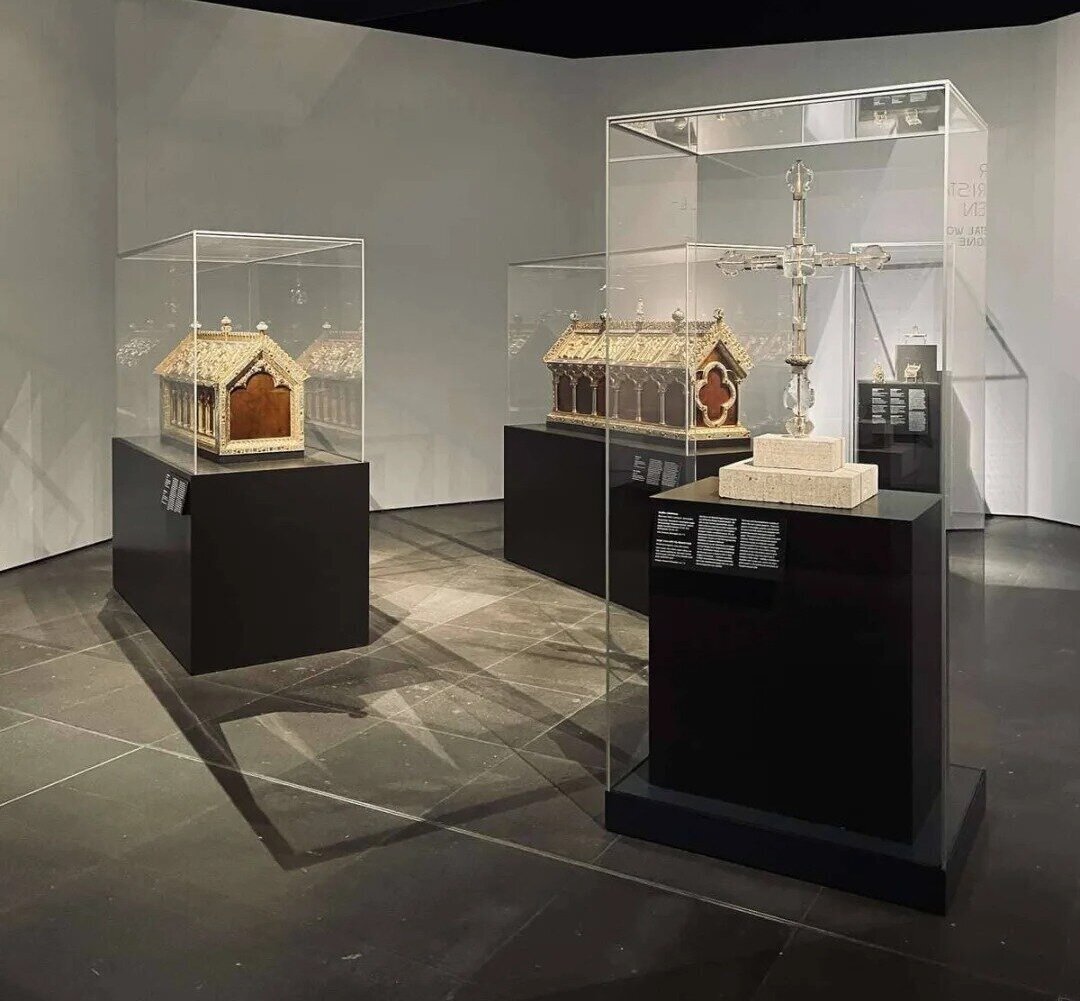
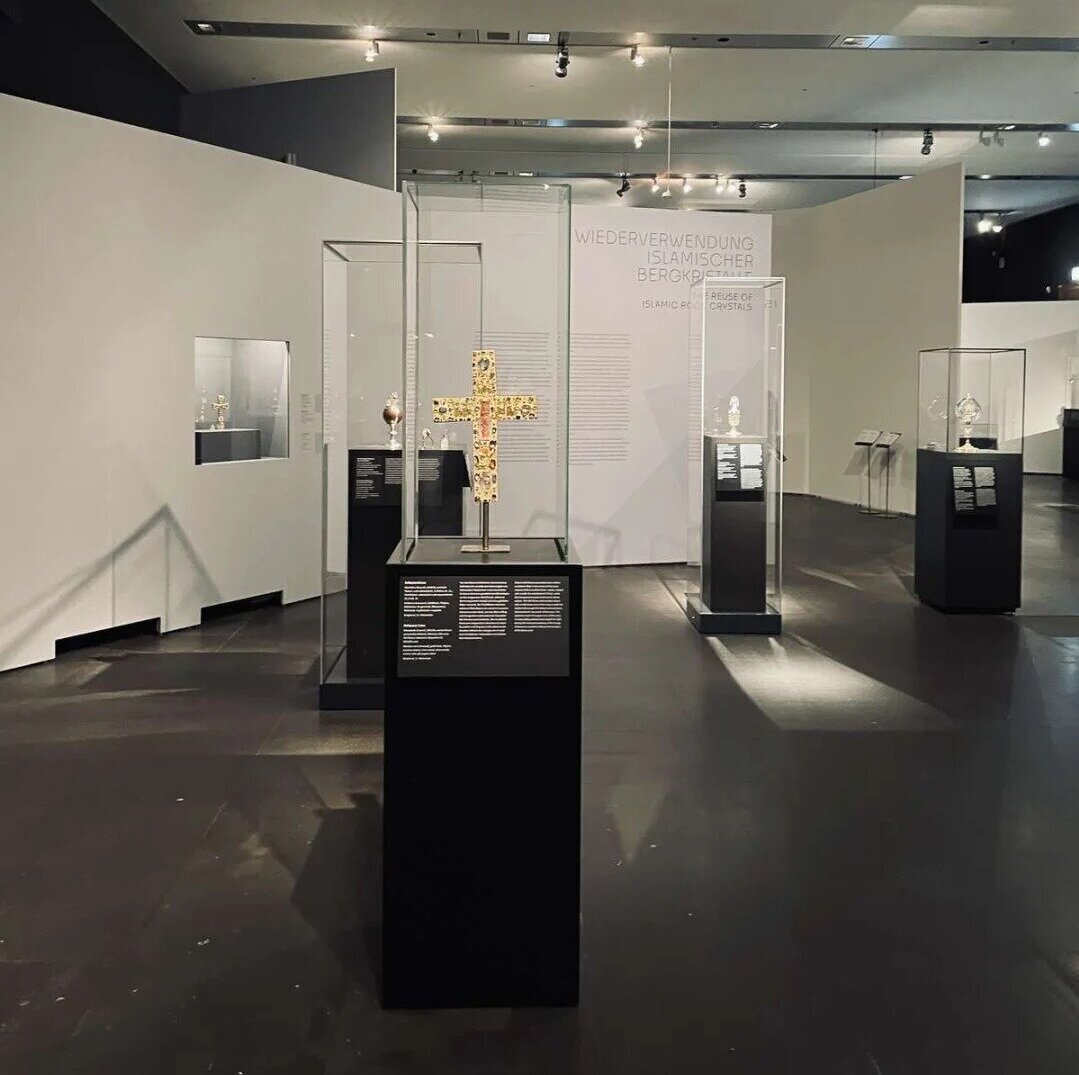
Adopting the “Minimalism & Focus” design philosophy, museoshowcase opted for a frameless all-glass structure and single-artifact display layout, stripping away redundant decorative elements to ensure visitors’ attention stays firmly on the 17th-century relics. The main body uses 8mm ultra-white tempered glass with 98.9% light transmittance and 0.12mm anti-glare coating—preserving the original hues of oil paintings while eliminating reflections that obscure parchment text.
The base is crafted from 304 stainless steel with a black matte electrostatic spray finish: its 5mm-thick solid structure bears up to 300kg (suitable for large silverware sets), while the surface undergoes 72-hour salt spray testing to resist moisture in the Dutch maritime climate, ensuring a 15+ year service life.
Function Customization
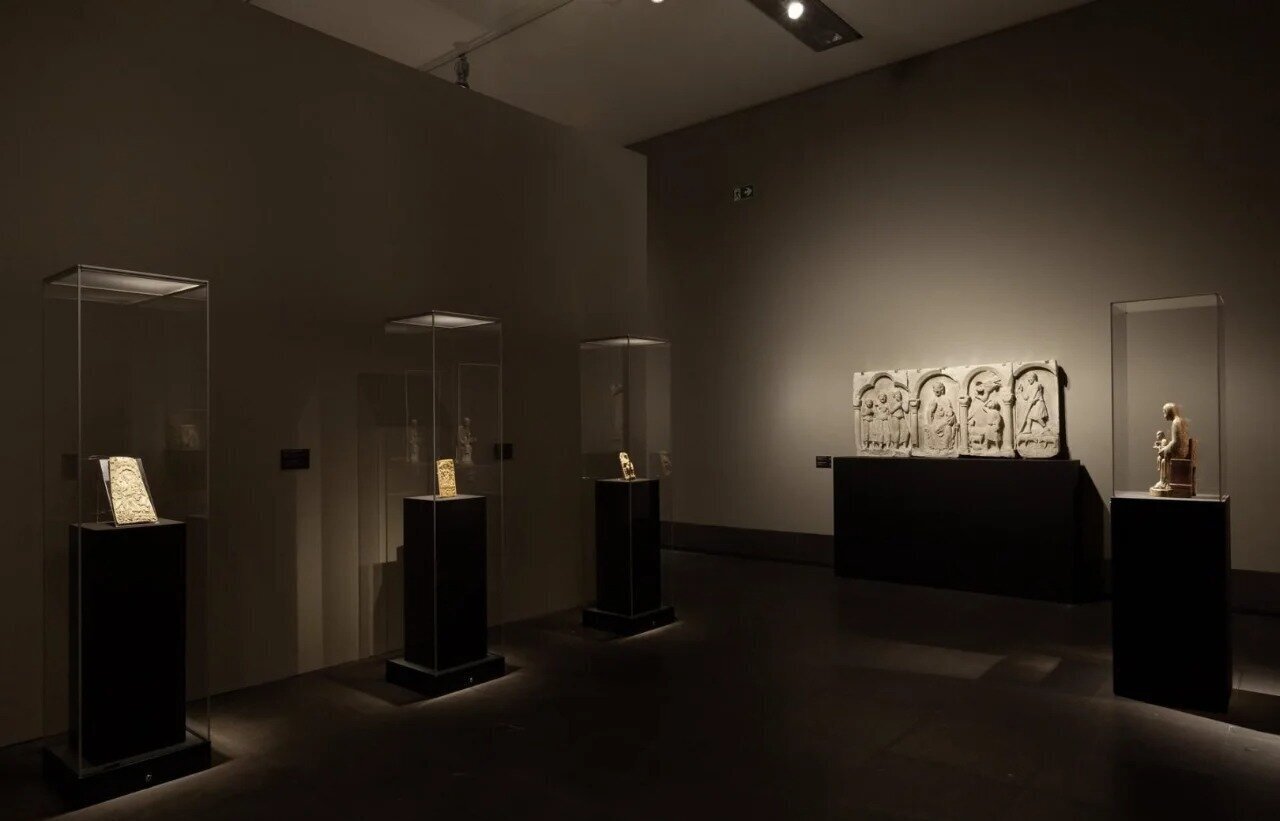
After production, museoshowcase shipped the showcases to the Netherlands via custom shockproof packaging (EPE foam + wooden crates), passing 3 international logistics inspections undamaged. The museum conducted a 3-day acceptance check: verifying the glass’s anti-glare effect under exhibition lighting, testing the constant humidity system (55%±2% RH), and simulating anti-theft alarms (triggering within 3 seconds of abnormal opening)—all indicators met or exceeded requirements.
Since the showcases’ deployment, visitor satisfaction with clear relic viewing in the special exhibition rose 40%. The curator stated, “These showcases highlight 17th-century silverware craftsmanship and oil painting details—setting a benchmark for future exhibitions.” Both parties have signed a 3-year long-term cooperation agreement covering annual maintenance and new exhibition showcase customization.
PREGUNTAS FRECUENTES
1. ¿Cómo trabajamos con usted? (Proceso de pedido)
Enviar una consulta → Discutir requisitos → Proporcionar cotización → Pagar depósito → Diseño conceptual → Trabajo de dibujo → Producción → Inspección de calidad → Embalaje → Pagar saldo → Envío.
2. ¿Puede hacernos un presupuesto basado en nuestros dibujos?
Sí, podemos ofrecerle servicios de fabricación a medida y presupuestos según sus necesidades.
3. ¿Es usted una fábrica y dónde está ubicada?
Sí, somos una entidad de fábrica especializada en la fabricación de accesorios de exhibición de museo durante años. ¡Nuestra fábrica está en la ciudad de Guangzhou, provincia de Guangdong-usted es agradable visitarnos para la inspección!
4. ¿Podemos hacer una muestra para inspeccionar la calidad antes de hacer un pedido?
Se aceptan pedidos de muestras, pero los gastos de envío correrán a cargo del cliente.
5. ¿Cuál es el plazo de producción tras realizar un pedido?
Tras la confirmación del pedido, la producción suele completarse en 35 días laborables, aunque el plazo exacto depende de la cantidad del pedido.
6. ¿Cuáles son las condiciones de pago más seguras y el coeficiente de depósito?
Apoyamos métodos de pago seguros: T/T (transferencia telegráfica) y Alibaba International Station Trade Assurance. Se requiere un depósito de 50%, y el saldo debe ser pagado antes del envío.
7. ¿Podemos organizar una inspección de calidad antes del envío?
Por supuesto. Su personal de control de calidad o agencias externas son bienvenidos para la inspección in situ. Tenemos nuestro propio sistema de inspección de calidad antes del envasado para garantizar la calidad del producto; si no está disponible para los controles in situ, podemos proporcionar informes de inspección según sea necesario.