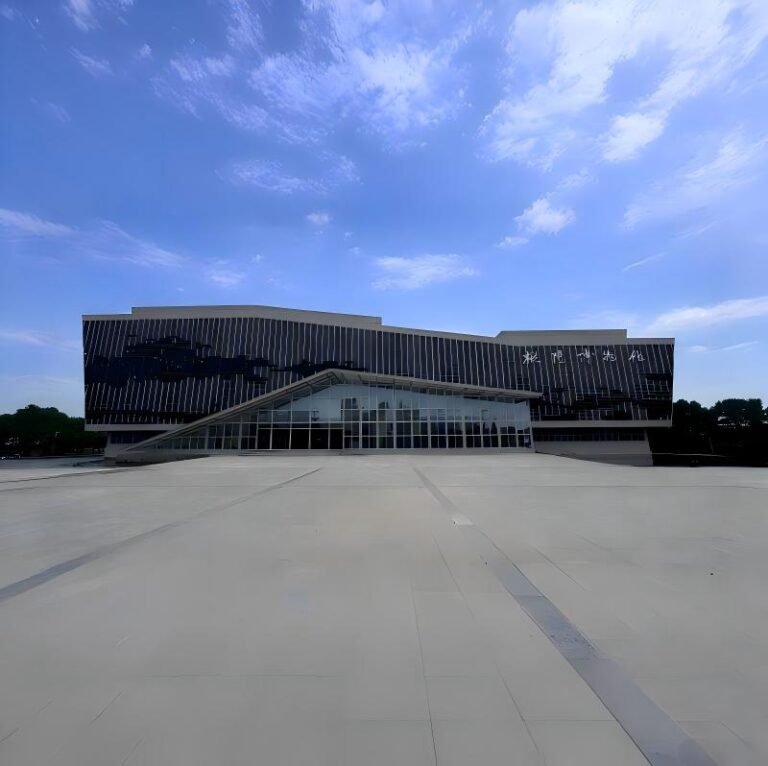
As the largest university museum in the UK, the Manchester Museum is committed to integrating its heritage with contemporary social issues such as decolonization and community inclusion. The museum centers on the theme of “building a world of cross-cultural understanding and sustainable development.
The Manchester Museum is part of the University of Manchester and has a history of over 130 years. This project aims to break away from the traditional “aloof” image of museums, transforming it into a more inclusive, imaginative, and humanistic public space.
Following the completion of our project, the museum has set out the following plans for the future: first, the museum will no longer engage in one‑way knowledge transmission but will instead emphasise co‑curation. Second, it will place environmental sustainability at its core, using exhibitions to inspire public action on climate change. Third, it will focus on decolonisation and Indigenous perspectives. Finally, it will enhance spatial inclusivity and provide all‑age experiences.
The Manchester Museum has a total exhibition area of approximately 8,640 square meters and spans 4 floors. The ground floor primarily houses the Welcome Hall, the Fossils and Dinosaurs Gallery, and a new large temporary exhibition gallery. The first floor features the South Asia Gallery, the Chinese Culture Gallery, the Egypt and Sudan Gallery, and the Archaeology Gallery, among others. The second floor contains the Africa Centre, research studios, and natural history‑related exhibition areas. The third floor mainly consists of office spaces and educational spaces for specific events. The museum’s total collection amounts to 4.5 million objects, spanning an immense range—from fossils hundreds of millions of years old and insect specimens to cultural artifacts from around the world.
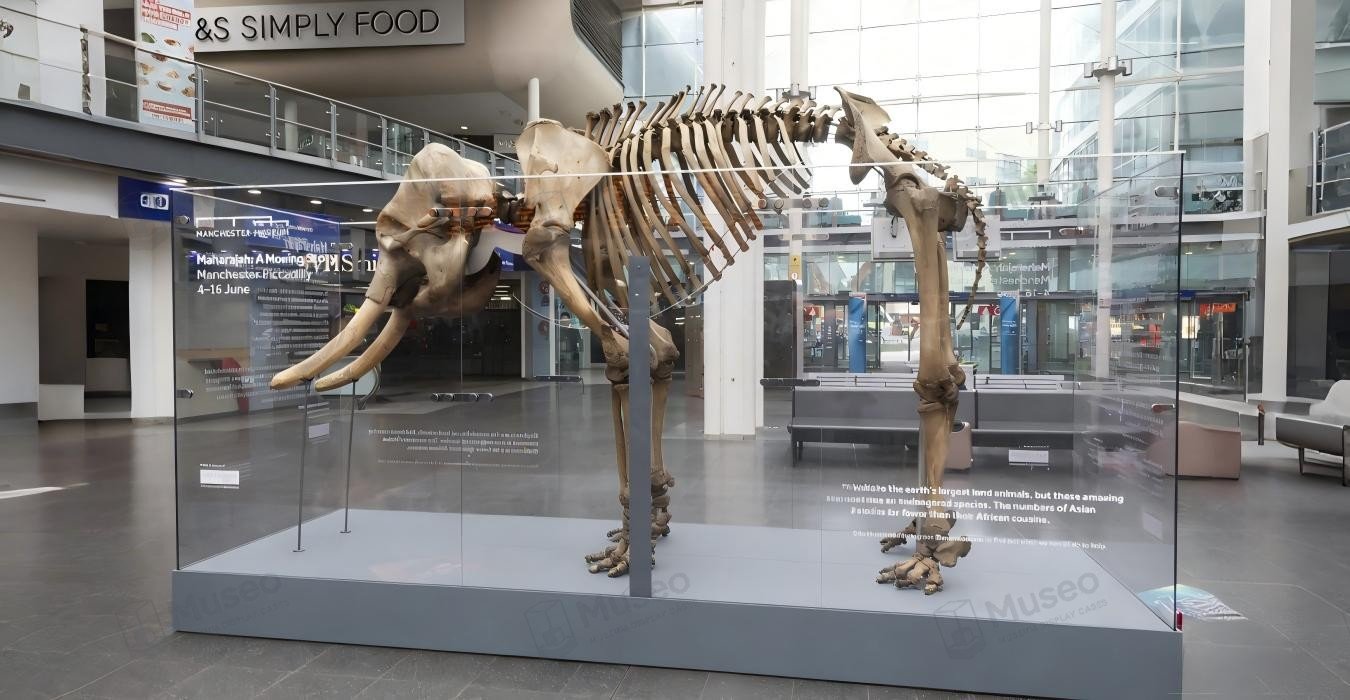
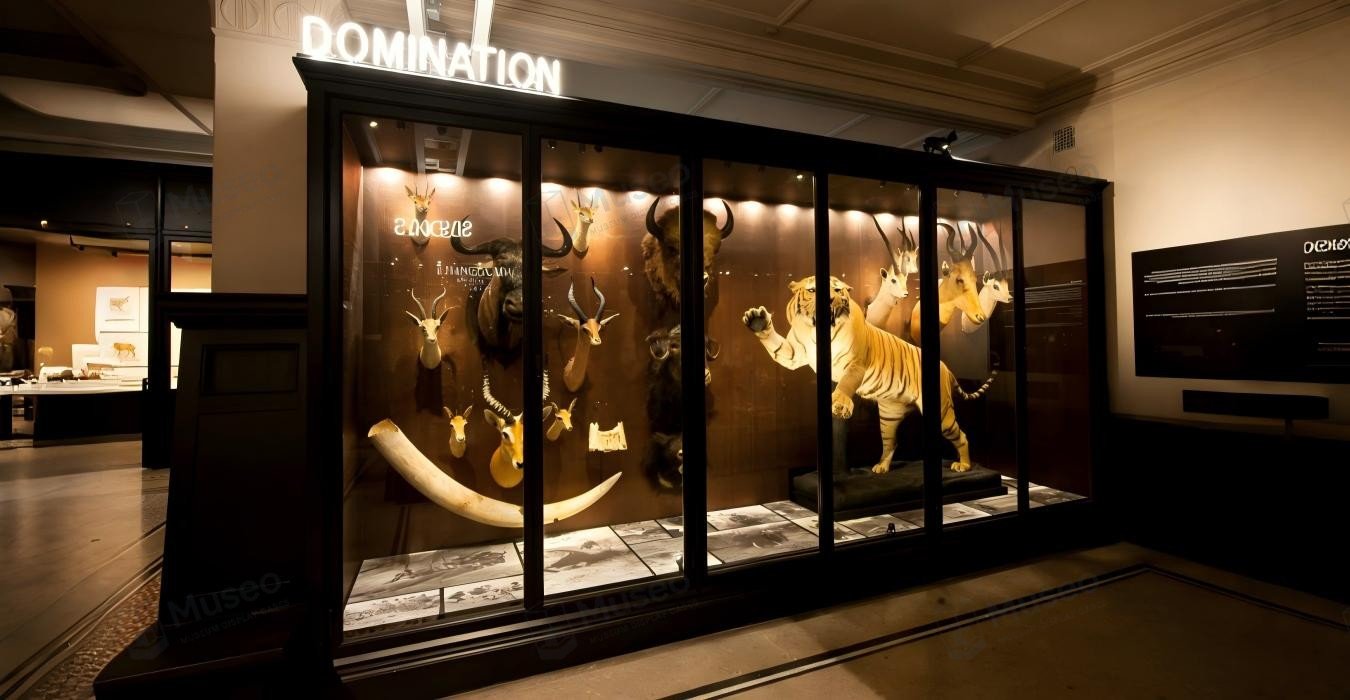
For the elephant skeleton, we have used a frameless panoramic glass museum display cabinet. The fully transparent glass allows for unobstructed 360-degree viewing, enabling visitors to clearly observe the skeletal details; the glass is explosion-proof and UV-resistant, protecting the exhibits from light damage while preventing accidental breakage from causing harm to visitors.
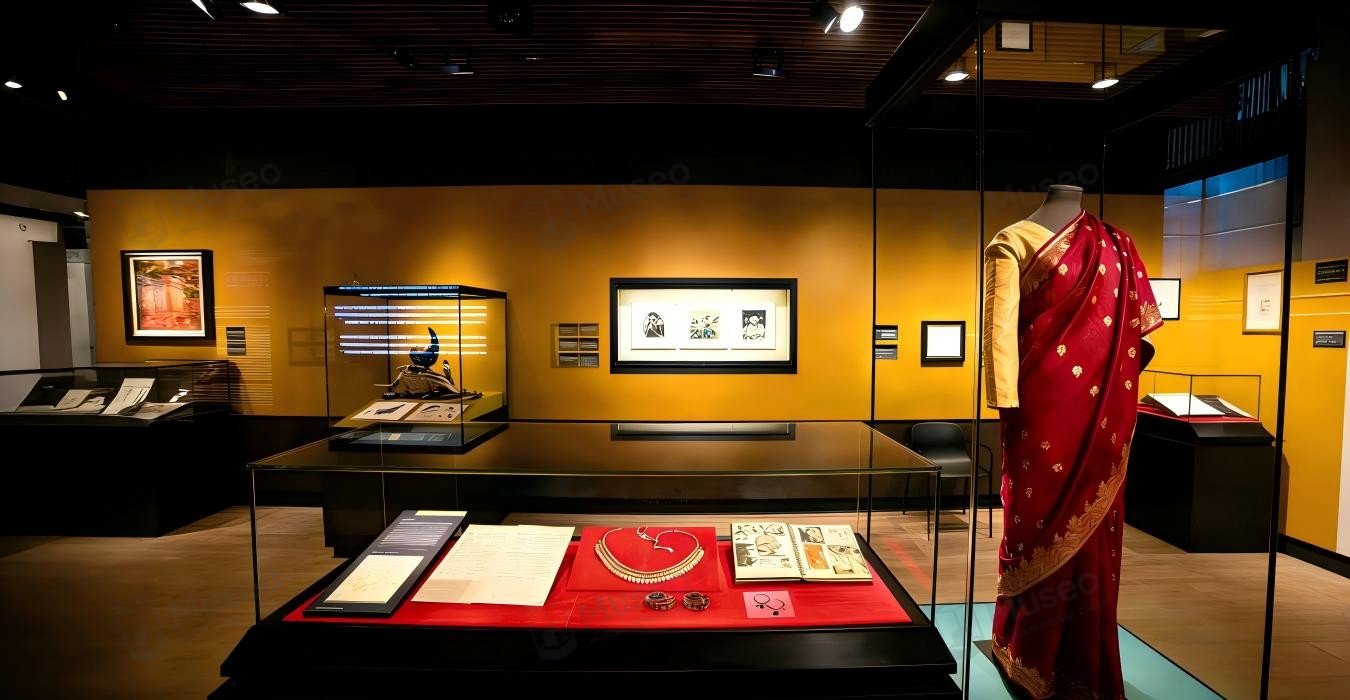
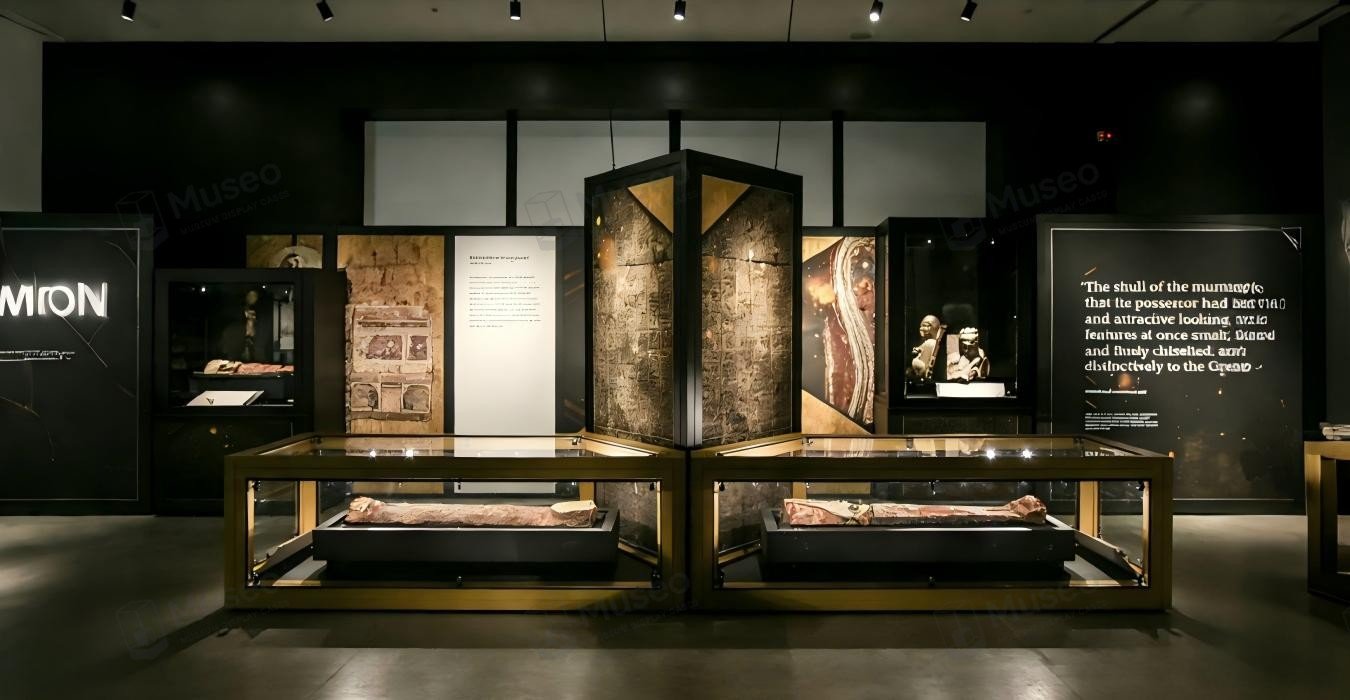
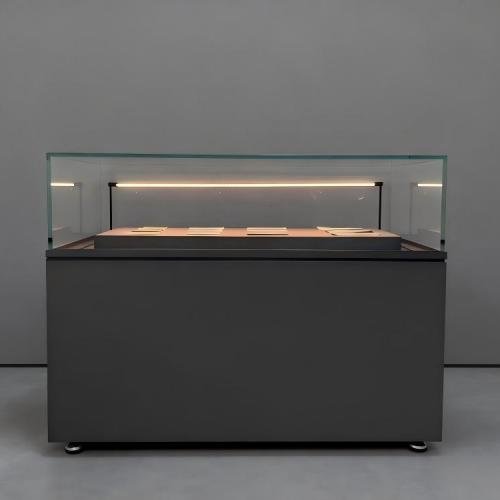
For the jewelry and handwritten notes/manuscripts, we have used tabletop museum display cabinet. With eye-level or overhead viewing, visitors can observe the details of the artifacts from all angles. Low-reflection glass reduces glare and enhances visual clarity.
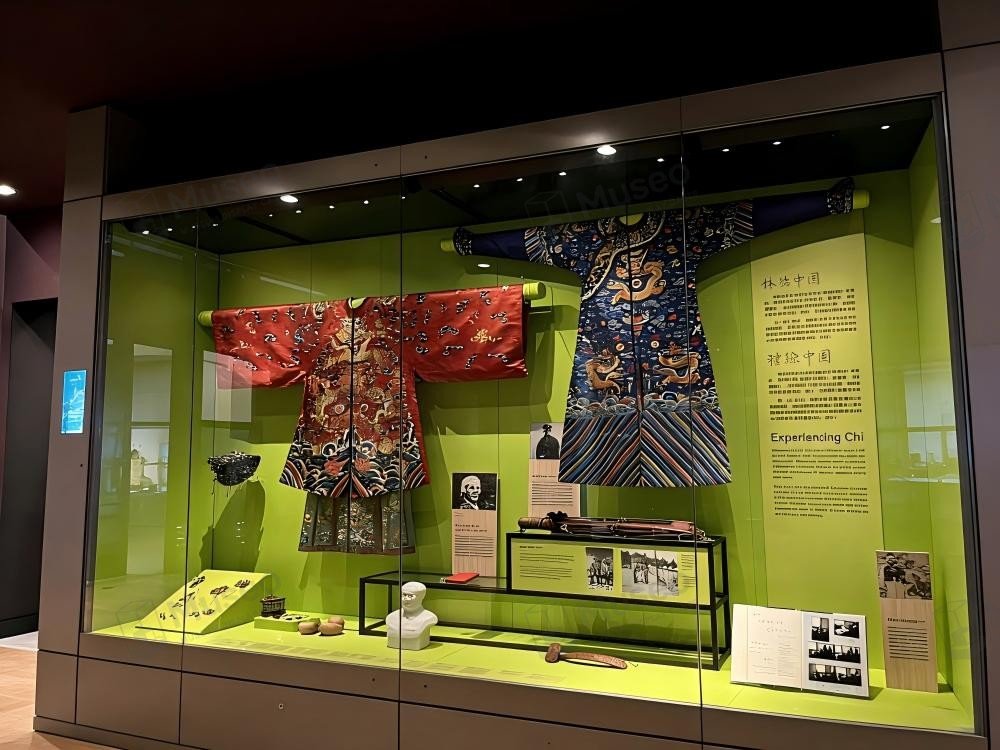
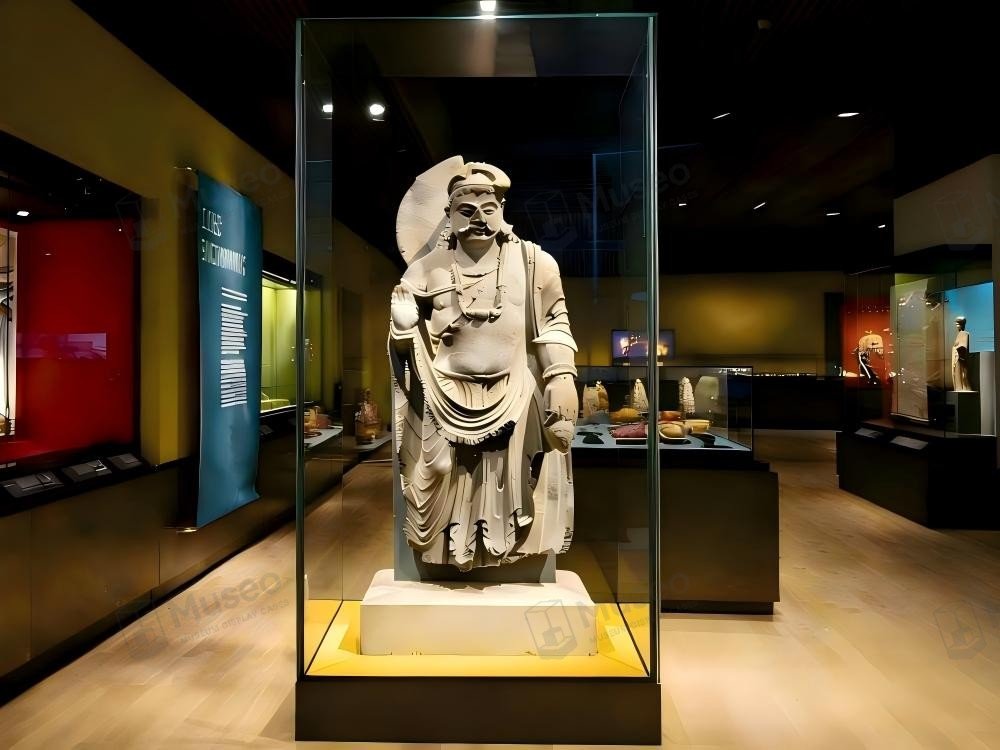
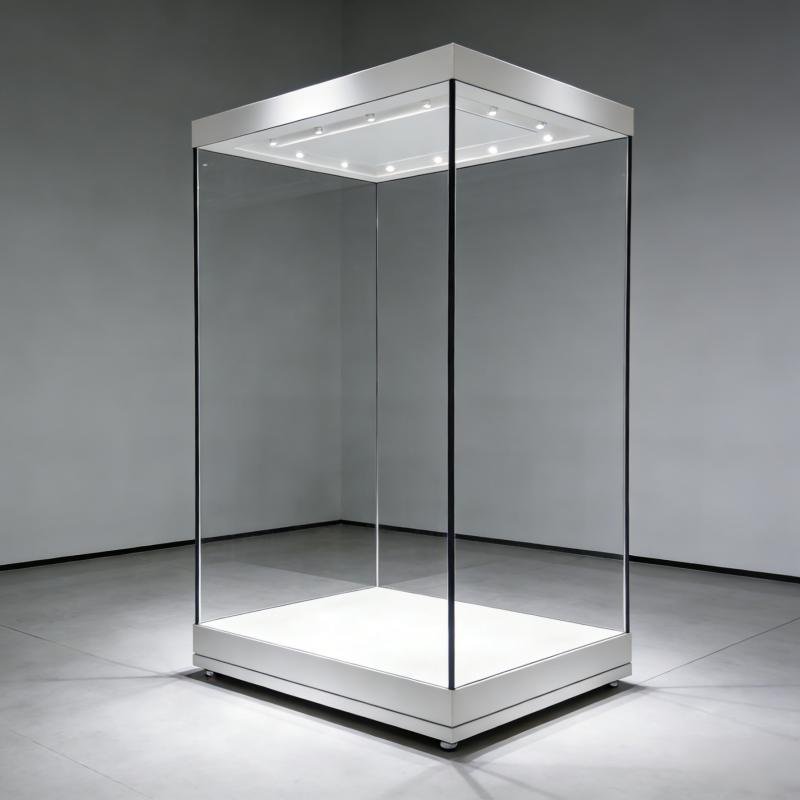
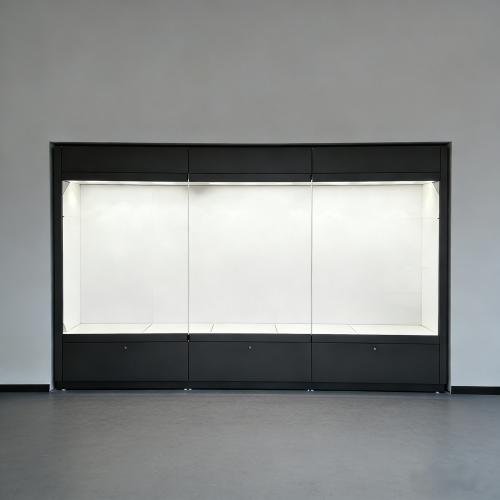
Type of display cases: To accommodate the display needs of different artifacts, we have equipped the museum with over 60 display cases across 10 different types, including frameless panoramic glass museum display cabinet, tabletop museum display cabinet, wall-to-wall museum display cabinet, and freestanding tall museum vitrine display case,ect.
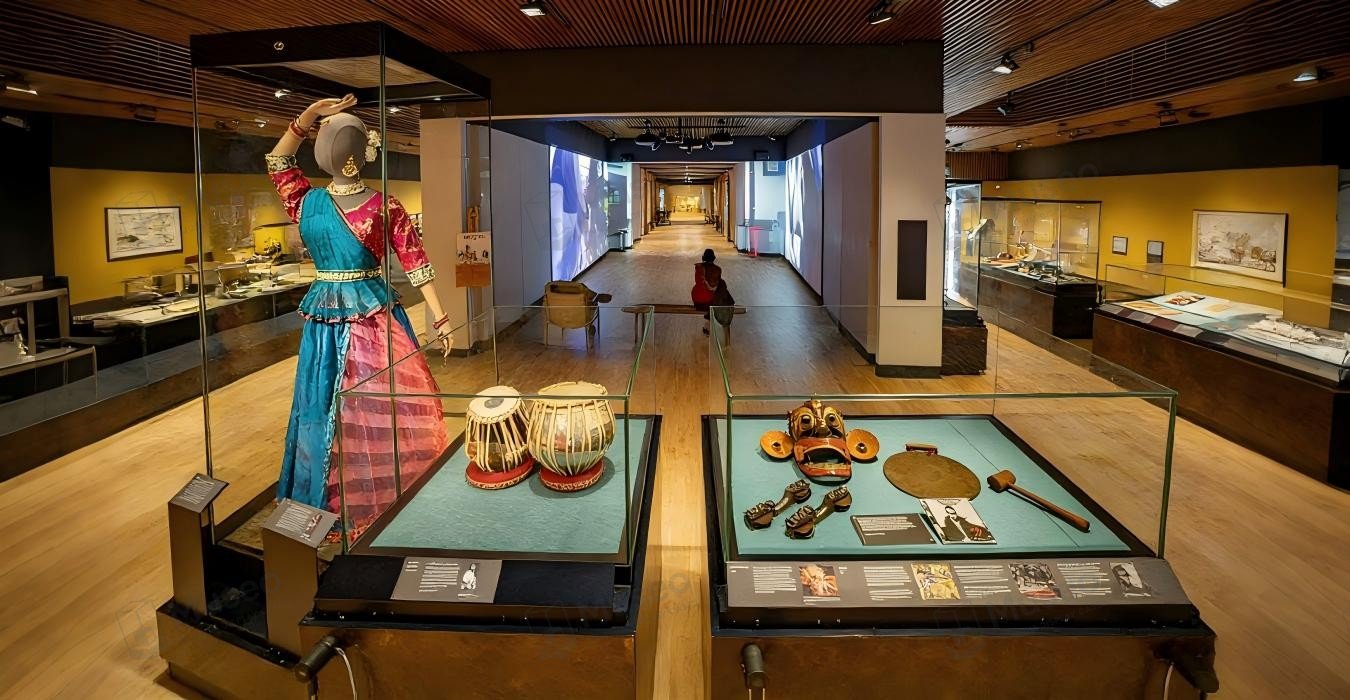
For traditional ethnic costumes, figures, and documents, we have used wall-to-wall museum vitrine display case. The linear, elongated design of these cases is well-suited for displaying multiple artifacts thematically or chronologically, forming a complete narrative chain. The large areas of low-reflection glass provide an expansive view, while the linear lighting at the top delivers precise illumination—highlighting the three-dimensionality of larger items such as costumes while also allowing visitors to examine details up close.
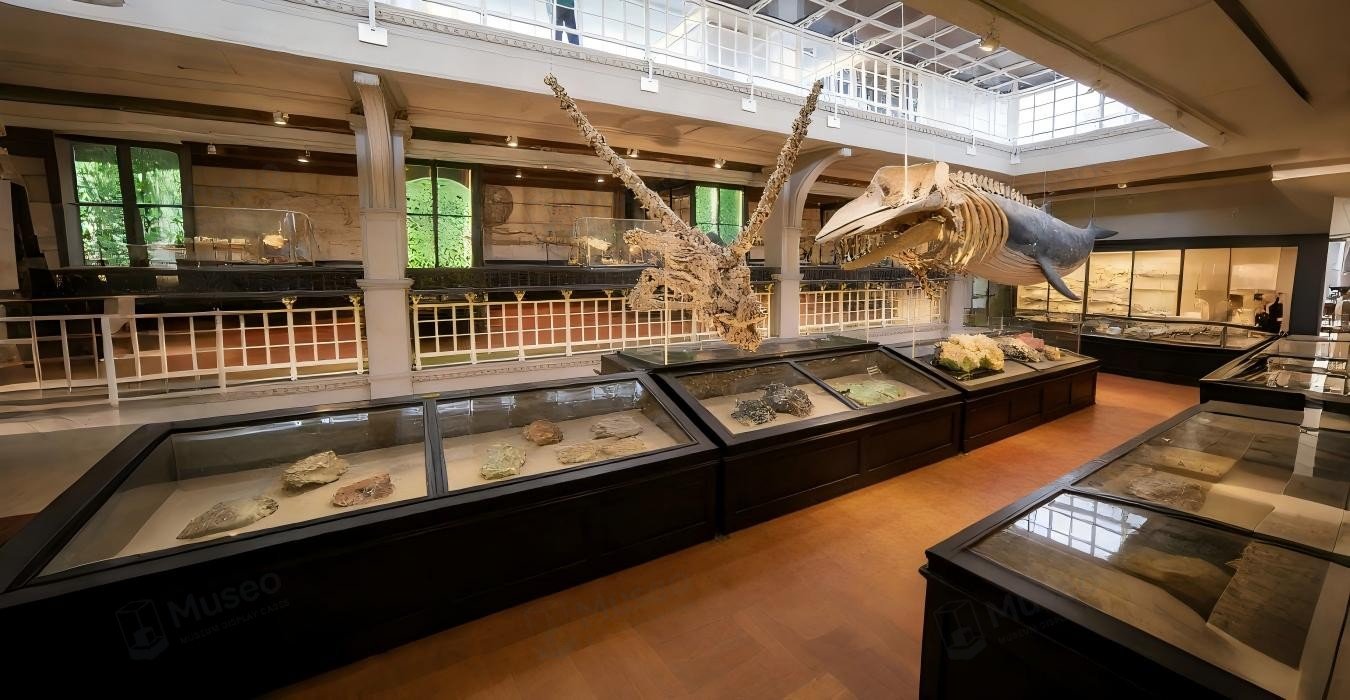
For stone sculptures, we have adopted freestanding tall museum vitrine display case, a core exhibition device specifically designed for large, three-dimensional artifacts. With 360-degree unobstructed glass surfaces, these cases are placed independently in the center of the exhibition hall or at key points along the visitor route, becoming visual focal points that enhance the ceremonial presence and historical gravitas of the objects. The elevated base lifts the artifacts, emphasizing their volume and imposing dignity. Low-reflection glass reduces glare and enhances visual clarity.
1. ¿Cómo trabajamos con usted? (Proceso de pedido)
Enviar una consulta → Discutir requisitos → Proporcionar cotización → Pagar depósito → Diseño conceptual → Trabajo de dibujo → Producción → Inspección de calidad → Embalaje → Pagar saldo → Envío.
2. ¿Puede hacernos un presupuesto basado en nuestros dibujos?
Sí, podemos ofrecerle servicios de fabricación a medida y presupuestos según sus necesidades.
3. ¿Es usted una fábrica y dónde está ubicada?
Sí, somos una entidad de fábrica especializada en la fabricación de accesorios de exhibición de museo durante años. ¡Nuestra fábrica está en la ciudad de Guangzhou, provincia de Guangdong-usted es agradable visitarnos para la inspección!
4. ¿Podemos hacer una muestra para inspeccionar la calidad antes de hacer un pedido?
Se aceptan pedidos de muestras, pero los gastos de envío correrán a cargo del cliente.
5. ¿Cuál es el plazo de producción tras realizar un pedido?
Tras la confirmación del pedido, la producción suele completarse en 35 días laborables, aunque el plazo exacto depende de la cantidad del pedido.
6. ¿Cuáles son las condiciones de pago más seguras y el coeficiente de depósito?
Apoyamos métodos de pago seguros: T/T (transferencia telegráfica) y Alibaba International Station Trade Assurance. Se requiere un depósito de 50%, y el saldo debe ser pagado antes del envío.
7. ¿Podemos organizar una inspección de calidad antes del envío?
Por supuesto. Su personal de control de calidad o agencias externas son bienvenidos para la inspección in situ. Tenemos nuestro propio sistema de inspección de calidad antes del envasado para garantizar la calidad del producto; si no está disponible para los controles in situ, podemos proporcionar informes de inspección según sea necesario.
PONERSE EN CONTACTO
PONERSE EN CONTACTO
Póngase en contacto con nosotros, obtenga la hoja de presupuesto y conozca más noticias e información
Nuestras vitrinas de museo personalizadas de alta calidad, centradas en la protección de reliquias, la exposición profesional y la adaptación de colecciones y espacios, ofrecen soportes seguros y duraderos para que el patrimonio cultural transmita claramente su valor histórico.
Entrega rápida
Nuestras vitrinas de museo personalizadas, optimizadas con módulos centrales prefabricados, diseño rápido y producción/instalación racionalizada, se entregan en 1 mes, manteniendo los estándares de protección de reliquias y exposición de grado museístico para necesidades urgentes.
Servicio posventa
Nuestro servicio posventa de vitrinas de museo crea un sistema que cubre las garantías rutinarias y ofrece un servicio posventa a cargo de equipos profesionales en un plazo de 7 a 24 horas tras la entrega.