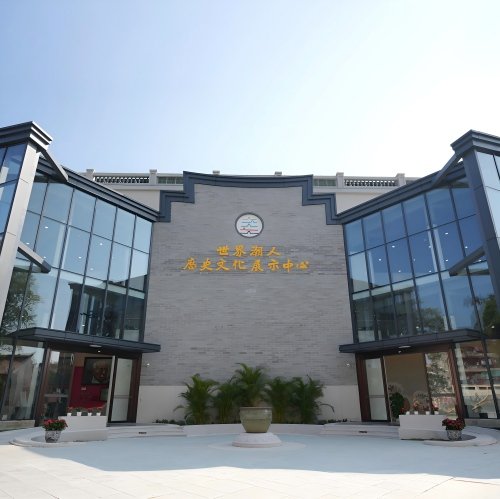
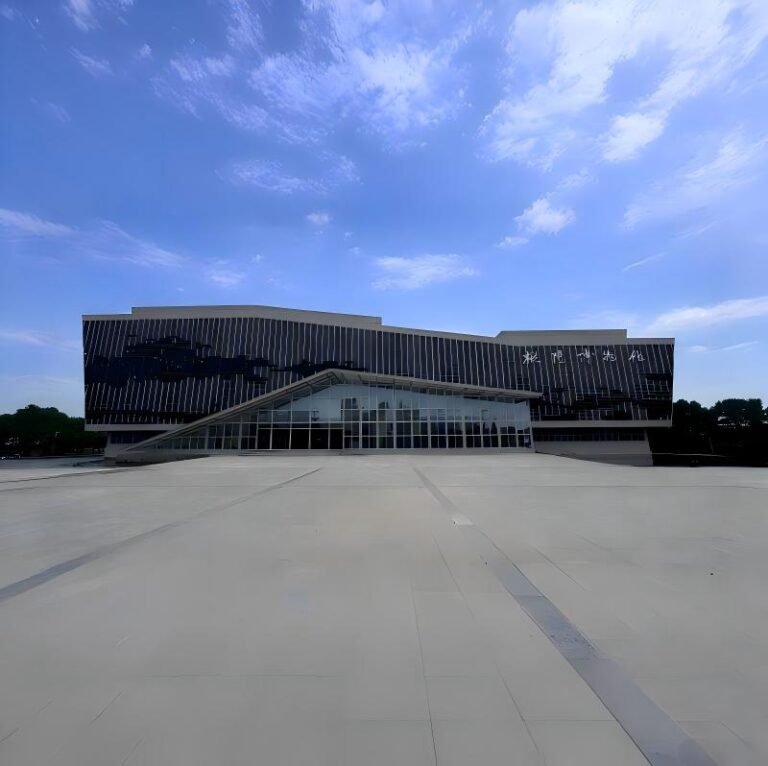
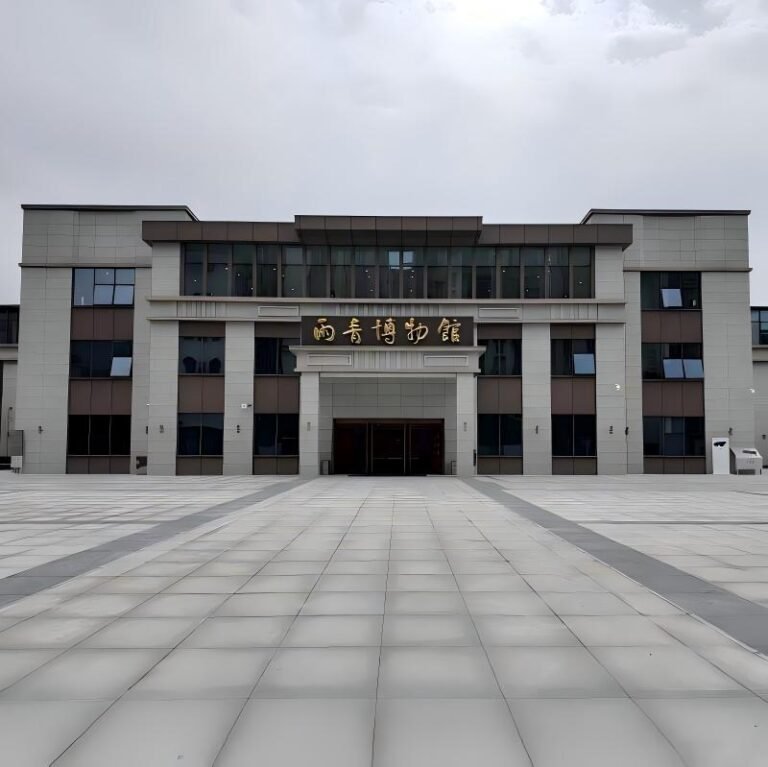
Jiangxi Museum
Nanchang City, China 2026.1
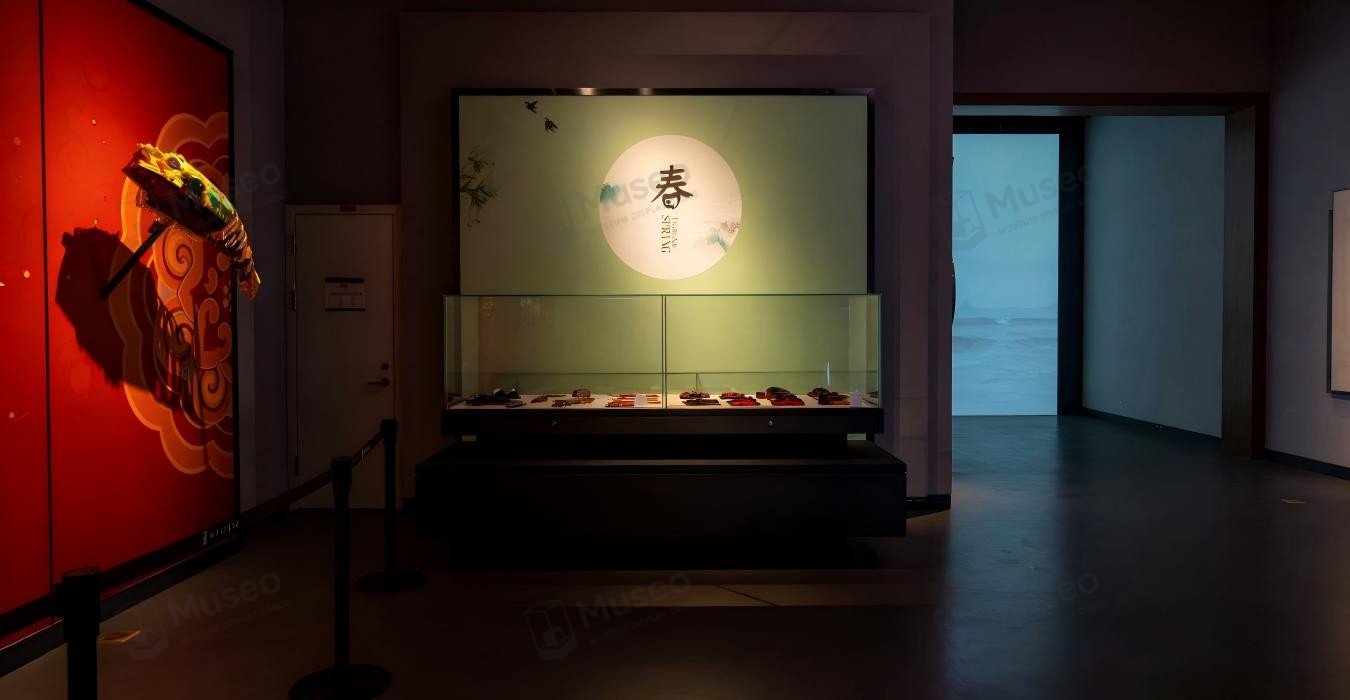
The museum adopts “Seeing the People, Seeing the Objects, Seeing the Life” as its core philosophy for intangible cultural heritage protection.The theme “A New Poetic Life for the Millennium-Old Crafts: The Intangible Cultural Heritage of Jiangxi” not only echoes Jiangxi’s reputation as a “land of stunning natural beauty and outstanding individuals” but also signifies that the ancient intangible cultural heritage of Jiangxi is being revitalized with new poetic life and vitality in the modern era.
On July 1, 1961, the museum officially opened to the public at the southern end of Bayi Square in Nanchang.Standing at a new historical starting point, its future planning is primarily centered on two core initiatives: “Digital Transformation” and the “Central-Branch Museum System”.
Digital Transformation refers to fundamentally changing exhibition methods through the construction of a “Historical and Cultural Digital Experience Space”.The Central-Branch Museum System means that Jiangxi Provincial Museum, as the central hub, will play a leading role in driving the collaborative development of municipal and county-level grassroots museums in areas such as exhibition planning, talent cultivation, artifact conservation, and digital construction.

The Jiangxi Provincial Museum has an exhibition area of 28,000 square meters. The exhibition halls are spread across 6 floors. The museum’s collection totals approximately 60,437 pieces/sets.The First floor features various temporary exhibitions and special exhibition artifacts.The Second floor displays cultural relics from ancient civilizations and artifacts related to the revolutionary period.The third floor showcases Shang Dynasty bronze vessels, fine examples of ceramics from various dynasties, ect.The Fourth floor exhibits are animal specimens donated by Beilin,ect.
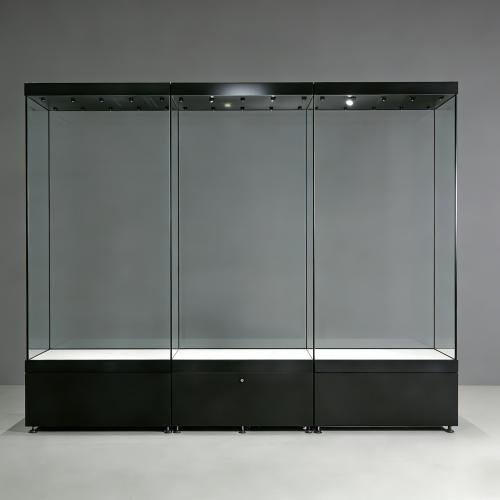
For temporary special exhibition areas, we have designed modular temporary museum vitrine display case. These cases are movable and adjustable, allowing for quick installation and dismantling to accommodate the fast-changing needs of traveling exhibitions and special exhibits.
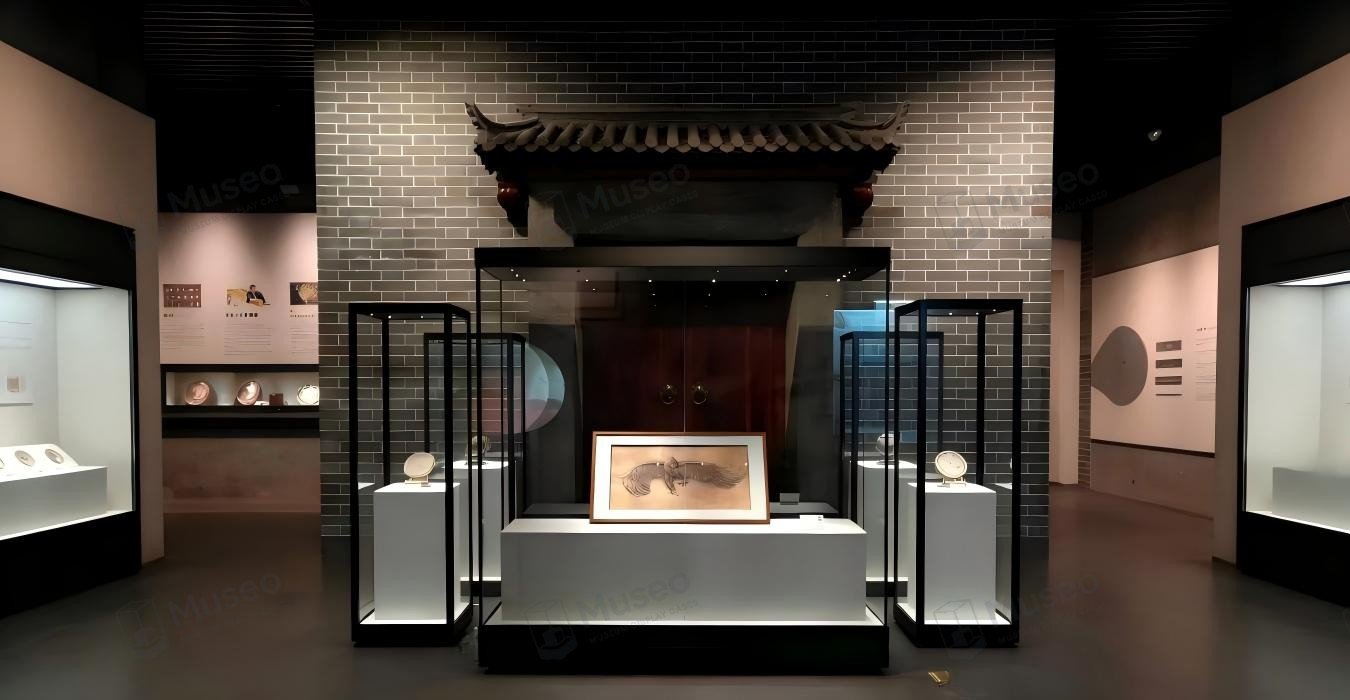
For porcelain artifacts, we have designed recessed display niches built into the walls. This embedded design integrates the display case seamlessly with the exhibition wall, directing the visual focus entirely onto the artifacts.
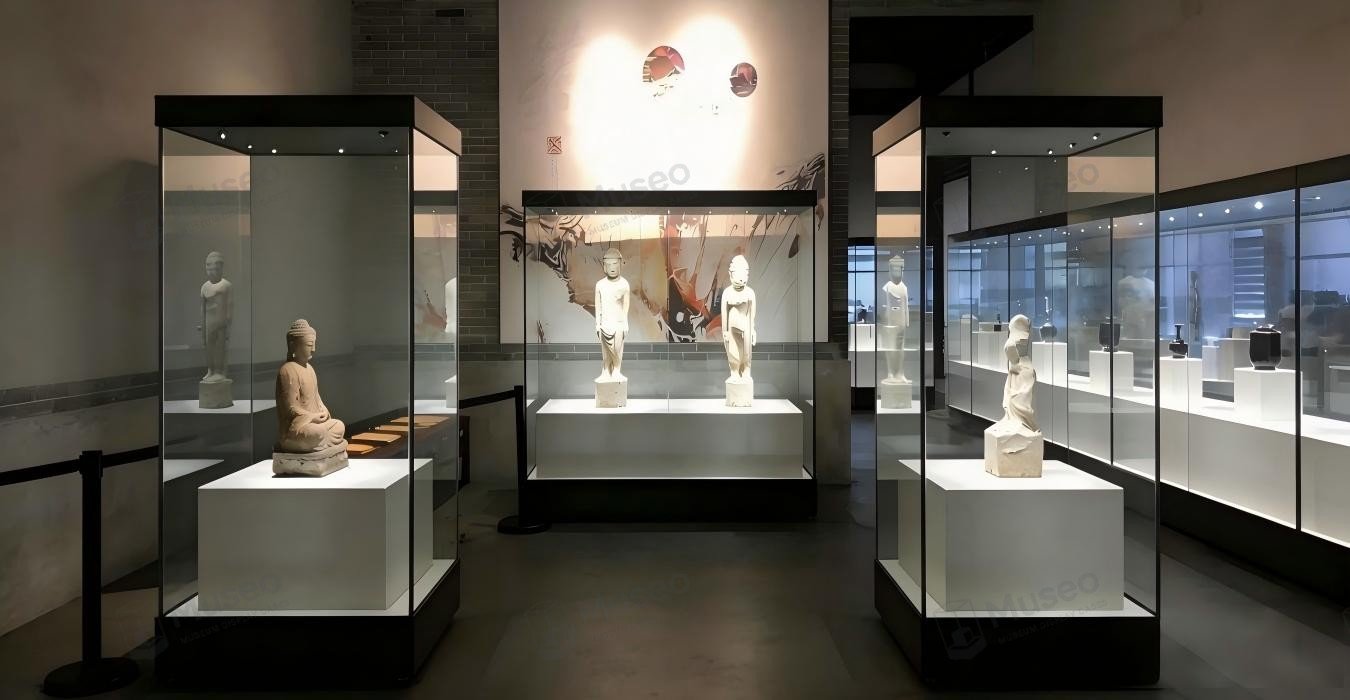
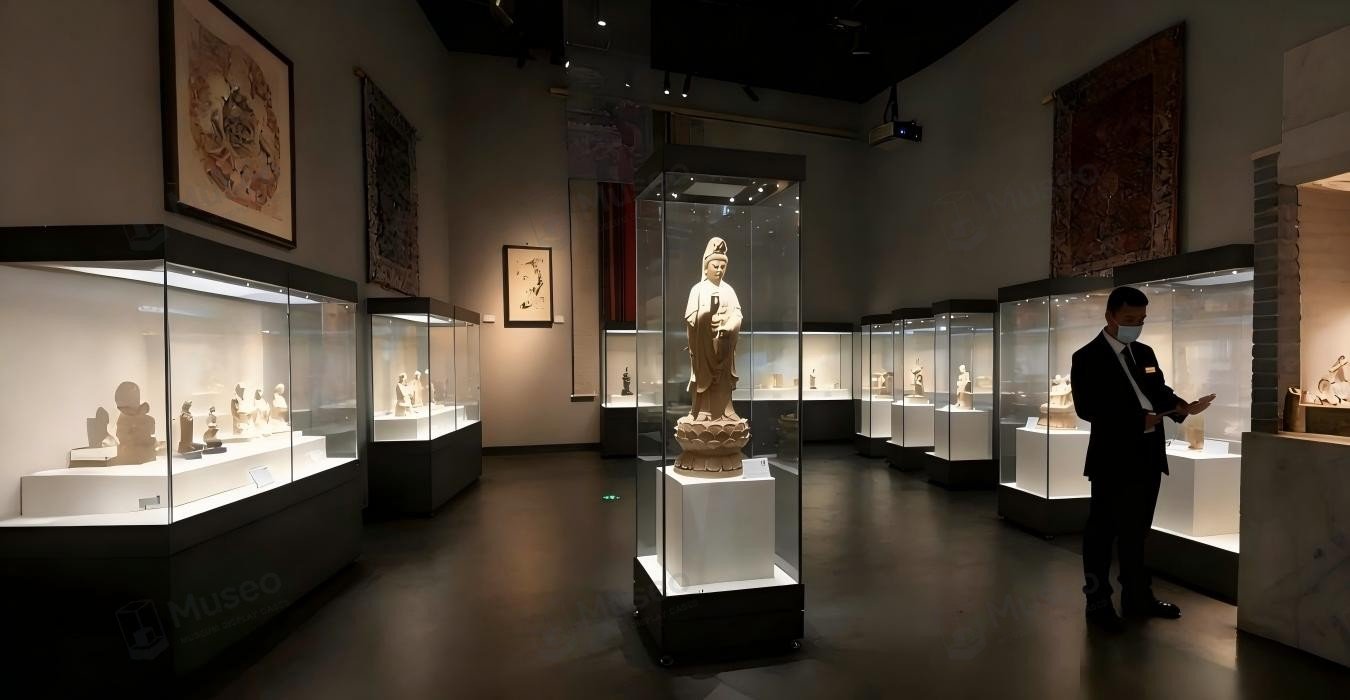
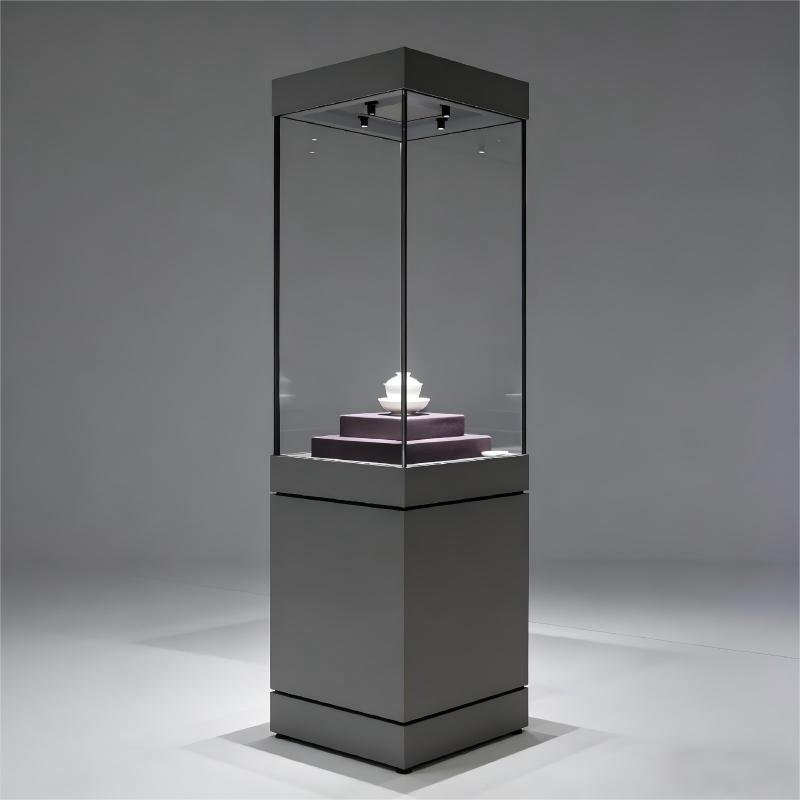
For statues, we have designed freestanding museum vitrine display case. The four transparent sides of these cases allow the low-reflection glass to almost “disappear,” creating an unobstructed visual connection between the viewer and the sculpture.
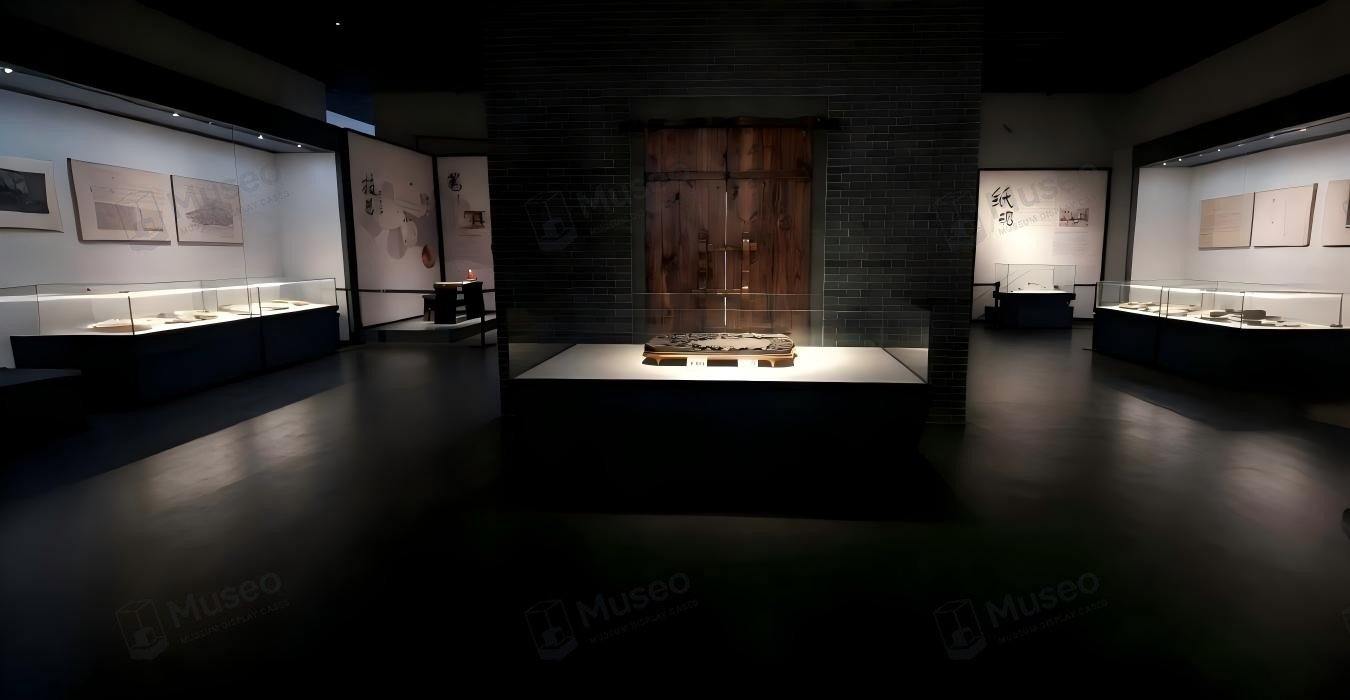
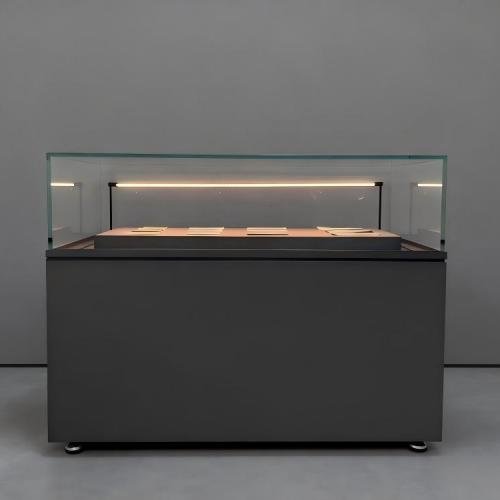
For To meet the display requirements of different cultural relics, we equipped the museum with 16 different models, totaling over 70 showcases. These include modular temporary museum vitrine display case, recessed museum quality display cabinets (niche showcases), tabletop museum vitrine display case, independent museum quality display cabinets, extra-large museum vitrine display case(through-cases), and more.
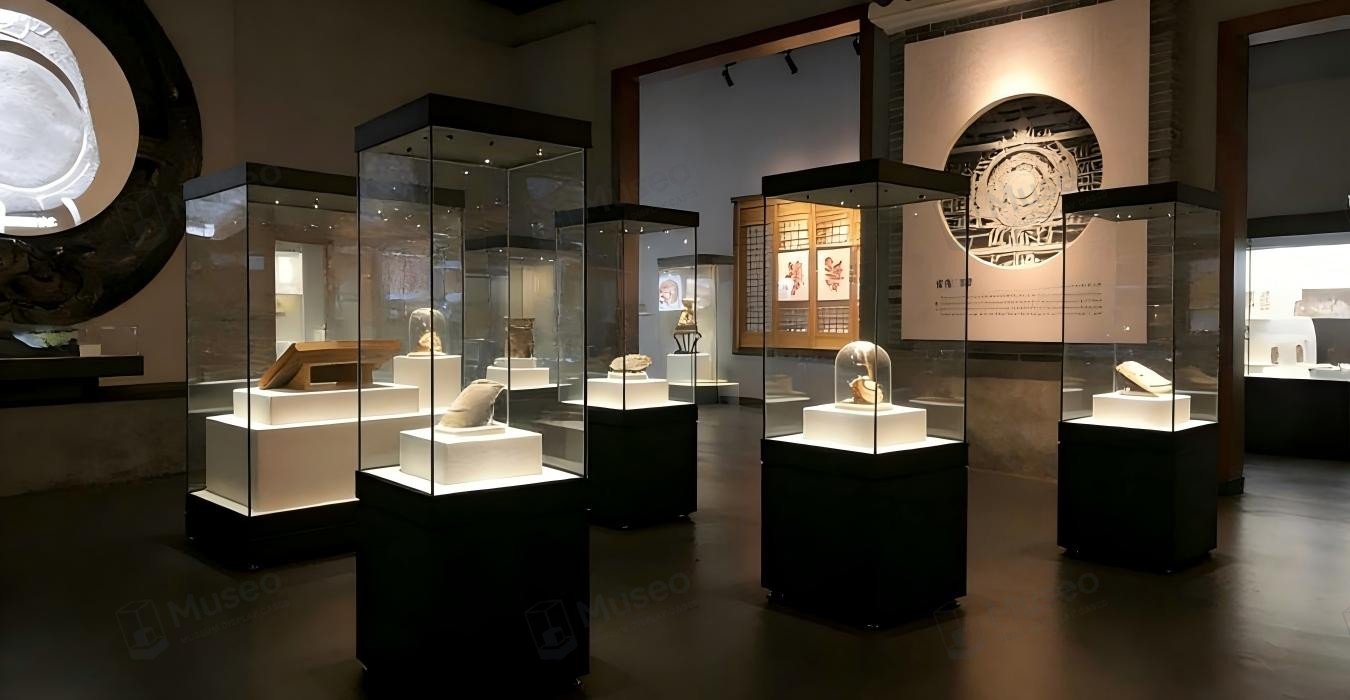
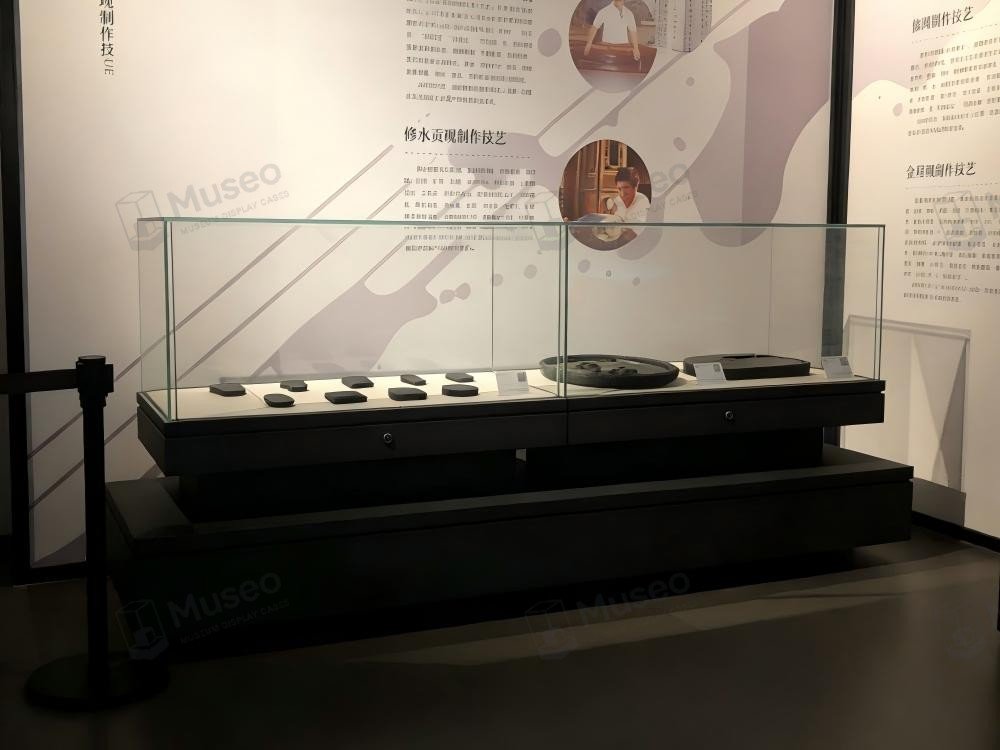
For inkstone molds, we have adopted tabletop museum vitrine display case. Their low-profile design allows viewers to observe the inkstones at eye level or from above, clearly examining the details. Professional lighting and low-reflection glass maximize the reproduction of the inkstone’s texture and the beauty of its craftsmanship.
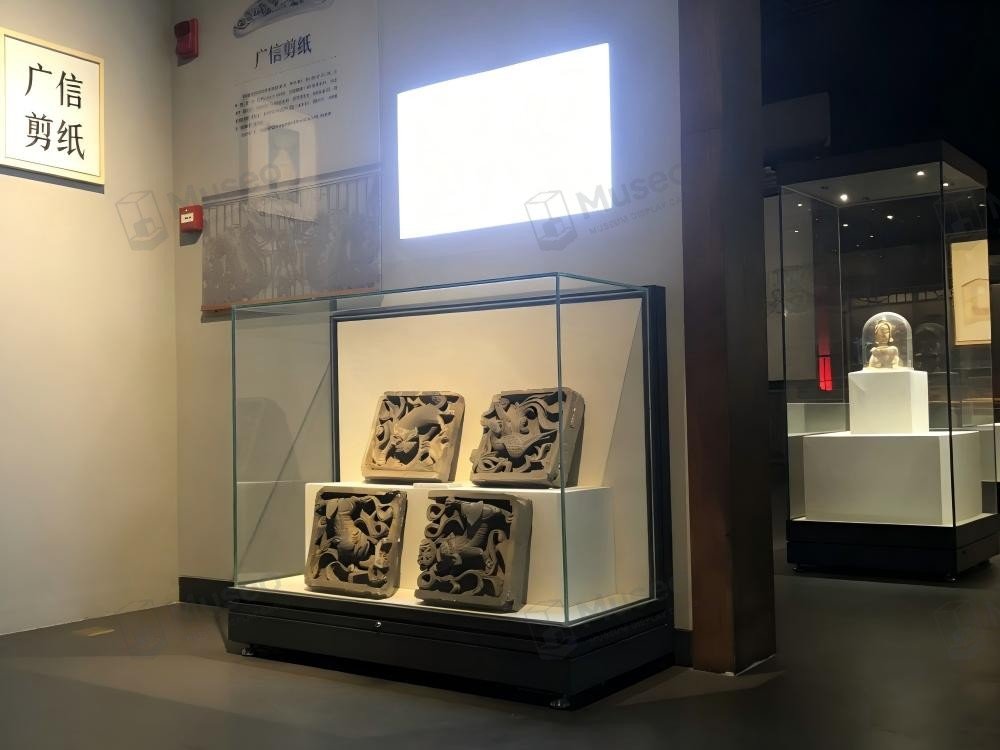
For stone sculpture artifacts, we have adopted low wall-mount museum quality display cabinets. This tiered platform design allows viewers to appreciate the three-dimensional carving technique of the brick carvings from multiple angles, both frontal and side. Professional lighting and low-reflection glass maximize the reproduction of the texture and details of the brick carvings, enhancing the visual impact.
Display Cases for the Project
PREGUNTAS FRECUENTES
1. ¿Cómo trabajamos con usted? (Proceso de pedido)
Enviar una consulta → Discutir requisitos → Proporcionar cotización → Pagar depósito → Diseño conceptual → Trabajo de dibujo → Producción → Inspección de calidad → Embalaje → Pagar saldo → Envío.
2. ¿Puede hacernos un presupuesto basado en nuestros dibujos?
Sí, podemos ofrecerle servicios de fabricación a medida y presupuestos según sus necesidades.
3. ¿Es usted una fábrica y dónde está ubicada?
Sí, somos una entidad de fábrica especializada en la fabricación de accesorios de exhibición de museo durante años. ¡Nuestra fábrica está en la ciudad de Guangzhou, provincia de Guangdong-usted es agradable visitarnos para la inspección!
4. ¿Podemos hacer una muestra para inspeccionar la calidad antes de hacer un pedido?
Se aceptan pedidos de muestras, pero los gastos de envío correrán a cargo del cliente.
5. ¿Cuál es el plazo de producción tras realizar un pedido?
Tras la confirmación del pedido, la producción suele completarse en 35 días laborables, aunque el plazo exacto depende de la cantidad del pedido.
6. ¿Cuáles son las condiciones de pago más seguras y el coeficiente de depósito?
Apoyamos métodos de pago seguros: T/T (transferencia telegráfica) y Alibaba International Station Trade Assurance. Se requiere un depósito de 50%, y el saldo debe ser pagado antes del envío.
7. ¿Podemos organizar una inspección de calidad antes del envío?
Por supuesto. Su personal de control de calidad o agencias externas son bienvenidos para la inspección in situ. Tenemos nuestro propio sistema de inspección de calidad antes del envasado para garantizar la calidad del producto; si no está disponible para los controles in situ, podemos proporcionar informes de inspección según sea necesario.
PONERSE EN CONTACTO
Póngase en contacto con nosotros, obtenga la hoja de presupuesto y conozca más noticias e información