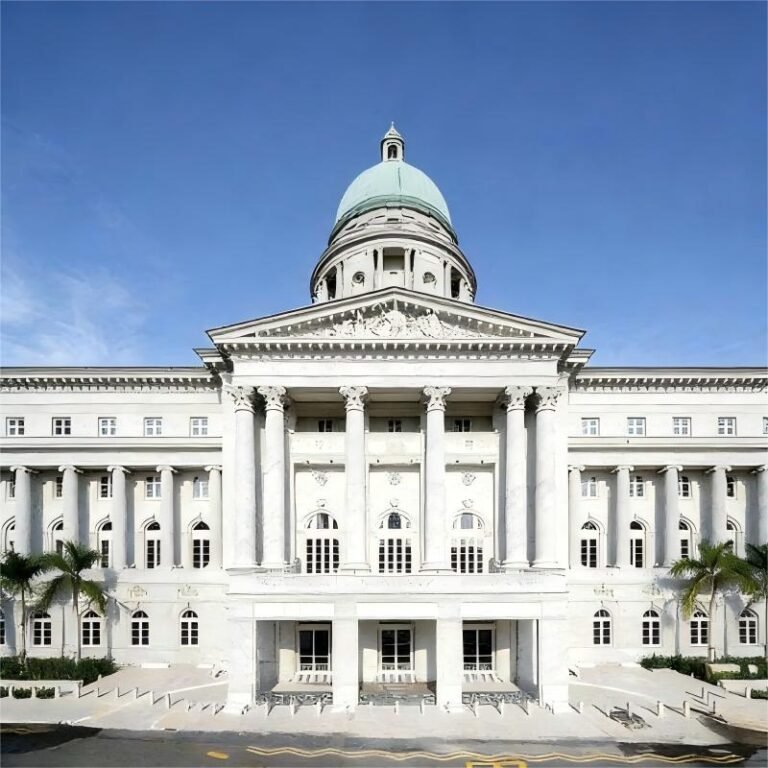
Natural History Museum of Denmark
Copenhagen,Denmark 2025.6
The core exhibition theme of the Natural History Museum of Denmark can be summarized as:”The Symbiotic Evolution of Earth’s Life and Natural History.”
First, From Stardust to Life – presenting the grand narrative from the Big Bang and the formation of Earth to the explosion of biodiversity, emphasizing the evolution of Earth as an integrated system.Second, focusing on the mutual influence between human civilization and the natural environment, exploring a sustainable future in the context of climate change and species extinction.Finally, leveraging over 14 million natural history specimens accumulated across 400 years, showcasing the scientific spirit of “research” and “exploration” through modern technology.

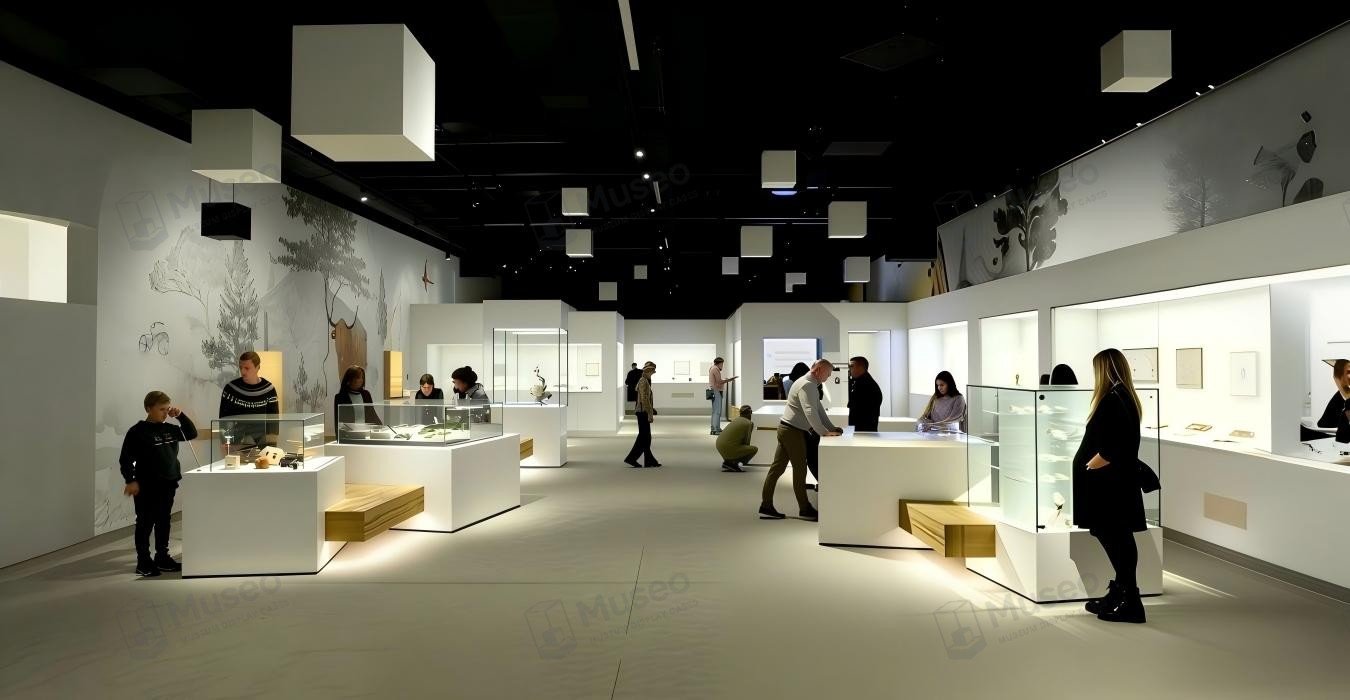
The Natural History Museum of Denmark is undergoing the most significant transformation in its 400-year history. To consolidate its scattered rare collections of zoology, geology, and botany, the museum has launched a costly new building project. As the museum houses a large number of environmentally sensitive organic specimens as well as oversized paleontological fossils, the existing display equipment could no longer meet modern museum requirements for preservation and exhibition. Therefore, our company was invited to participate in the custom redesign of its display case system.
After we completed the project, the Natural History Museum of Denmark has the following plans for the future: First, integrated display – for the first time, presenting the complete evolutionary chain of Earth’s geology, plants, and animals under one roof. Second, equal emphasis on research and public education – the museum style display case design not only serves visitors but also provides convenient maintenance and research access, allowing scientists to observe specimens at any time. Finally, achieving sustainability goals – using low‑energy lighting and air control modules.
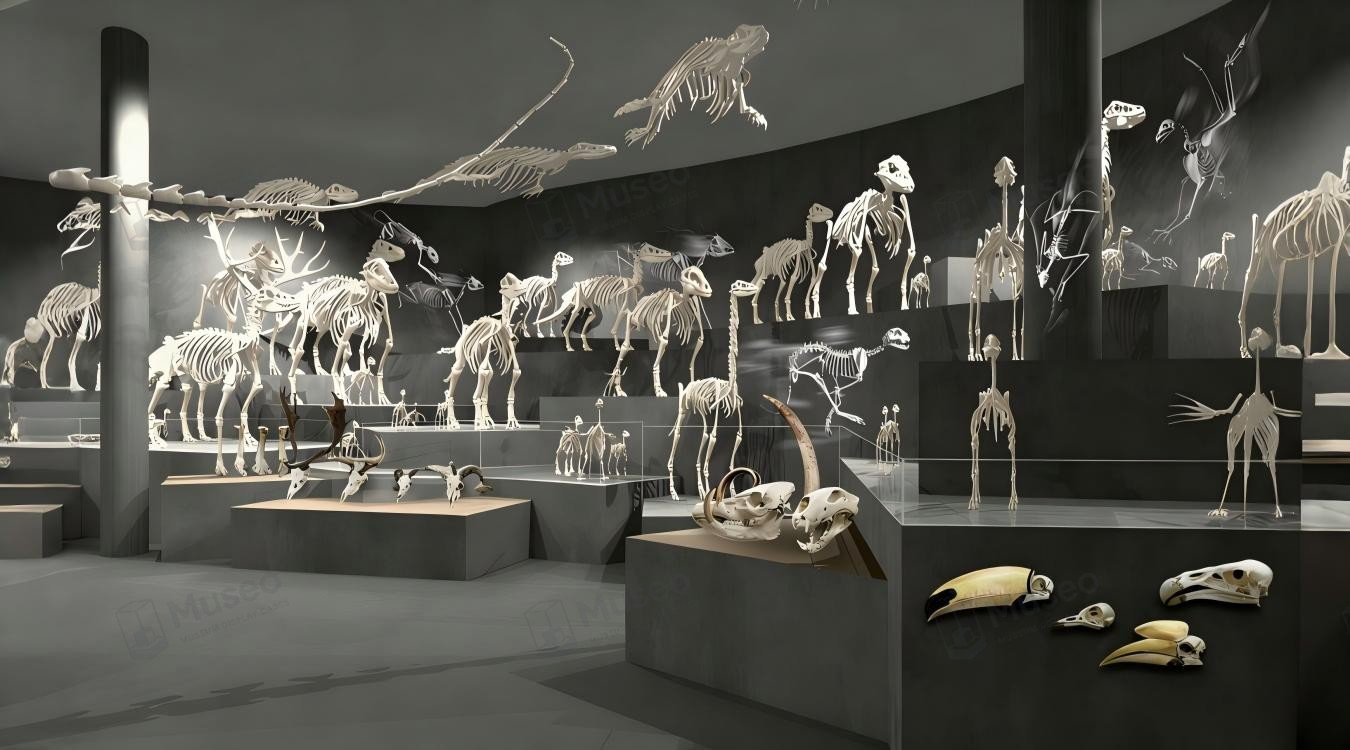
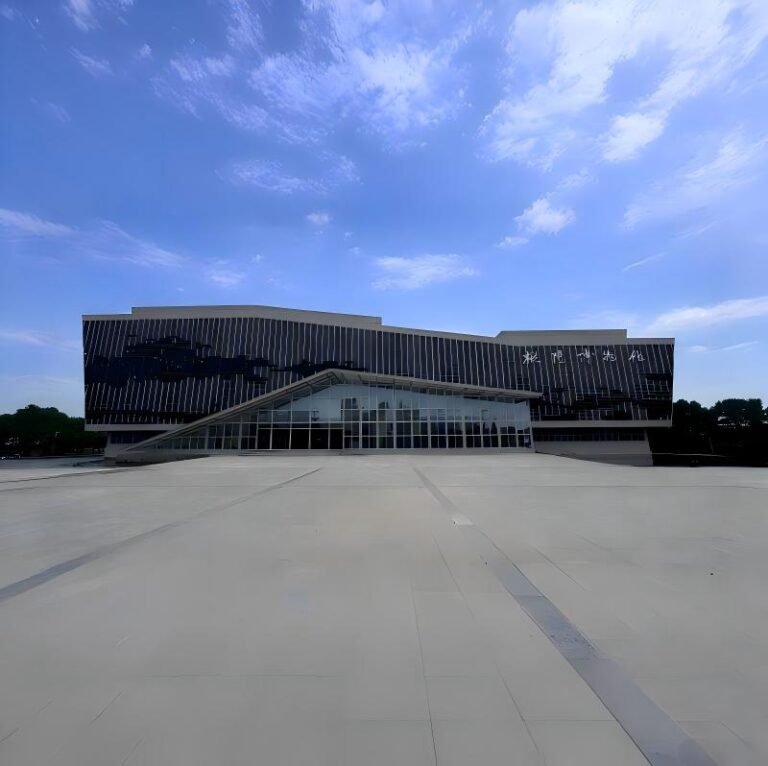
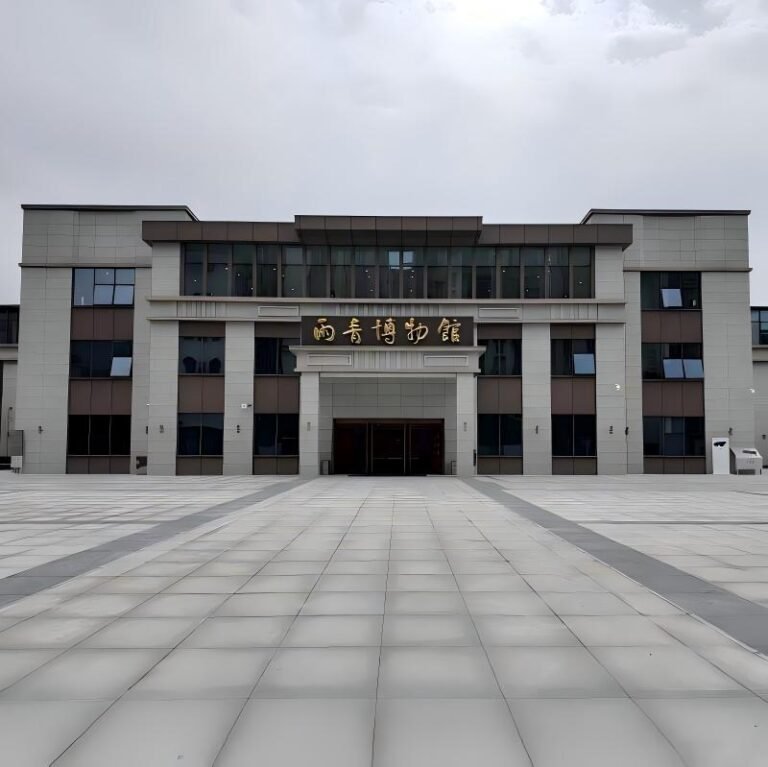
The Natural History Museum of Denmark has a total building area of 30,000 square meters, comprising historic above‑ground structures and multi‑level underground dark‑environment exhibition halls (the underground spaces being inspired by geological formations). The museum holds over 14 million precious specimens, including skins, bones, insects, fossils, minerals, meteorites, and more.

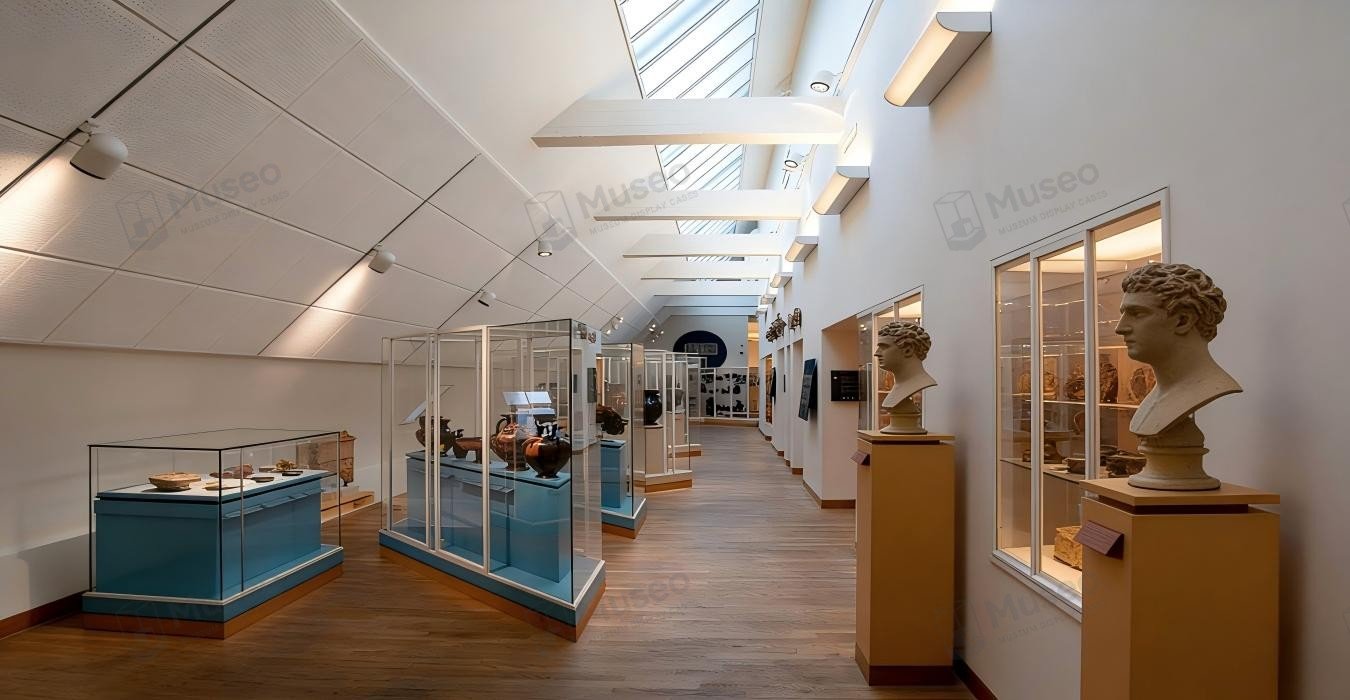
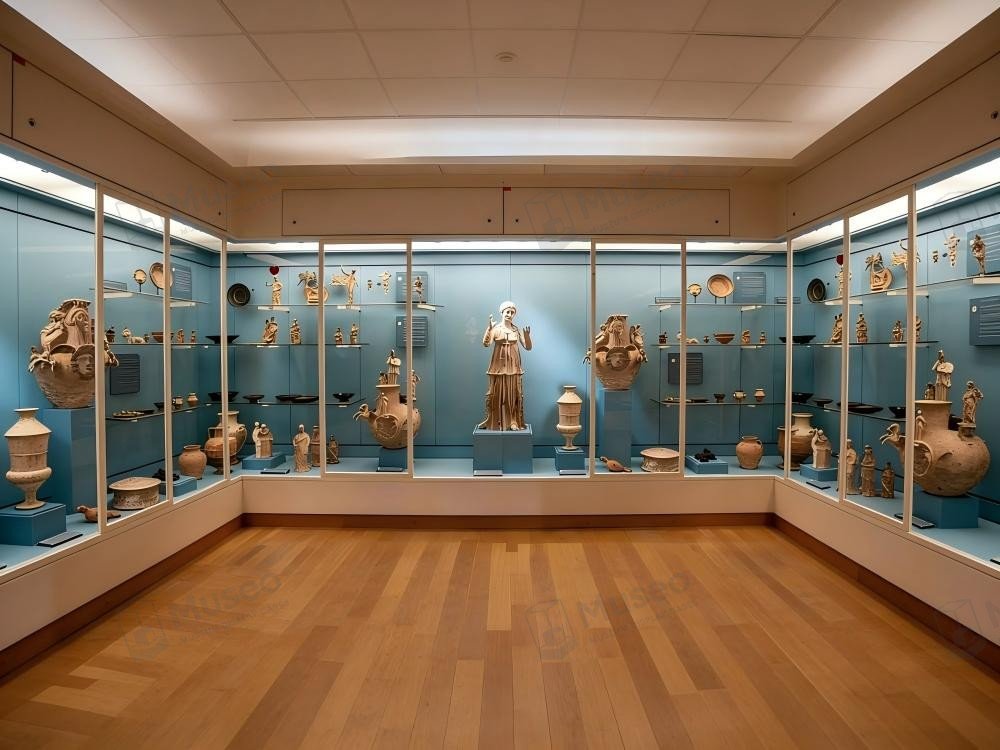
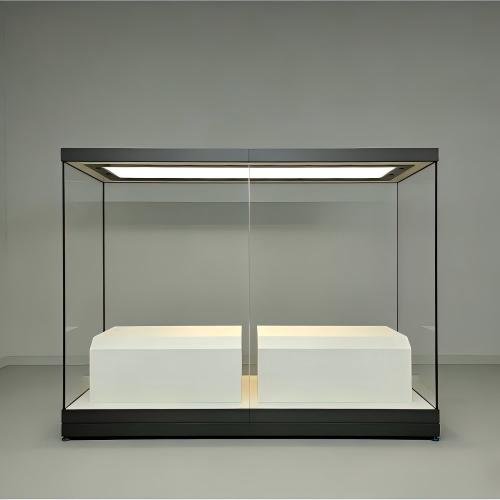
For ancient Greek pottery, we used independent glass museum style display case. With a three‑sided or fully glass design, visitors can observe the details of the pottery from multiple angles. The low‑reflective glass significantly reduces glare, allowing viewers to clearly appreciate the colours and decorative patterns of the artefacts.
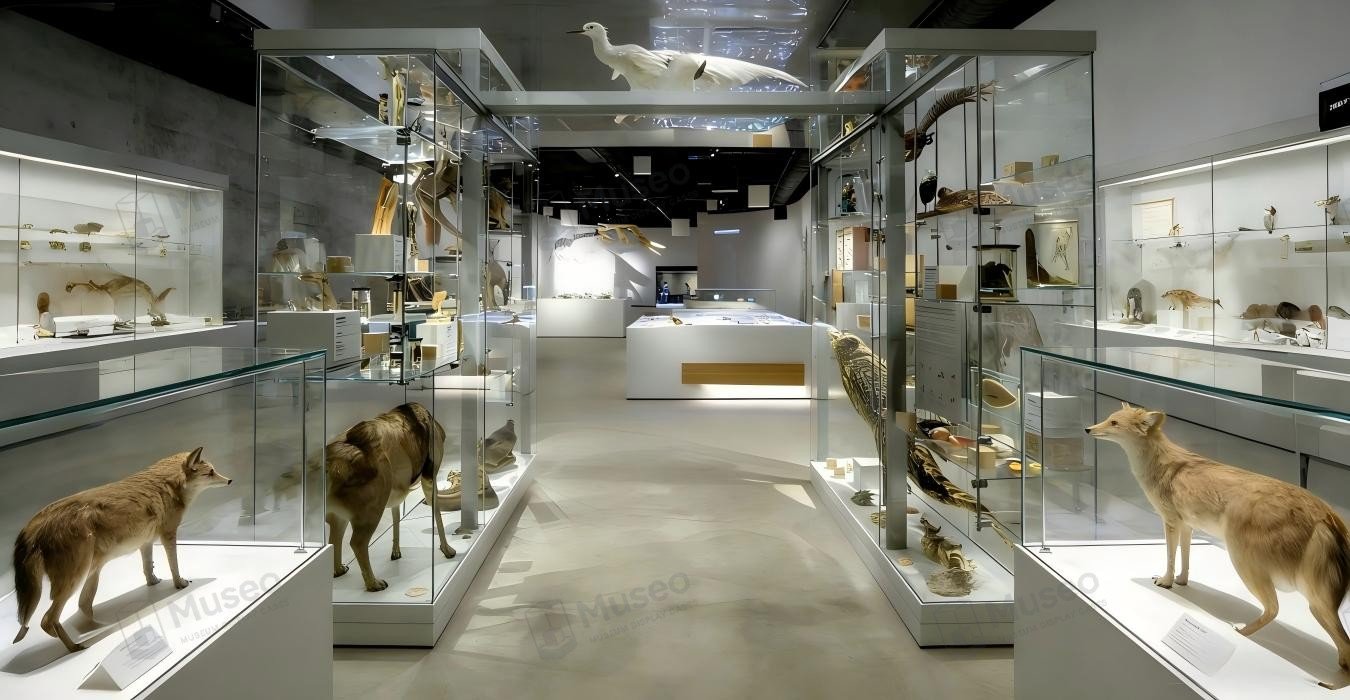
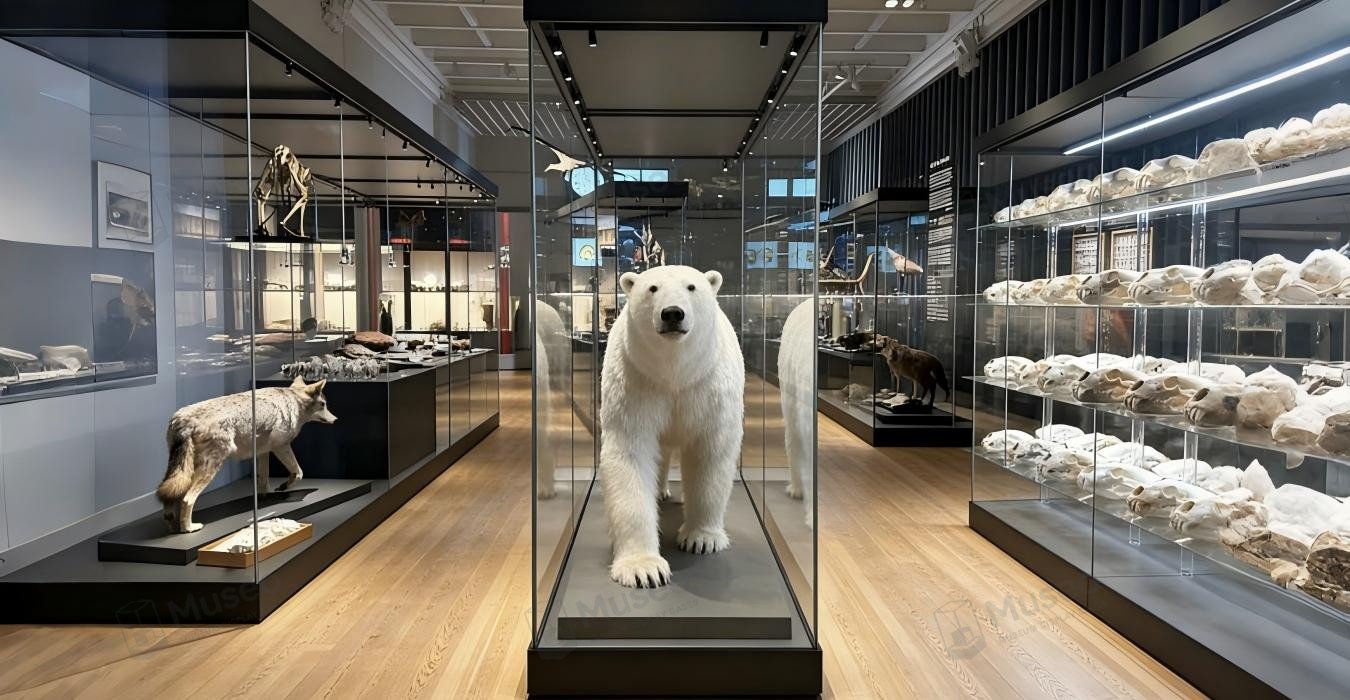
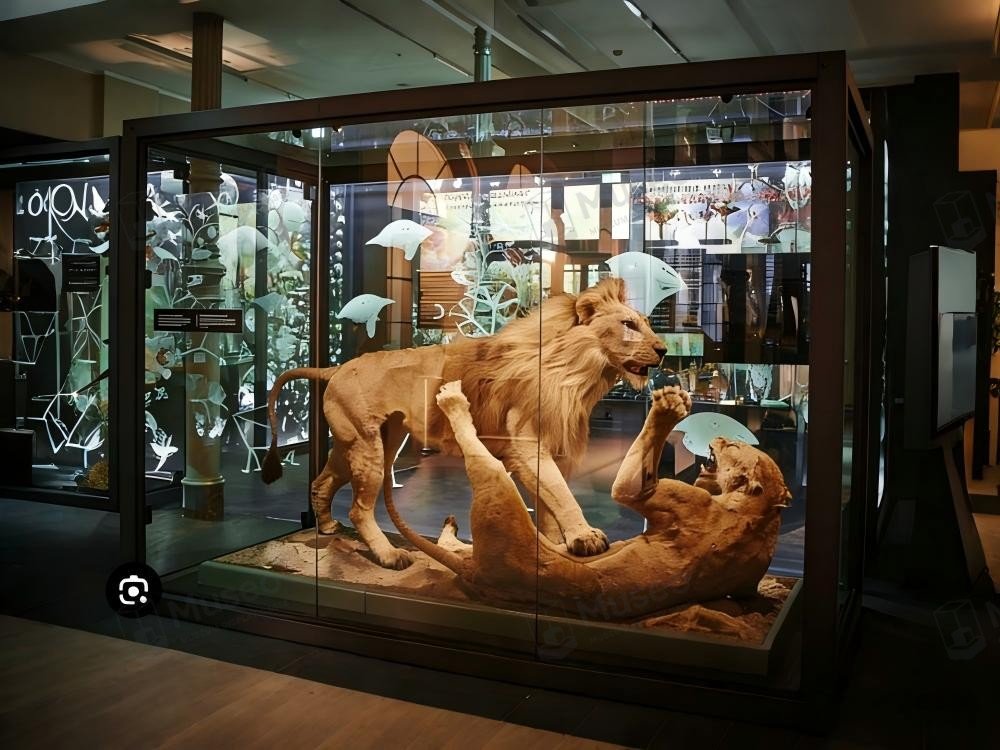
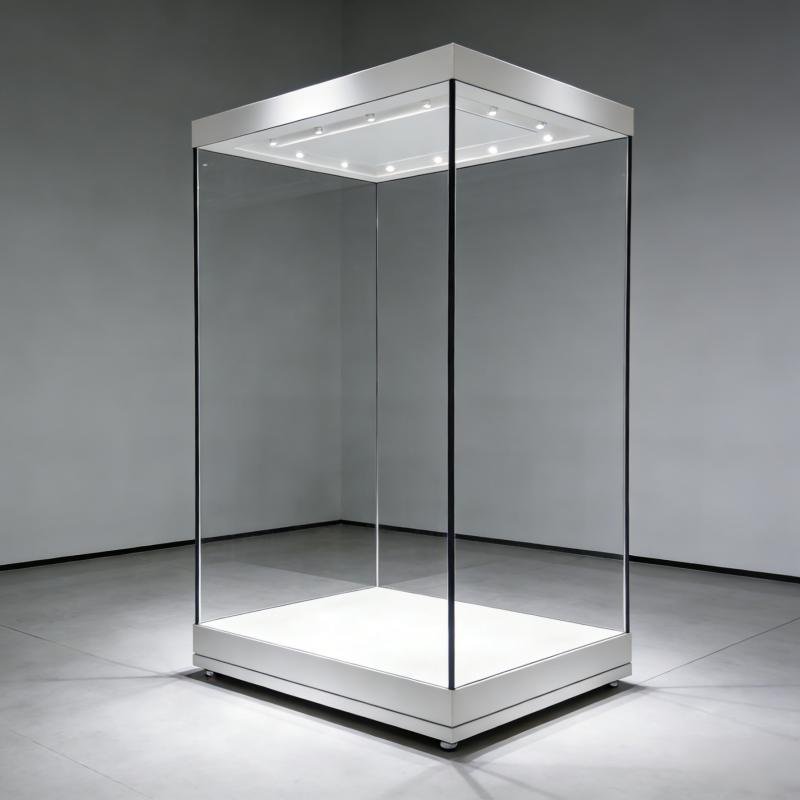
For animal specimens, we used independent panoramic tall museum style display case. Enclosed entirely with low‑reflective glass, they provide a 360° unobstructed view of the specimens, faithfully restoring the animals’ true forms. The sealed structure blocks dust, pests, and harmful gases, preventing contamination and corrosion of the specimens.
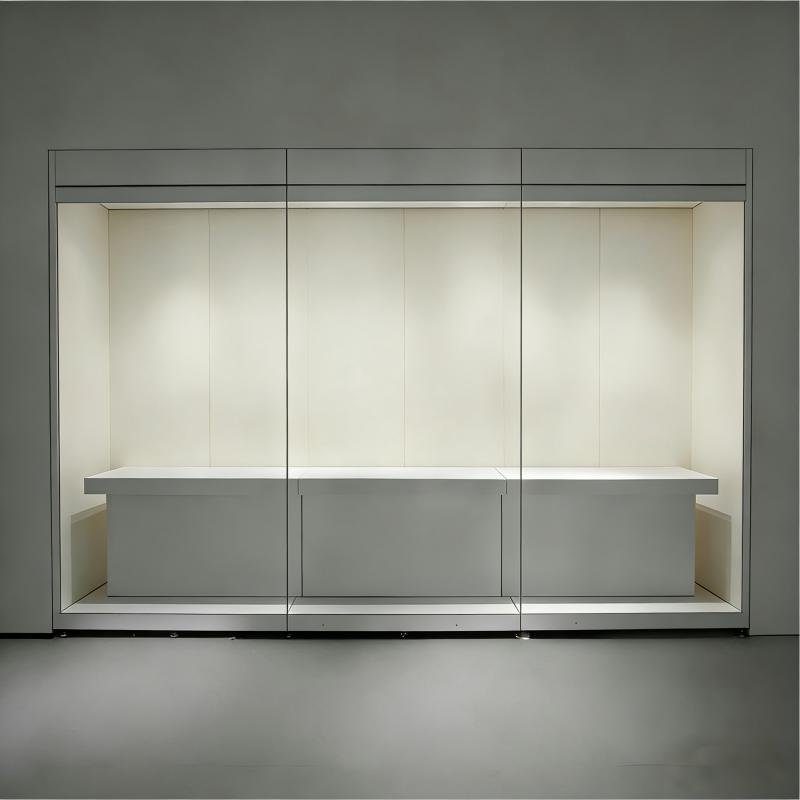
Display case types: To meet the diverse display requirements of different artifacts, we produced over 70 display cases across 13 different models for the museum, including fully enclosed glass museum exhibit cases, panoramic glass museum exhibit cases, and more.
For taxidermy specimens, we adopted fully enclosed glass display cases. The fully enclosed cubic structure, made of high-strength low-reflection glass and a metal frame, offers a 360° unobstructed view, allowing visitors to observe the specimens from multiple angles. It also accommodates the dimensions of large specimens and meets the requirements of contextual display.
For ancient Greek pottery artifacts, we adopted panoramic glass wall cases. These cases feature a design with low-reflective tempered glass and a white metal frame, providing a complete view of all artifacts inside. With multi-layer adjustable glass shelves and custom blue display stands, the artifacts are arranged in a layered manner based on their dimensions and display logic, highlighting the key large pieces.
Display Cases for the Project
PREGUNTAS FRECUENTES
1. ¿Cómo trabajamos con usted? (Proceso de pedido)
Enviar una consulta → Discutir requisitos → Proporcionar cotización → Pagar depósito → Diseño conceptual → Trabajo de dibujo → Producción → Inspección de calidad → Embalaje → Pagar saldo → Envío.
2. ¿Puede hacernos un presupuesto basado en nuestros dibujos?
Sí, podemos ofrecerle servicios de fabricación a medida y presupuestos según sus necesidades.
3. ¿Es usted una fábrica y dónde está ubicada?
Sí, somos una entidad de fábrica especializada en la fabricación de accesorios de exhibición de museo durante años. ¡Nuestra fábrica está en la ciudad de Guangzhou, provincia de Guangdong-usted es agradable visitarnos para la inspección!
4. ¿Podemos hacer una muestra para inspeccionar la calidad antes de hacer un pedido?
Se aceptan pedidos de muestras, pero los gastos de envío correrán a cargo del cliente.
5. ¿Cuál es el plazo de producción tras realizar un pedido?
Tras la confirmación del pedido, la producción suele completarse en 35 días laborables, aunque el plazo exacto depende de la cantidad del pedido.
6. ¿Cuáles son las condiciones de pago más seguras y el coeficiente de depósito?
Apoyamos métodos de pago seguros: T/T (transferencia telegráfica) y Alibaba International Station Trade Assurance. Se requiere un depósito de 50%, y el saldo debe ser pagado antes del envío.
7. ¿Podemos organizar una inspección de calidad antes del envío?
Por supuesto. Su personal de control de calidad o agencias externas son bienvenidos para la inspección in situ. Tenemos nuestro propio sistema de inspección de calidad antes del envasado para garantizar la calidad del producto; si no está disponible para los controles in situ, podemos proporcionar informes de inspección según sea necesario.
PONERSE EN CONTACTO
PONERSE EN CONTACTO
Póngase en contacto con nosotros, obtenga la hoja de presupuesto y conozca más noticias e información