American Museum of Natural History
New York, USA 2022.7
The core mission of the American Museum of Natural History focuses on ‘scientific research and science popularization,’ dedicated to inspiring public awareness and love for the natural world through scientific exploration, educational dissemination, and cultural exhibition. Its collection covers five major fields: astronomy, Earth, human, paleontology, and modern biology. The Gilder Center project refines the museum’s deeper message — ‘All life is interconnected’ — and conveys this core concept to every visitor through immersive experiences and open displays.
To celebrate its 150th anniversary and address issues such as poor internal circulation within the building complex and aging facilities in some old exhibition halls, the American Museum of Natural History planned and completed the ‘Richard Gilder Center for Science, Education, and Innovation’ with a total investment of $465 million. The project’s core concept — ‘All life is interconnected’ — placed extremely high demands on the security of museum display cabinets, micro-environment control, and the ability to provide non-standard customized solutions suitable for complex and irregular spaces.

Following the completion of the customized museum display cabinets renovation, the American Museum of Natural History is embarking on a new transformation centered around the Gilder Center. Internally, leveraging our high-precision digital display case solutions, it is continuously advancing its massive digital collection project. Externally, it is actively upgrading the adjacent Theodore Roosevelt Park to create a more open community space for the public. At the same time, the museum is more thoughtfully reshaping its multicultural narratives, striving to ensure that this century-old institution continues to serve as a global beacon of scientific exploration in the future.
The American Museum of Natural History covers an area of over 70,000 square meters. It has a six-story structure, with four floors open to the public and an additional underground floor used for collections and research. The total number of specimens and artifacts in its collection ranges from 30 to 36 million.
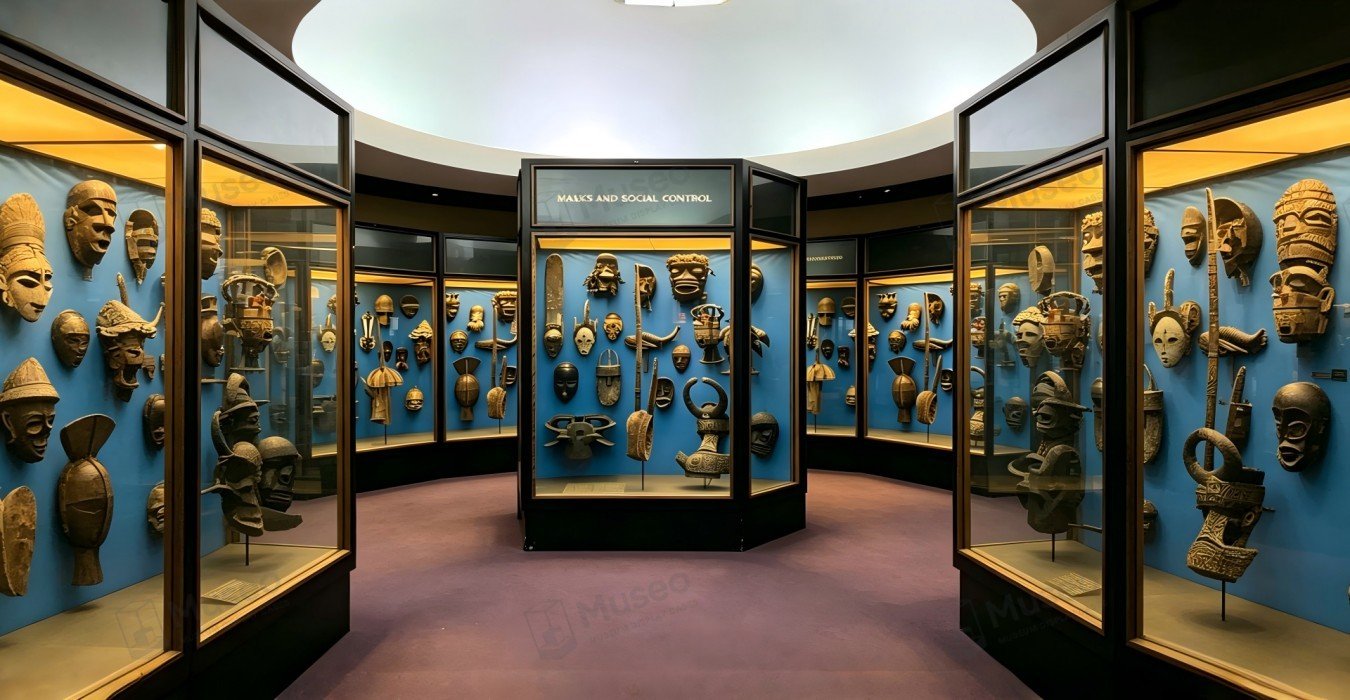
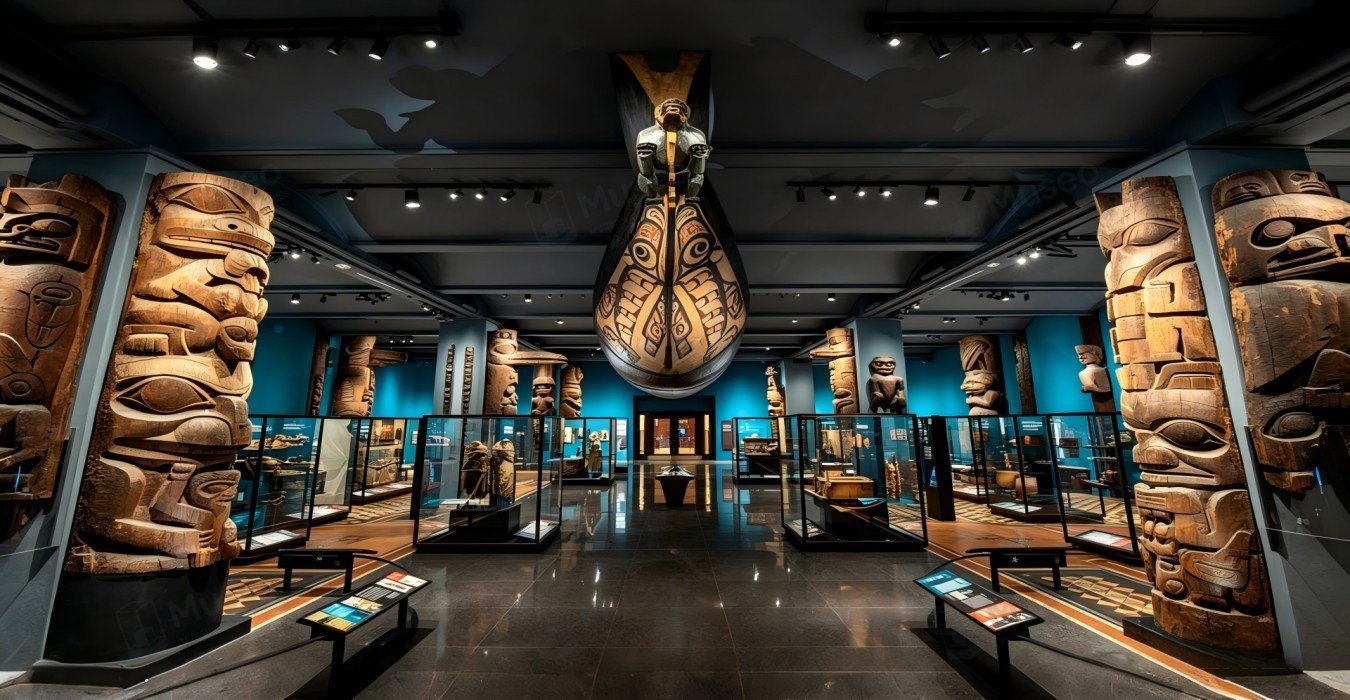
Display case types: To accommodate the diverse display needs of various artifacts, we produced over 100 display cases in 17 different models for the museum, including free‑standing island cases, free‑standing diorama cases, along‑wall continuous cases, and others.
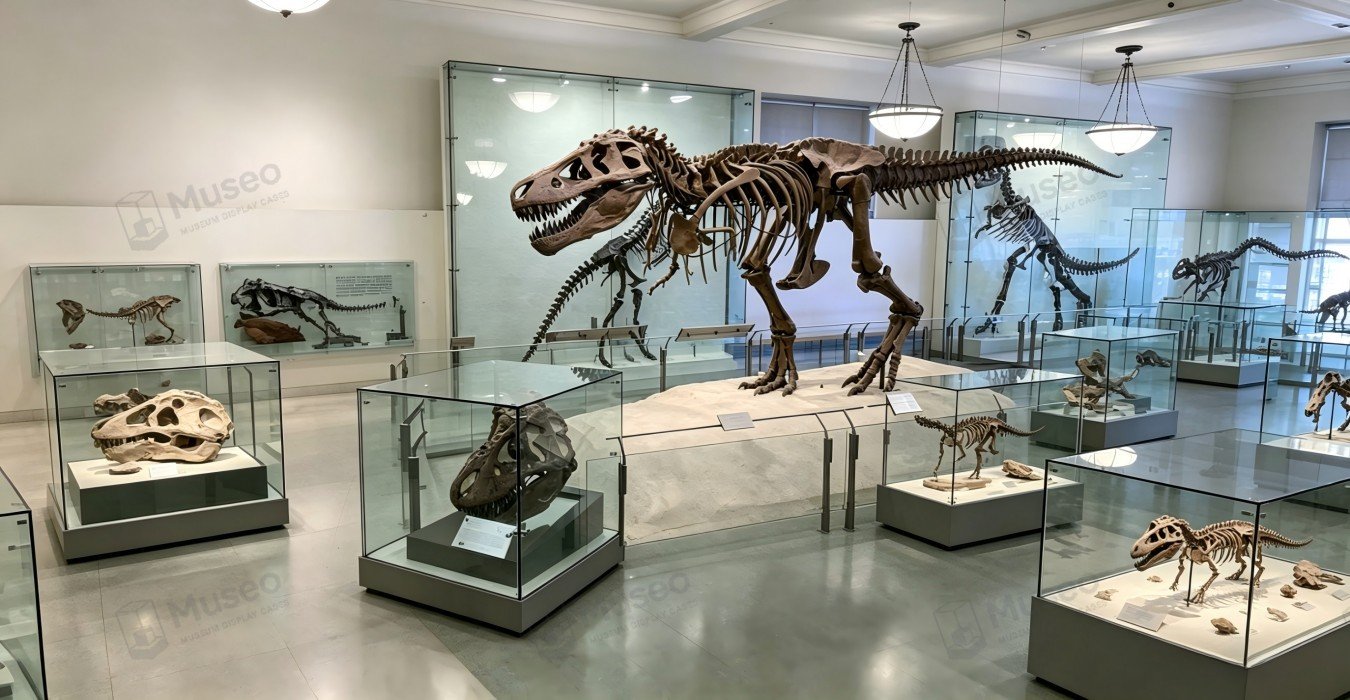
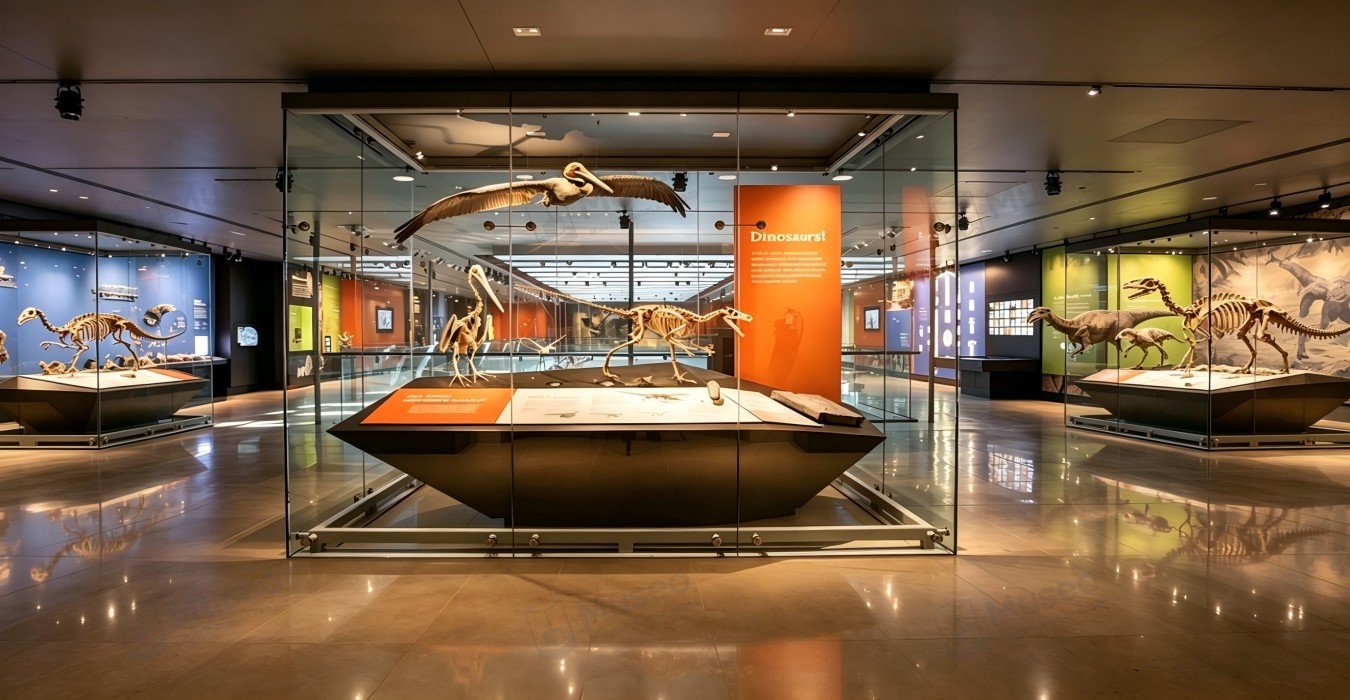
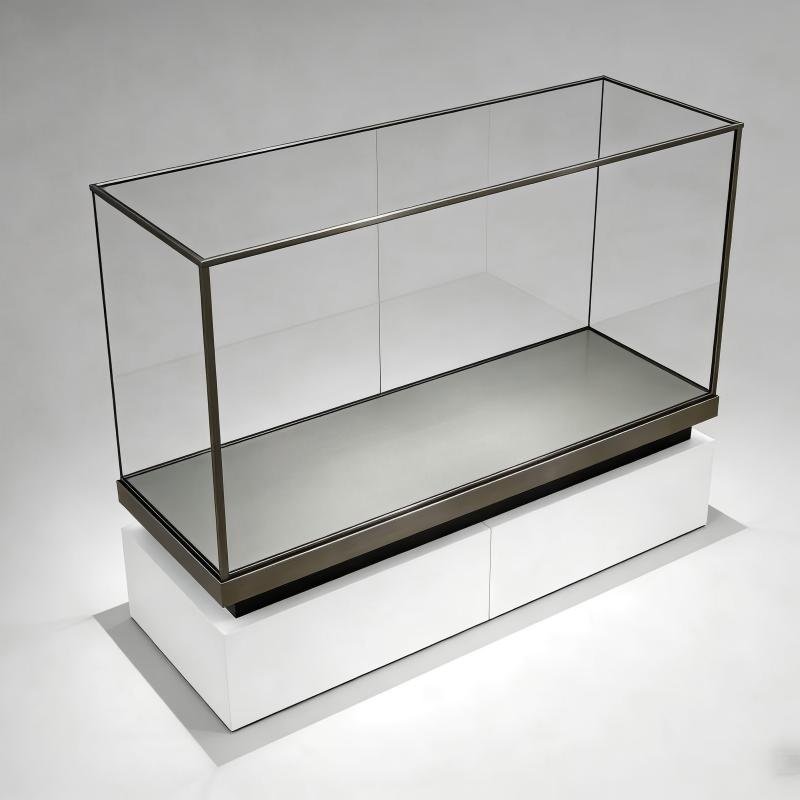
For dinosaur fossil specimens, we used free‑standing island museum display cabinetss. The enclosed museum display cabinets, combined with four transparent glass sides, allows visitors to observe the fossils from a 360° perspective. The low‑reflective ultra‑clear laminated glass offers high light transmittance, UV protection, and is both impact‑resistant and shatter‑proof. The aluminum alloy frame ensures structural stability and strong load‑bearing capacity.
For paleontological fossil skeleton specimens, we adopted panoramic free‑standing island museum display cabinets. The 360° fully transparent glass design enables visitors to view every detail without obstruction. The low‑reflective ultra‑clear laminated glass provides high light transmittance, UV protection, and is impact‑resistant and shatter‑proof. The aluminum alloy frame delivers extremely high structural strength.
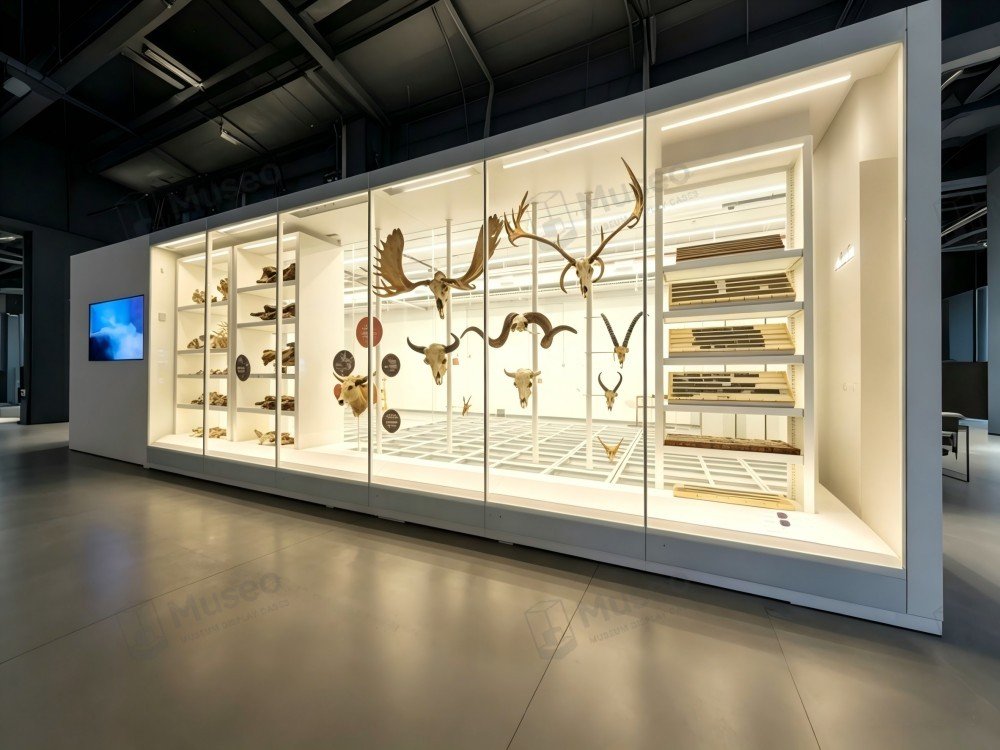
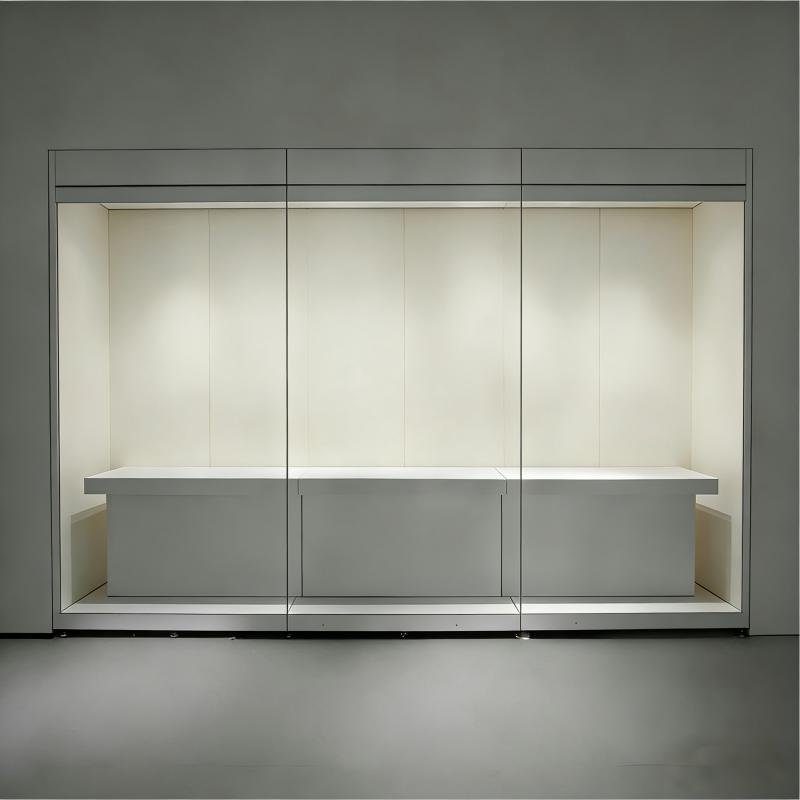
For animal fossil specimens, we used along‑wall continuous museum display boxs. The interior of the museum display box is divided by vertical posts and shelves to categorize the exhibits and help visitors understand them. The low‑reflective ultra‑clear laminated glass offers high light transmittance, UV protection, and is impact‑resistant and shatter‑proof. The high‑strength aluminum alloy frame structure is corrosion‑resistant and provides excellent stability.
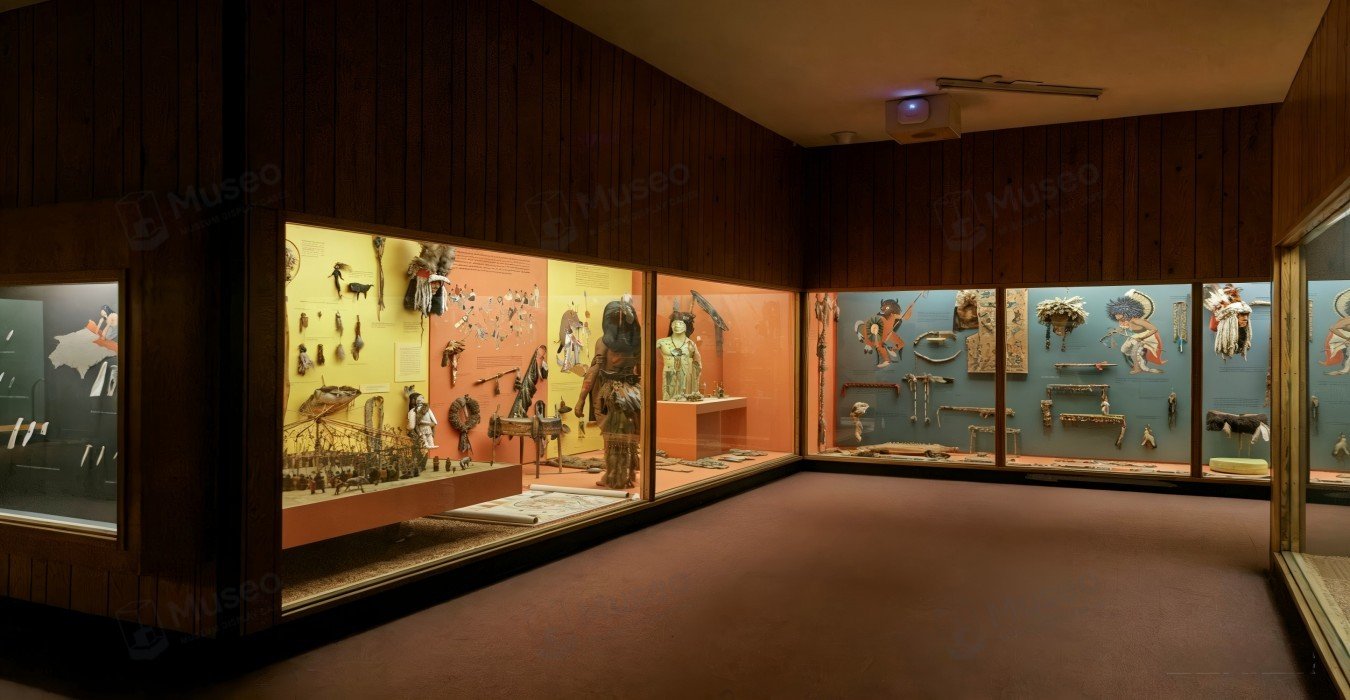
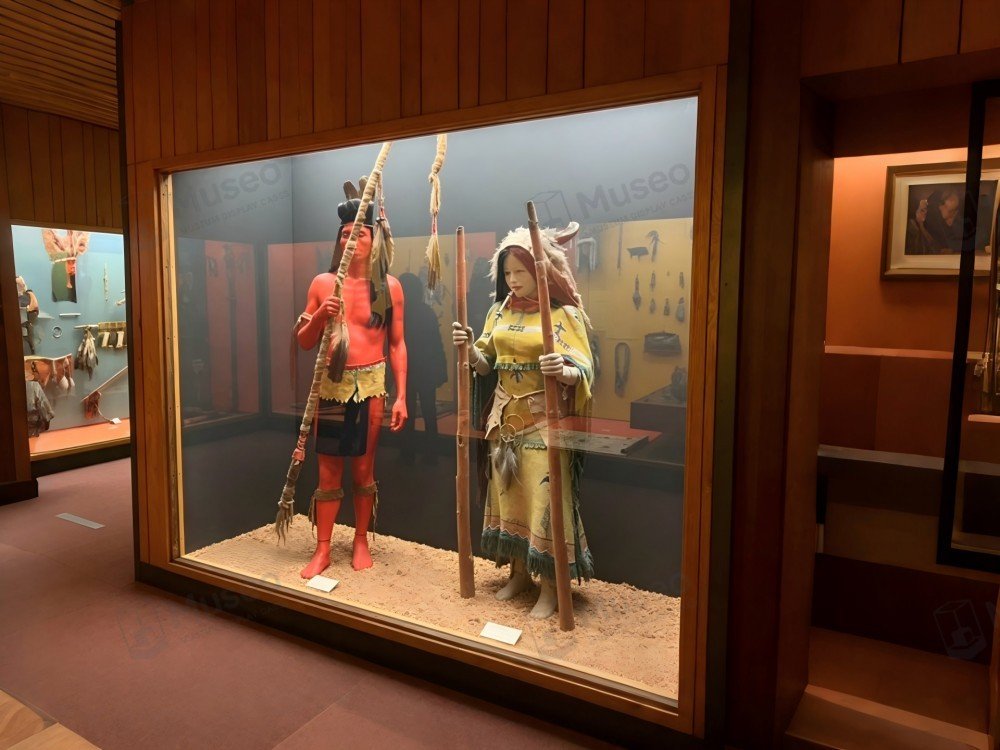
For the Native American dioramas, we used free‑standing scene museum display boxs. The single‑case independent presentation, combined with a dark background and soft lighting, keeps visitors’ attention fully focused on the scene itself. The low‑reflective ultra‑clear laminated glass offers high light transmittance, UV protection, and is impact‑resistant and shatter‑proof. The solid wood frame structure balances durability with aesthetic compatibility.
Display Cases for the Project
FAQ
1. How do we work with you? (Order Process)
Send an inquiry → Discuss requirements → Provide quotation → Pay deposit → Conceptual design → Drawing work → Production → Quality inspection → Packaging → Pay balance → Shipment.
2. Can you provide a quotation based on our drawings?
Yes, we can provide custom manufacturing services and quotations according to your requirements.
3. Are you a factory, and where is your factory located?
Yes, we are a factory entity specialized in manufacturing museum display props for years. Our factory is in Guangzhou City, Guangdong Province—you’re welcome to visit us for inspection!
4. Can we make a sample for quality inspection before placing an order?
Sample orders are acceptable, with sample fee and shipping costs to be borne by you
5. How long is the production lead time after placing an order?
After order confirmation, production is usually completed within 35 working days, with the exact timeline subject to order quantity.
6. What are the safest payment terms and the deposit ratio?
We support secure payment methods: T/T (Telegraphic Transfer) and Alibaba International Station Trade Assurance. A 50% deposit is required, and the balance must be paid before shipment.
7. Can we arrange quality inspection before shipment?
Certainly! Your QC personnel or third-party agencies are welcome for on-site inspection. We have our own quality inspection system before packaging to ensure product quality; if you’re unavailable for on-site checks, we can provide inspection reports as required.
GET IN TOUCH
GET IN TOUCH
Contact us, get the quotation sheet, and learn about more news and information