


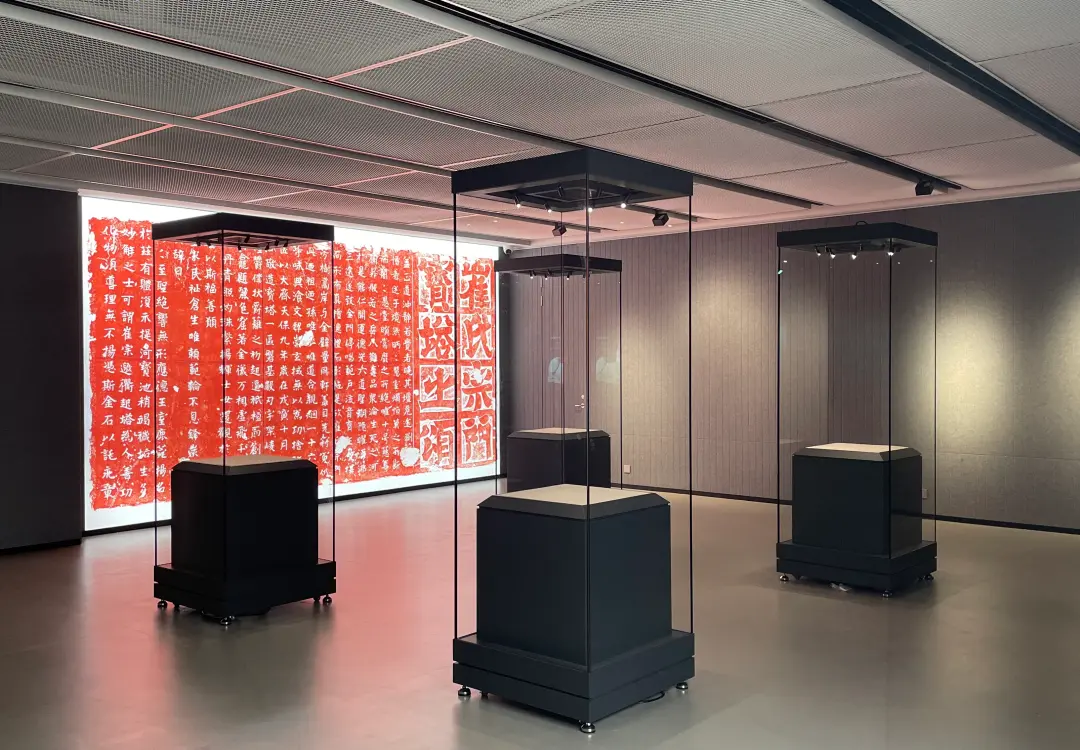
A curator in Stuttgart called me last March, three weeks after a major textile exhibition opened. The frameless vitrines looked pristine from the outside. Inside, condensation had begun fogging the anti-reflective glazing on the north-facing case – the one holding a 19th-century silk panel worth more than my Long Beach warehouse. The humidity swing was 8% over 72 hours. The case was sold as “climate-controlled.” It was not airtight. That is the museum vitrine problem in one sentence: the spec sheet lies long before the glass does.
I have spent fifteen years on the factory floor side of this trade – sourcing tempered glass in Dongguan, bending acrylic jigs in Wenzhou, and for the last seven years donig some programs for jewelry display manufacturers and museum showcase exporters Stateside. Most procurement content I read online reads like it was scraped from three Alibaba pages and a brochure. It tells you a frameless vitrine “enhances the visitor experience.” It does not tell you that the bond between laminated glass plies can delaminate at the edge after 400 thermal cycles, or that a 400mm radius acrylic bend carries a tolerance of +/-0.05mm that most shops cannot hold past MOQ 30.

Why Do Most Museum Display Specs Fail on the Factory Floor?
The failure modes I see repeat across B2B inquiries are not exotic. They are structural. A freestanding frameless vitrine shipped LCL (less-than-container-load) has roughly a 1-in-6 chance of arriving with a chipped edge, because consolidators do not cushion glass the way FCL does. I have seen a $14,000 custom-built vitrine arrive in Long Beach with three corners fractured because the forwarder packed it between steel brackets. That is not a shipping problem. That is a specification problem – the RFQ never called for corner protectors and crate-on-crate dunnage.
Then there is the MOQ trap on custom brass hardware. A museum architect specifies a bespoke brass hinge for a wall-mounted case at MOQ 12. The shop in Wenzhou quotes tooling at $2,800 amortized across 12 units. You actually need 4. The shop says fine, the tooling cost triples per unit, and now your minimalist frameless display cabinet is priced like a luxury good. The honest conversation happens before the PO, not after. Museo builds its spec sheets around this – every custom-hardware line item carries a stated MOQ and a tooling amortization figure so the buyer sees the real cost curve before signing.
What Does a Frameless Vitrine Actually Do to Sightlines and Accessibility?
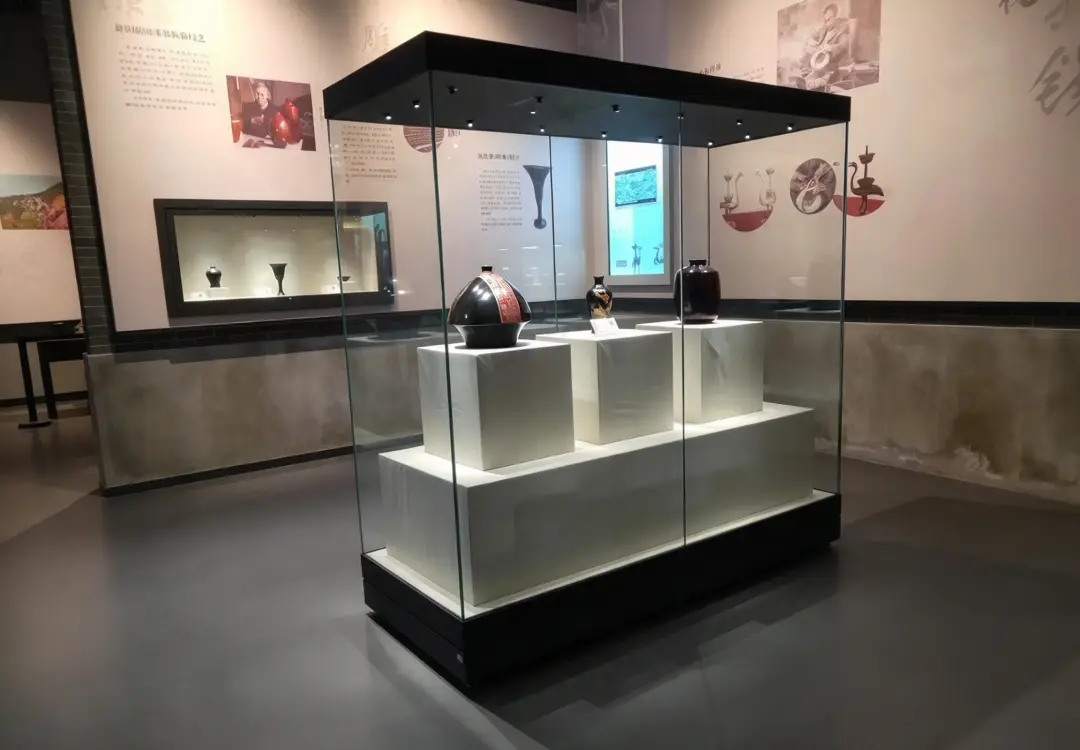
Let’s separate marketing from mechanics. A frameless vitrine is not magic. It is a structural glass assembly – usually 6+6mm or 8+8mm laminated, low-iron (extra-clear) for high light transmission, with anti-reflective coating applied to one or both surfaces. The AR coating typically cuts residual reflection from around 8% to under 1.5%. That is the number that matters. When a visitor leans in and sees the artifact instead of their own face, that 6.5% delta is the entire visitor experience.
The other number: viewing angle. A well-engineered frameless museum vitrine gives unobstructed sightlines up to 160 degrees off-axis before frame shadow appears. Traditional aluminum-framed cases drop to about 95 degrees. The minimalist aesthetic is not a style choice – it is a visibility yield. For a Minimalist Frameless Display Cabinet placed in a high-traffic gallery corner, that delta is the difference between a visitor stopping and a visitor walking past. It is also why freestanding vitrines, despite their higher base-plate cost, dominate temporary exhibition layouts – they let curators rotate sightlines without rebuilding walls.

Lighting Drift: The Quiet Killer of Sapphire and Textile Displays
Here is where most museum display content goes silent, and where I have seen the most expensive damage. LED showcase lighting drifts. A 3000K LED channel specified at install will read 2950K after 6,000 hours and can shift toward 2700K if the driver runs hot. For sapphire and jewelry displays, that drift yellows the stone. For textiles, prolonged exposure to even UV-filtered LED above 50 lux will accelerate fading on organic dyes.
The fix is not “use better LEDs.” The fix is specifying a UV-filtering laminate interlayer (PVB or SentryGlas) on the glass panel, a dimmable fiber-optic or low-lumen LED channel on a separate circuit, and a lux cap written into the conservation brief. I have walked galleries where the lighting designer hit 350 lux on a 17th-century tapestry because “it looked better on camera.” That is how you destroy a textile in 18 months. Conservation needs come first. Aesthetic comes second, or it does not come at all.
How Is a Climate-Controlled Vitrine Engineered for Protection and Conservation?
Can Museum Display Cases Be Engineered for Both Visibility and Climate?
Yes – but the airtight spec is non-negotiable. A climate-controlled vitrine is not a display case with a humidifier stuck inside. It is a sealed glass envelope with a microclimate unit, active humidity control at +/-2% RH, temperature stability at +/-0.5C, and an air exchange rate below 0.1 per day. The glass bond – typically a structural silicone or a UV-cured acrylate – is what holds that seal. If the bond fails at the corner, the microclimate fails. If the microclimate fails, the artifact degrades. The Stuttgart case I opened with failed because the fabricator used a general-purpose silicone rated for -20C to 80C but not tested for long-term RH cycling. Three weeks. Condensation. Real cost: $9,400 in rework and a 6-week exhibition delay.
Freestanding vs Wall-Mounted: Which Display Case Saves Real Cost?
Freestanding vitrines carry a premium, and most buyers do not understand why. The base plate alone – usually steel-reinforced, powder-coated, with concealed leveling feet – adds 18-24% to the unit cost. Wall-mounted cases save the base but demand a load-bearing wall and a concealed mounting system that does not telegraph through the drywall. For a temporary exhibition, freestanding wins on flexibility. For a permanent gallery, wall-mounted wins on tooling amortization across a longer install horizon.
This is where Museo and a small number of fabricators separate from the pack – they publish the structural calculations. A freestanding vitrine taller than 1800mm needs a base that resists tip-over at 200N lateral force. If your supplier cannot send you that calc sheet, you are buying a showcase, not an engineered product. The same applies to a Minimalist Frameless Display Cabinet specified for a high-traffic visitor path – the aesthetic is frameless, but the engineering is not.
Where Does Minimalist Aesthetic Meet Conservation Reality in the Gallery Environment?
The seamless look that curators love is the hardest thing to manufacture well. A frameless glass vitrine with mitered corners, polished edges, and no visible hardware is a fabrication tolerance problem disguised as a design statement. The corner bond has to be invisible. The glass has to be tempered after cutting, not before, or the edge will chip. The AR coating has to survive the tempering oven – and not all coatings do. If you are sourcing from a shop that cannot show you a 5-year-old install with unblemished corners, walk away.
Natural light integration is the other quiet variable. Daylight in a gallery is beautiful and dangerous. A south-facing frameless vitrine without UV-filtering glazing will hit 600+ lux on the artifact at noon in summer. That is six times the conservation ceiling for most organic materials. The spec is not “integrate natural light.” The spec is “integrate natural light at a measured lux ceiling, with UV below 75 microwatts per lumen, verified with a meter at handover.” Verify. Do not trust the brochure.
A frameless vitrine, done right, is one of the few objects in an exhibition space that is invisible to the visitor and decisive to the artifact. Done wrong, it is a fogging, drifting, condensing liability. The difference is in the specification, the factory, and the honesty of the supplier – in roughly that order.
FAQs
1. What glass thickness should a museum vitrine use?
Standard is 6+6mm laminated (two 6mm plies with PVB interlayer). For cases over 1500mm tall or freestanding in public spaces, step to 8+8mm. Low-iron extra-clear glass lifts light transmission above 91%.
2. What humidity tolerance should I specify for a climate-controlled vitrine?
+/-2% RH is the working standard for organic artifacts (textiles, paper, wood). Stability matters more than the absolute number – a case that holds 50% RH at +/-2% outperforms one that averages 50% but swings to 45-55%.
3. How long does anti-reflective coating last on a frameless vitrine?
Quality magnetron-sputtered AR coatings hold under 1.5% reflection for 10+ years if the glass is tempered before coating. Some coatings cannot survive tempering – verify the fabrication sequence in the RFQ.
4. What is the MOQ trap on custom brass hardware?
Tooling cost is amortized across the order quantity. A 2,800 tooling charge at MOQ 12 costs 233/unit; at MOQ 4 it costs $700/unit. Always negotiate MOQ flexibility before signing, not after.
5. Can freestanding frameless vitrines meet seismic codes?
Yes, with a reinforced base plate and concealed anchor. Tip-over resistance should be spec’d at 200N lateral force for cases over 1800mm. Ask the supplier for the structural calc sheet – if they cannot produce it, the case is not engineered for a public gallery.