


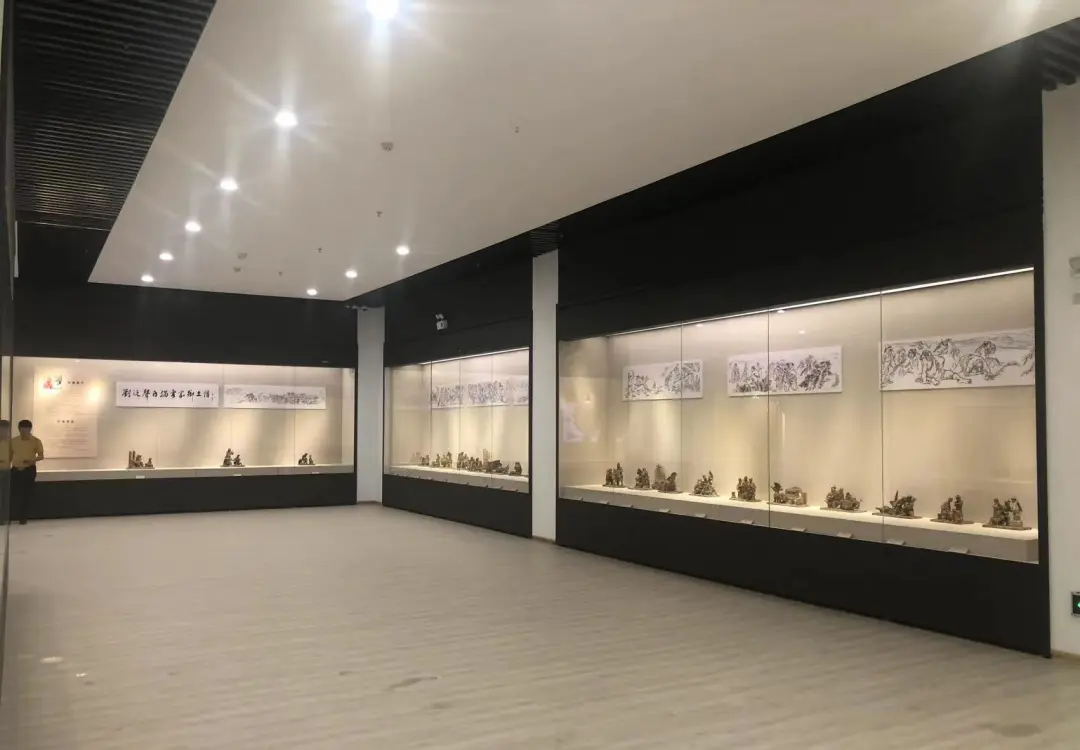
When curators ask us why a standard architectural vitrine fails after eighteen months, the answer is rarely the glass. It is structural creep in the mounting sub-frame or an untracked air exchange rate. Mounting an enclosure on a vertical substrate introduces asymmetrical shear forces that ground-supported pedestals never encounter. At Museo, our factory engineers approach wall-mounted units as structural cantilevers that must maintain air-tight conservation seals under dynamic loading.
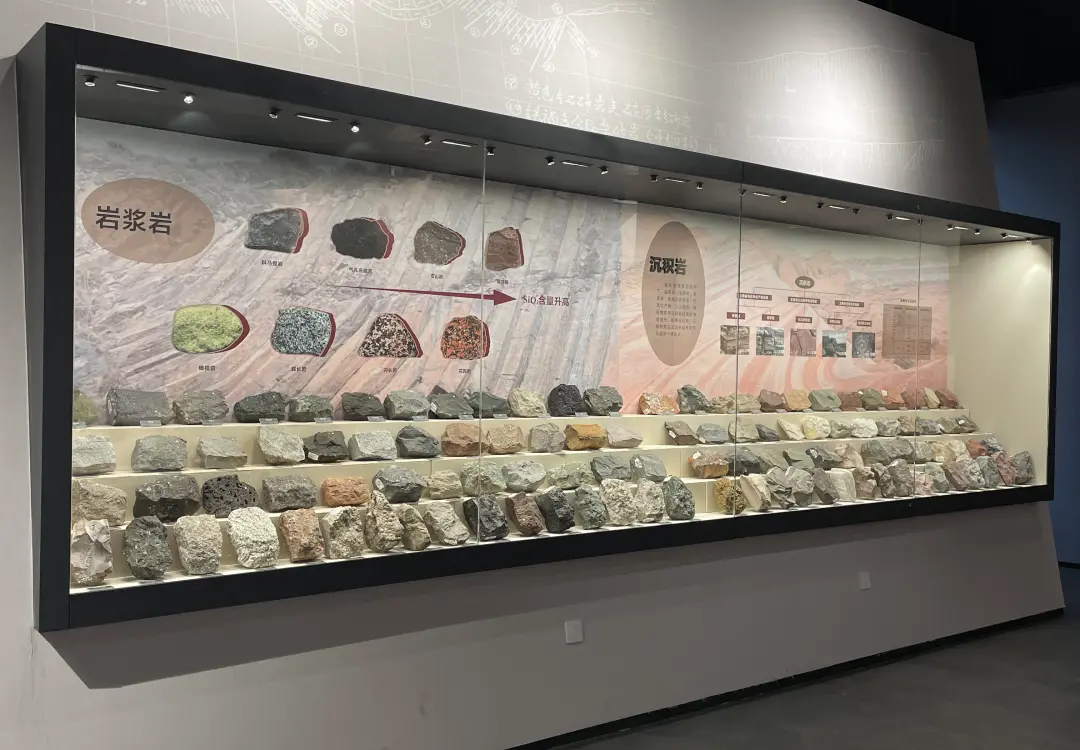
How Do You Engineer a Museum Wall Mounted Display Case for Heavy Artifacts?
Cantilevered loads place constant torque on top fixings. If a wall-mounted case flexes by even 0.5 millimeters under the mass of a bronze relief or ceramic relic, the silicone door gaskets unseat. This breaks the hermetic seal instantly. To prevent structural distortion, we construct rigid internal skeletons using powder-coated structural steel channels and extruded aluminum frames rather than relying on decorative outer cladding.
For flush-fit gallery layouts, specifying a Recessed Wall-Mounted Tall Cabinet transfers static dead loads directly into the building’s structural studs. This structural integration eliminates front-heavy rotational forces, providing an ultra-clean sightline while protecting sensitive paper items, fossils, and natural history specimens behind museum-quality safety glass.

Which Materials Truly Protect Archival Collections in Wall Display Cases?
Selecting between laminated safety glass and an acrylic vitrine is an exercise in balancing structural rigidity, optical transmission, and long-term maintenance. While acrylic cases offer lightweight advantages for smaller wall display cases, acrylic is prone to surface scratching and electrostatic dust attraction over extended gallery runs.
For high-traffic museum environments, low-iron, anti-reflective glass remains our primary recommendation. Annealed glass modified with a multi-layer magnetron sputtering coating yields visible light transmission above 98% with less than 1% surface reflection. This renders the glazing virtually invisible to visitors while filtering up to 99% of damaging UV rays.
| Material Property | Low-Iron Anti-Reflective Glass | High-Grade Acrylic Vitrine |
| Optical Clarity | > 98% Light Transmission, < 1% Reflection | -92% Light Transmission, higher surface glare |
| Scratch Resistance | Exceptional (Mohs Hardness ~ 6) | Moderate (Requires specialized anti-static cleaner) |
| UV Filtering | Integrated PVB interlayer blocks 99% UV | Requires specialized UV-blocking additives |
| Structural Creep | Zero deflection over 20+ year lifespan | Potential bowing under wide spans or humidity |

How Does Microclimate Control Work in Recessed Wall Display Units?
Archival preservation hinges on controlling relative humidity (RH) within an airtight microclimate. A true museum-quality wall case must achieve an Air Exchange Rate (AER) of equal to or less than 0.1 per day. Achieving this tight seal requires continuous, closed-cell EPDM gaskets compressed uniformly along hidden mechanical latches.
Inside a Recessed Wall-Mounted Tall Cabinet, we design dedicated desiccant compartments behind pinnable archival fabric backboards or inside concealed lower drawers. These compartments hold conditioned silica gel cartridges that stabilize RH without requiring active electrical systems. For highly sensitive manuscripts, textiles, or organic artifacts, the compartment is accessible without opening the main exhibit case, preventing microclimate destabilization during routine silica gel swaps.
How Do Security Locks and Gas Struts Ensure Artifact Security?
Security in a museum wall mounted display case requires mechanical subtlety. Exposed padlocks or external hinges disrupt the aesthetic experience and invite tampering. We integrate multi-point concealed mechanical locks operated by high-security Abloy key cylinders concealed within the aluminum frame profile.
Opening heavy vertical glass doors requires specialized pantographic hinges or concealed gas struts calibrated precisely to the door weight. Gas-assisted hydraulic dampeners allow a single conservator to open a heavy vertical door smoothly up to 85 degrees without risk of door drop or vibration damage to delicate artifacts on internal adjustable trays.
Why Choose Factory-Grade Custom Engineering for Wall Cases?
Off-the-shelf display cabinets rarely survive the rigor of public exhibitions. Every gallery wall presents unique challenges, from non-plumb drywall to thermal transfer from internal building piping. As a specialized manufacturer, Museo engineers custom modular internal track systems, built-in cold-light LED pucks or fiber-optic lighting, and specialized removable trays tailored to your exhibition layout.
Whether you need a compact wall display case for gold coinage or a large continuous museum wall mounted display case for historical weapons and textiles, engineering the enclosure around museum conservation standards guarantees that your collection stays pristine for generations.
FAQs
How is an Air Exchange Rate (AER) of 0.1/day measured in factory testing?
We perform pressure-decay testing and tracer gas decay analysis (using sulfur hexafluoride or helium) according to ISO standards in our factory chamber before shipment to verify that the airtight gasket system meets microclimate specs.
Can wall-mounted display cases support heavy stone or bronze artifacts?
Yes, provided the load is engineered through internal cantilevered steel brackets anchored directly into primary wall masonry or structural steel studs, bypassing decorative drywall entirely.
What type of internal lighting is safe for organic manuscripts and textiles?
We install zero-UV, zero-IR LED lighting arrays positioned outside the sealed archival microclimate chamber, typically mounted in an upper light attic with frosted diffusion panels to minimize heat transfer.
How often does silica gel need to be replaced in a sealed wall case?
In a cabinet engineered with an AER below 0.1/day, conditioned silica gel typically maintains stable relative humidity for 12 to 24 months before requiring re-conditioning or replacement.
What is the difference between tempered glass and laminated anti-reflective glass for museum cases?
Tempered glass shatters into tiny harmless granules when breached, leaving artifacts exposed to ambient air and theft. Laminated glass consists of two glass panes bonded by an PVB interlayer; even if struck, the glass cracks but remains structurally intact in the frame, maintaining physical protection.