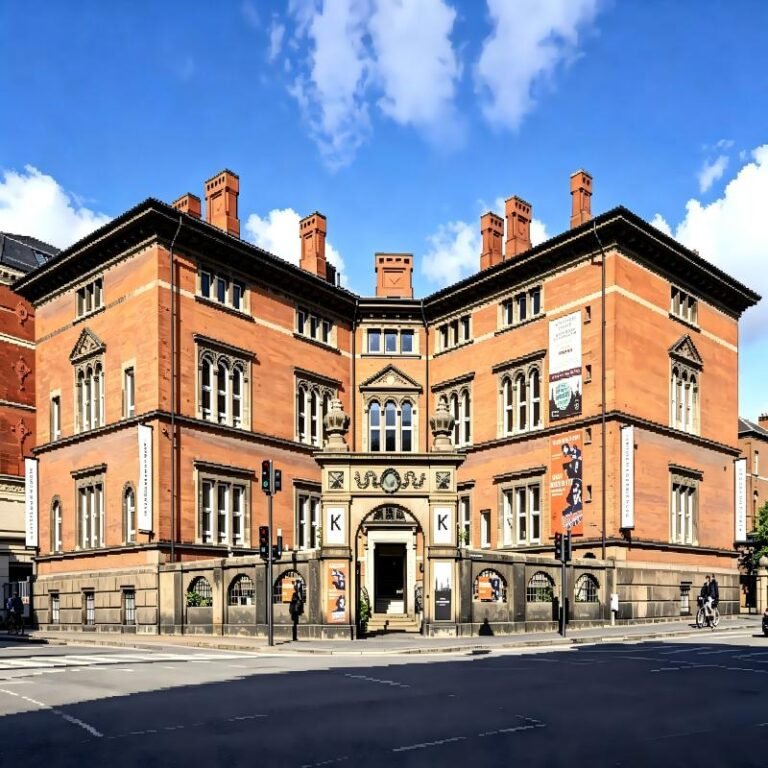
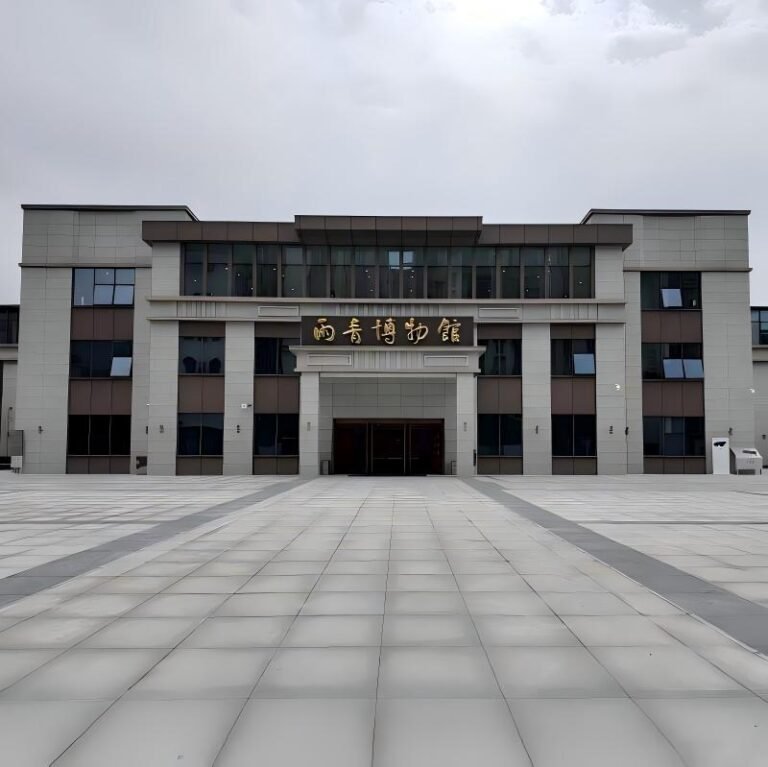
Natural History Museum of Basel
Basel, Switzerland 2016.1
The core exhibition theme of the Naturhistorisches Museum Basel can be summarized as “Archive of Life” — it is not merely a static collection of natural history, but a dynamic hub for research, conservation, and education concerning the diversity of life on Earth. Through nine permanent exhibition halls, including Fire & Water, Mammoth & Saber-Toothed Tiger, Extinct Species, Marine Life, and Dinosaur World, the museum weaves a complete narrative chain from geological transformations to biological evolution. It emphasizes science-driven specimen research and accessible, experience-based public communication, striving to present millions of precious fossils, skeletons, and mineral specimens while awakening deeper reflection on species conservation and ecological balance.
Due to a sharp increase in the number of specimens, the museum’s old building not only lacks sufficient space but also has overall storage and conservation conditions that have fallen seriously behind modern heritage preservation standards. The core reason why a display case renovation became necessary is that over a thousand rare animal specimens and several hundred exquisite minerals must be reinterpreted and protected to a high standard through modern exhibition and conservation methods, using the best possible display techniques to prevent these national treasures from suffering natural deterioration during long-term geological and biological evolution displays.

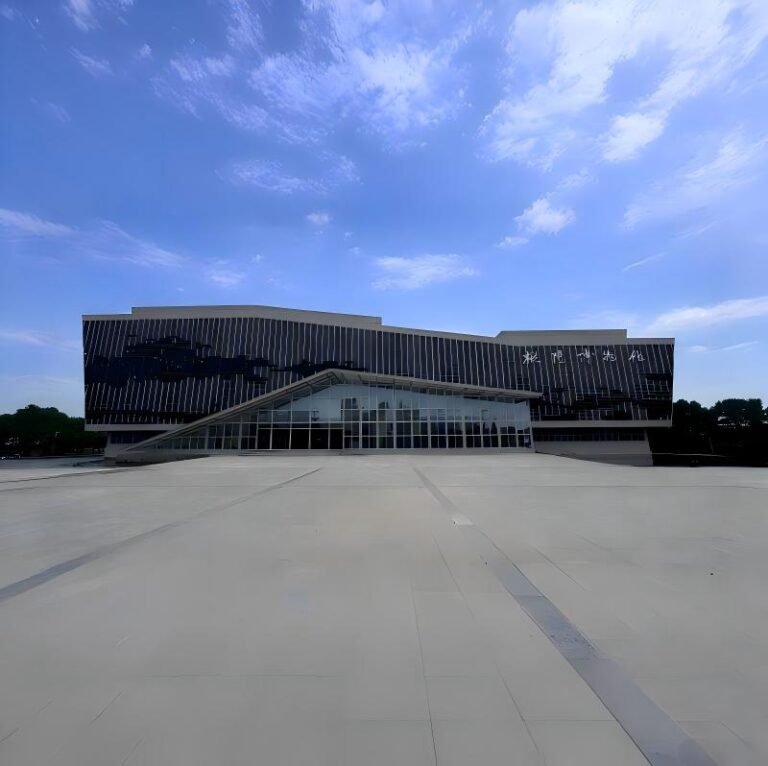
After the museum vitrine renovation, the core plan of the Naturhistorisches Museum Basel is to relocate entirely to a new building, which is expected to open in 2029. The new museum will have a total area of 35,000 square meters, completely solving the problems of insufficient space and scattered collections found in the old building, while creating a modern exhibition and educational space under the theme “Archive of Life.”
The old building of the Naturhistorisches Museum Basel has an exhibition area of approximately 2,100 square meters, featuring 9 permanent exhibition halls and a total collection of about 11.8 to 12 million specimens. A new museum is currently being planned, with a total area of approximately 35,000 square meters, which will feature a flexible, column-free exhibition hall design and comprehensively enhance its service capabilities.
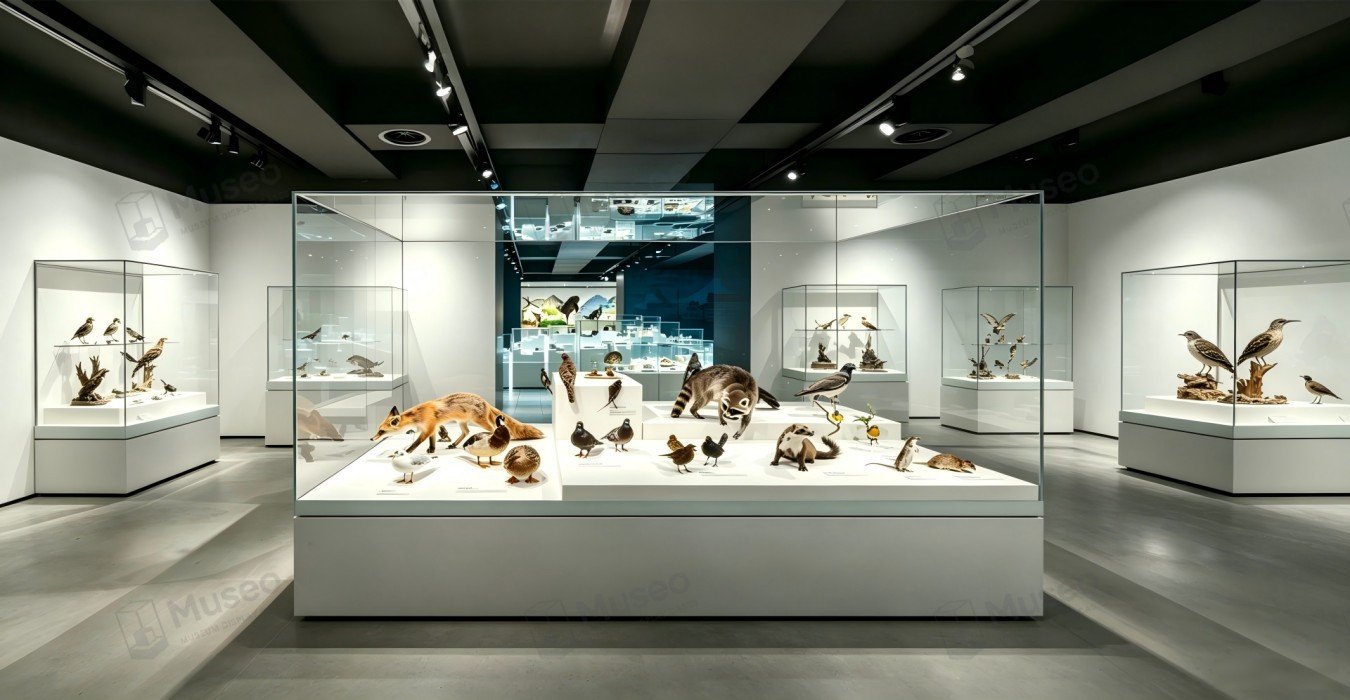
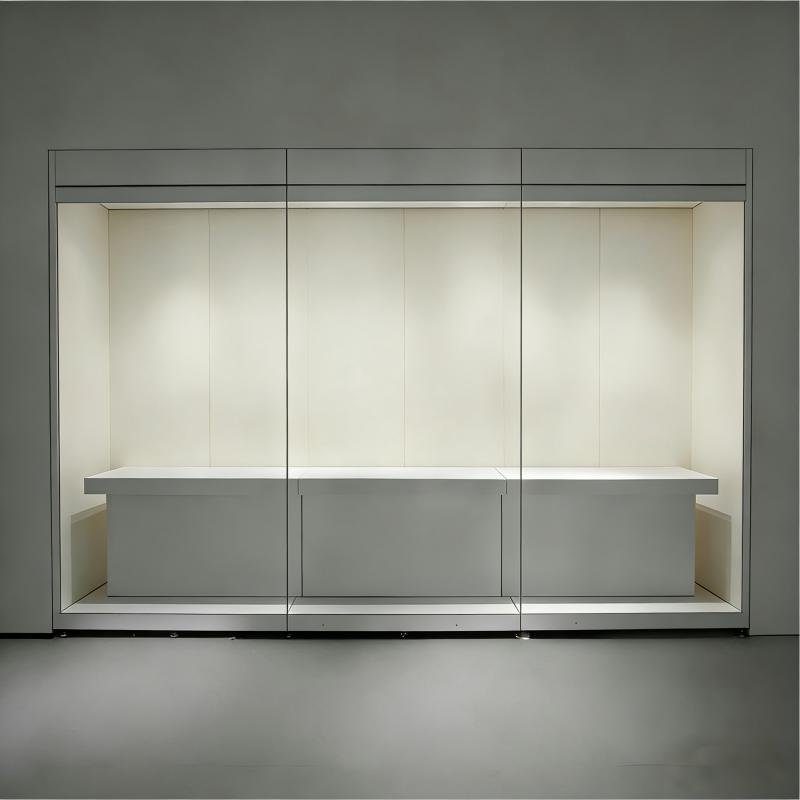
For taxidermy specimens of birds and small mammals, we used continuous wall‑mounted museum vitrines. A full run of uninterrupted glass cabinets extends horizontally along the wall, maximizing the use of wall space. The long, rectilinear cases create a continuous visual flow, guiding visitors to view the series of exhibits in sequence.
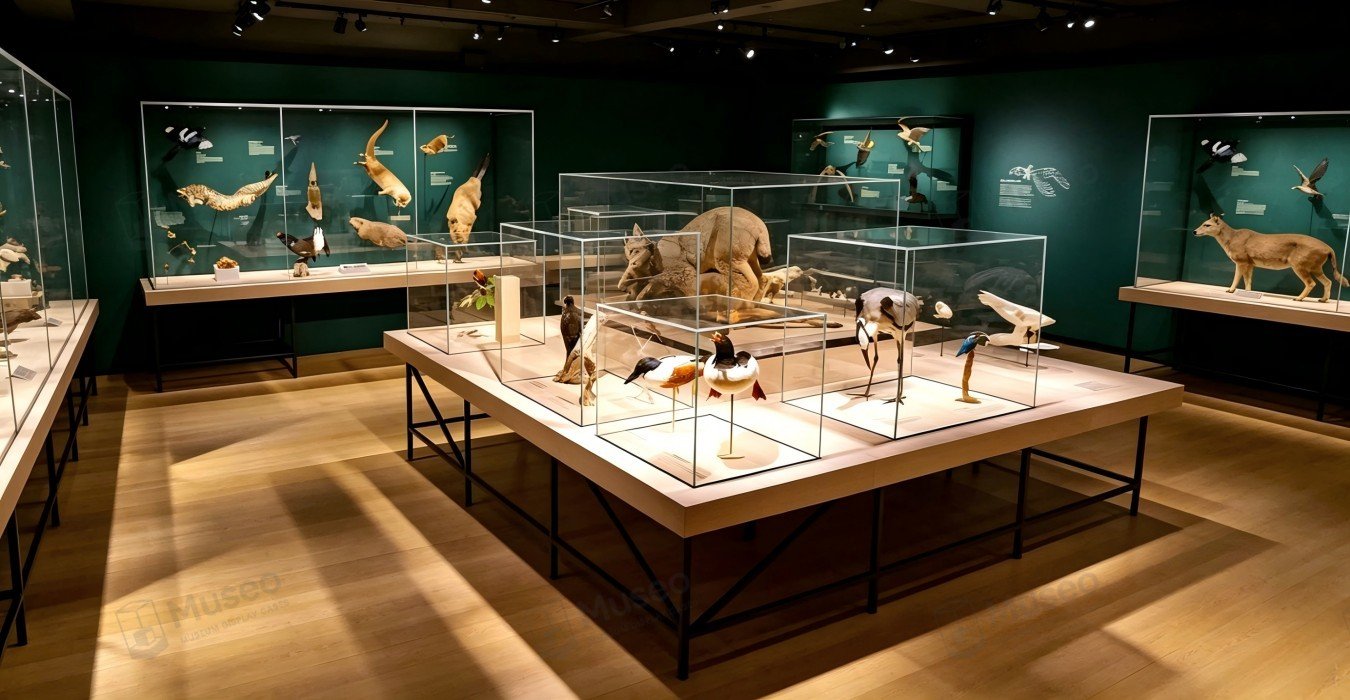
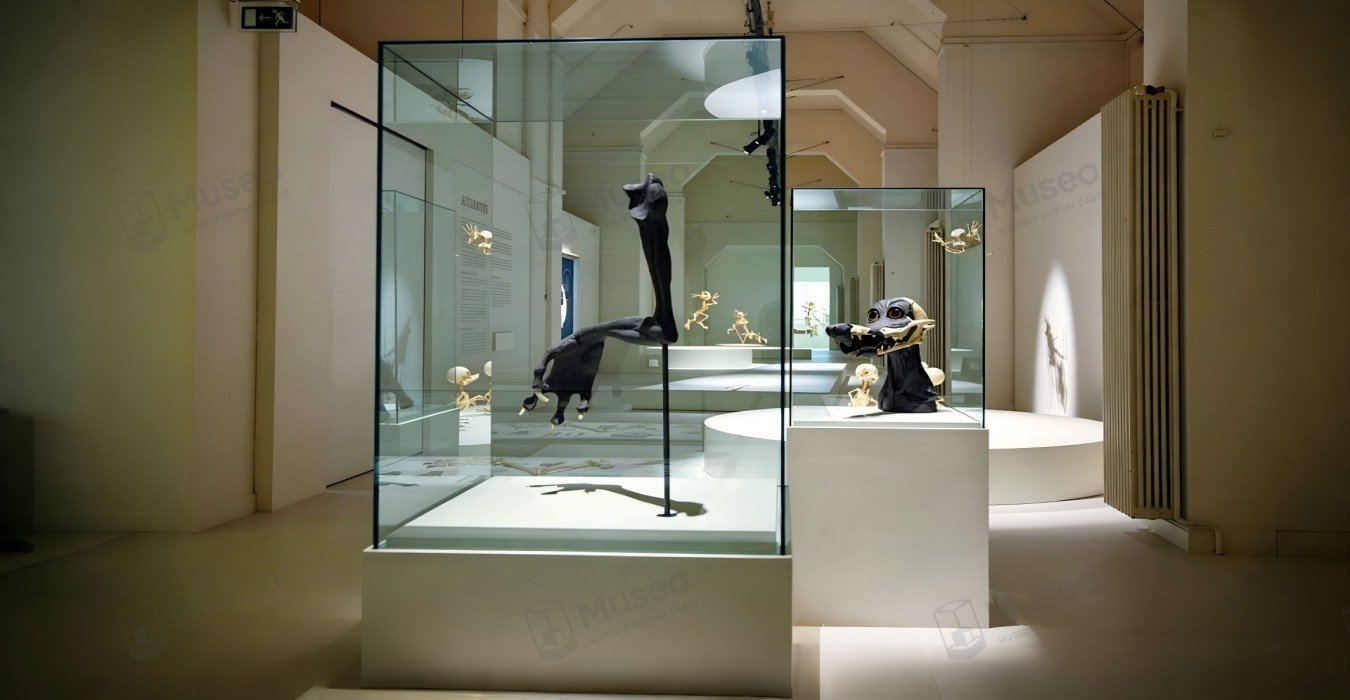
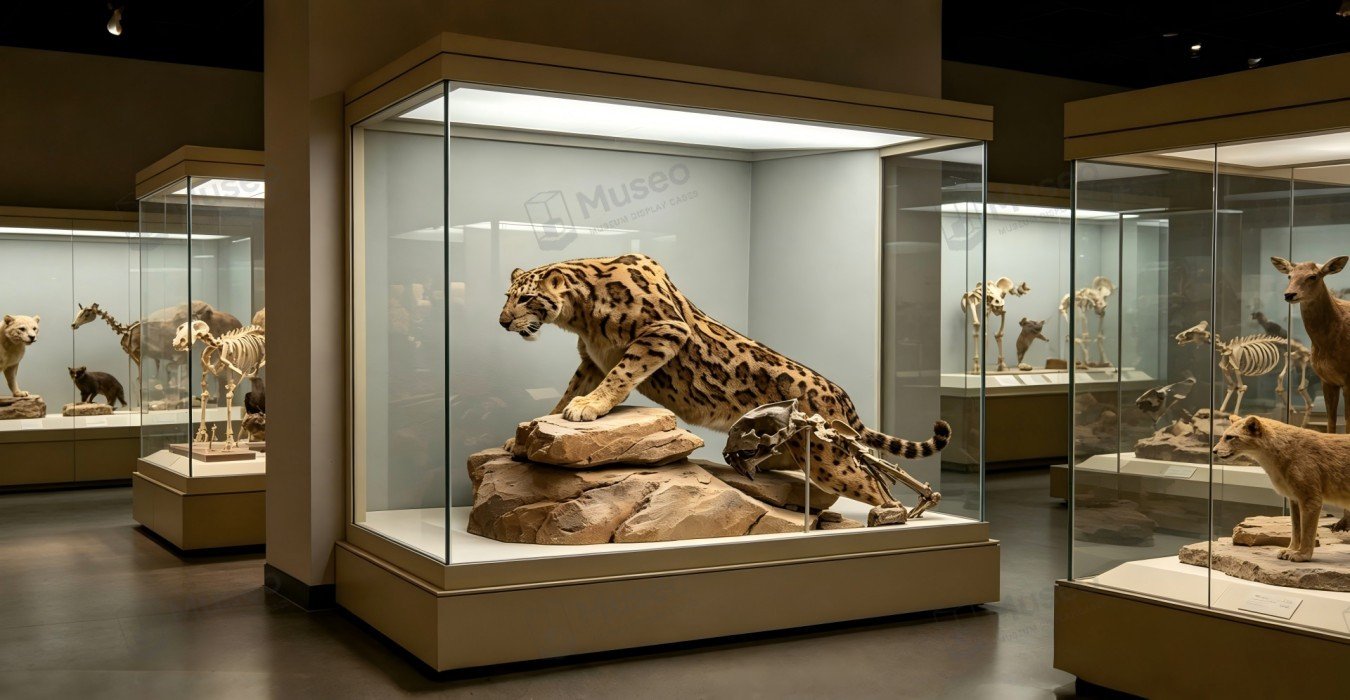
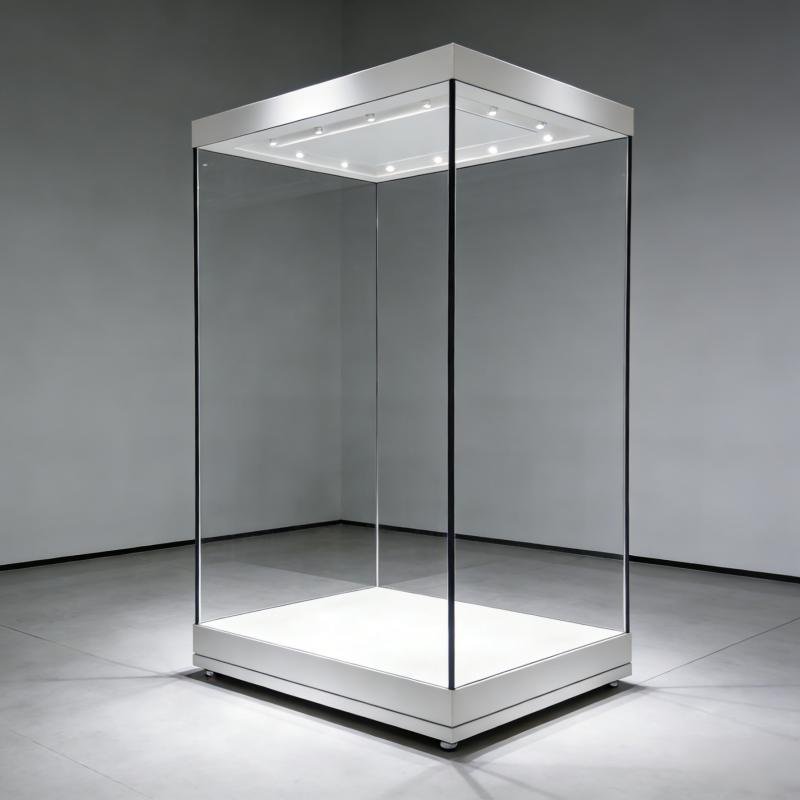
For animal skeletons, we used freestanding central museum vitrines. These museum vitrines feature three‑ or four‑sided ultra‑clear glass, minimizing the cabinet’s visual presence so that the viewer’s attention is entirely focused on the specimen itself, creating the visual effect of “the specimen floating in space.”
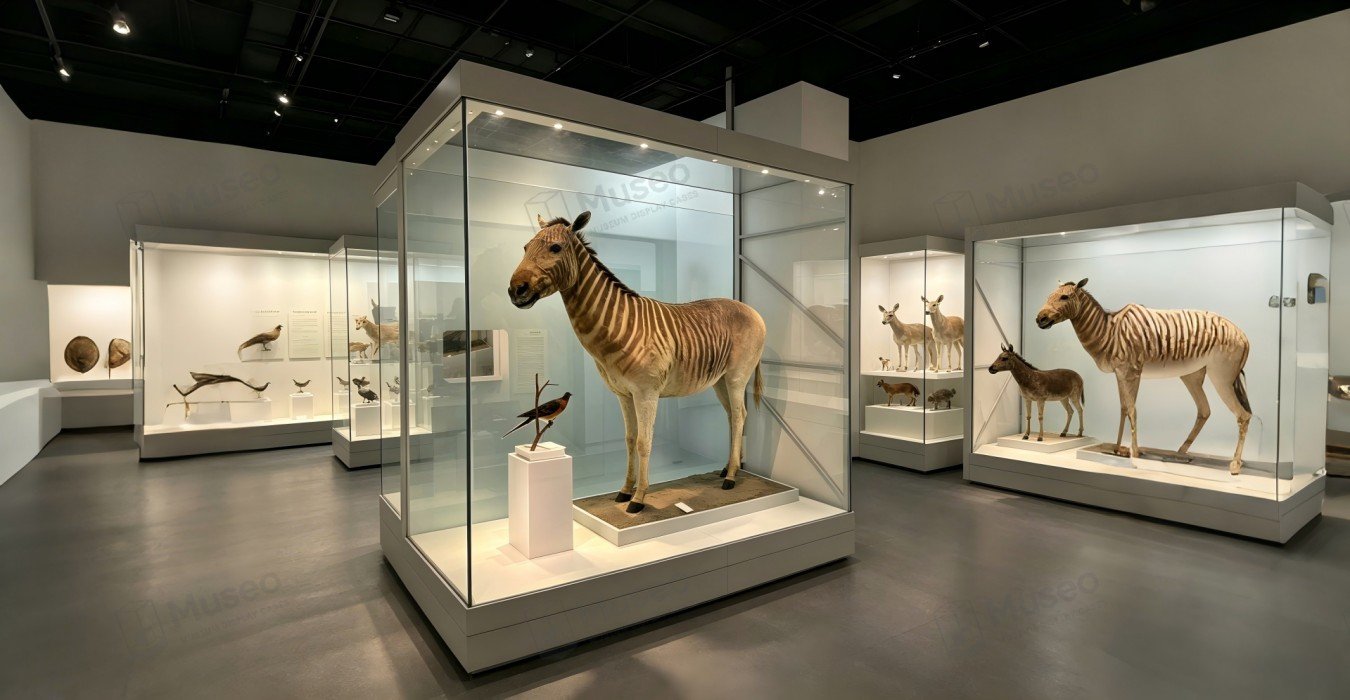
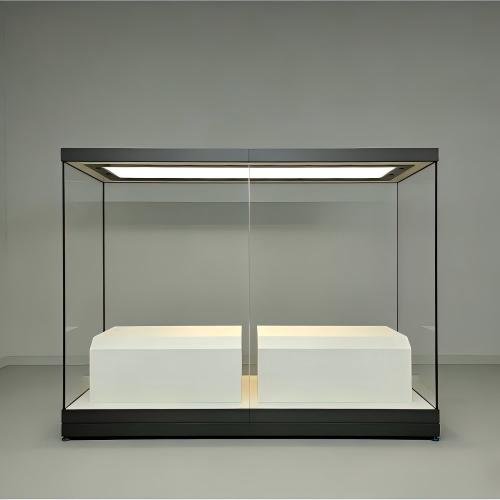
Display case types: To meet the display requirements of different cultural relics, we produced over 40 display cases in 6 different styles for the museum, including continuous wall‑mounted cases, freestanding tall cases, tabletop cases, and others.
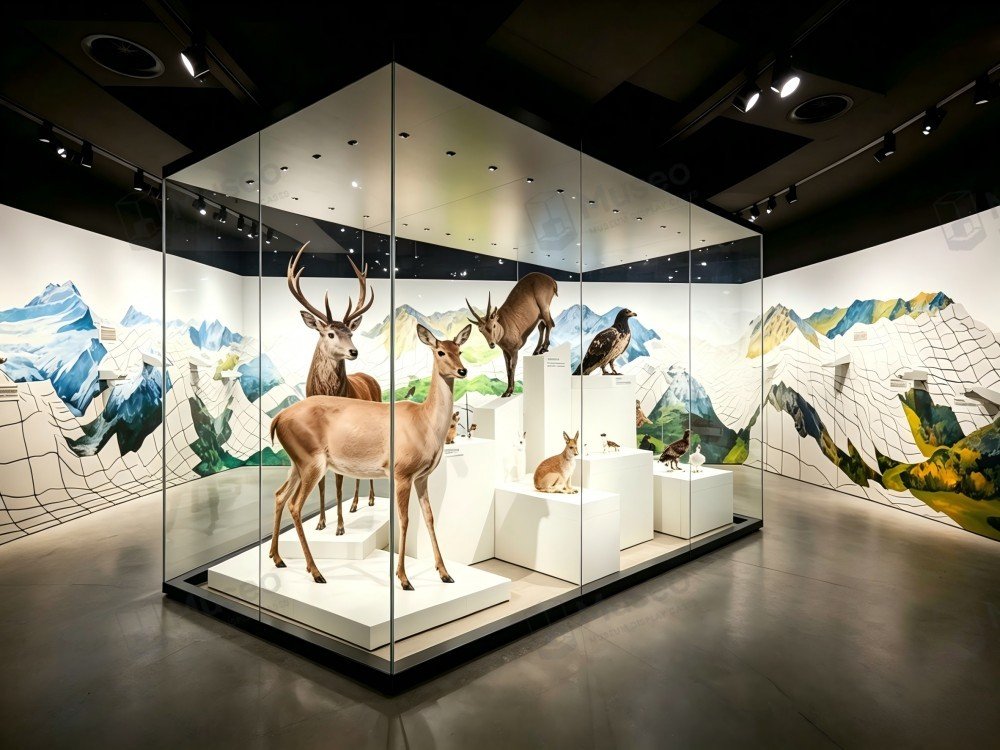
For the Alpine ecological animal specimens native to Switzerland, we used panoramic independent tall exhibition display cabinets. The non‑reflective glass and panoramic viewing angle of these cabinets allow visitors to clearly observe specimen details from any angle.
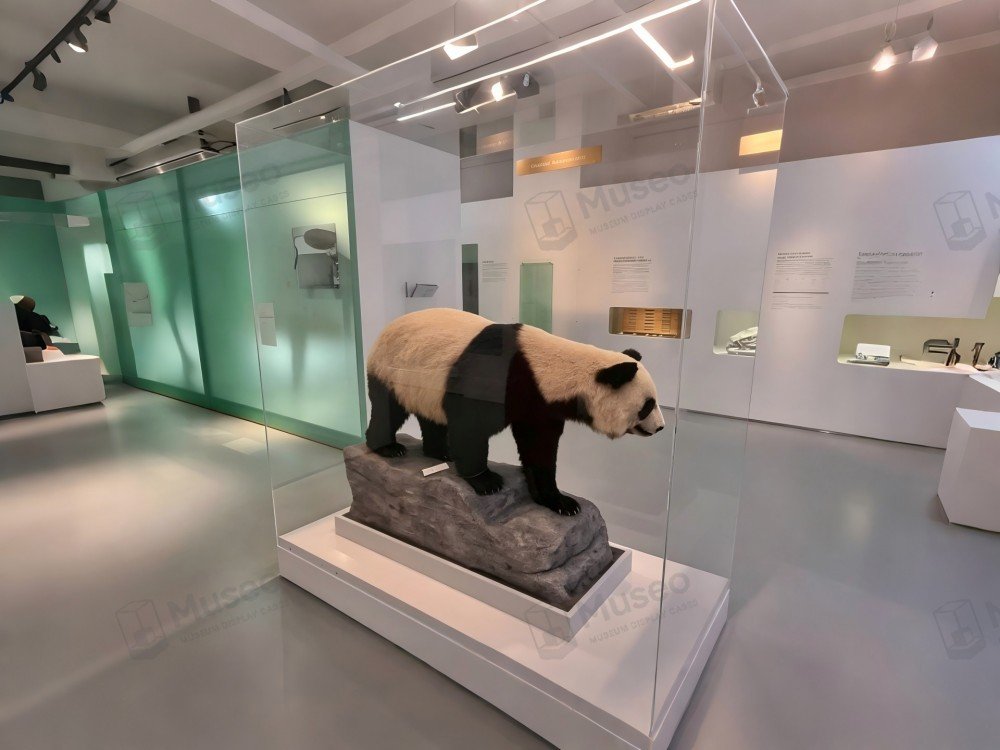
For the giant panda specimen, we used an independent tall exhibition display cabinets. With a four‑sided transparent ultra‑clear glass structure, visitors can fully observe the morphological details of the giant panda specimen from any angle. The exhibition display cabinet is equipped with a rock‑like base, which gives the specimen display a stronger narrative feel while also providing stable support for the specimen.
Display Cases for the Project
PERGUNTAS FREQUENTES
1. Como trabalhamos com você? (Processo de pedido)
Enviar uma consulta → Discutir requisitos → Fornecer cotação → Pagar depósito → Projeto conceitual → Trabalho de desenho → Produção → Inspeção de qualidade → Embalagem → Pagar saldo → Envio.
2. Vocês podem fornecer uma cotação com base em nossos desenhos?
Sim, podemos fornecer serviços de fabricação personalizada e cotações de acordo com suas necessidades.
3. Você é uma fábrica e onde está localizada sua fábrica?
Sim, somos uma fábrica especializada na fabricação de adereços para exibição em museus há anos. Nossa fábrica está localizada na cidade de Guangzhou, na província de Guangdong. Visite-nos para uma inspeção!
4. Podemos fazer uma amostra para inspeção de qualidade antes de fazer um pedido?
Pedidos de amostra são aceitáveis, com taxa de amostra e custos de envio a cargo do cliente
5. Qual é o prazo de produção após a colocação de um pedido?
Após a confirmação do pedido, a produção geralmente é concluída em 35 dias úteis, sendo que o cronograma exato está sujeito à quantidade do pedido.
6. Quais são os termos de pagamento mais seguros e o índice de depósito?
Oferecemos suporte a métodos de pagamento seguros: T/T (transferência telegráfica) e Alibaba International Station Trade Assurance. É necessário um depósito de 50%, e o saldo deve ser pago antes do envio.
7. Podemos providenciar a inspeção de qualidade antes do envio?
Com certeza! Sua equipe de QC ou agências terceirizadas são bem-vindas para inspeção no local. Temos nosso próprio sistema de inspeção de qualidade antes da embalagem para garantir a qualidade do produto; se você não estiver disponível para verificações no local, podemos fornecer relatórios de inspeção conforme necessário.
ENTRE EM CONTATO
ENTRE EM CONTATO
Entre em contato conosco, obtenha a folha de cotação e saiba mais sobre notícias e informações