



Most inquiries that reach our engineering desk start the same way. A curator has seen an immersive exhibition abroad, wants that effect wrapped around one specific artifact, and asks for a quote. Fair enough. The trouble starts when nobody has asked what the projection does to the object inside the vitrine – because a museum projection display case is the only product we build where the storytelling hardware and the conservation envelope share the same glass.
A projection case is a sealed, conservation-grade vitrine with an engineered light path: a laser projector, usually ultra-short-throw, delivers digital content onto a diffusing surface, the deck, or the artifact itself, without opening the enclosure. Done properly, the physical and digital layers read as one exhibit – the object sits inside its story. Done cheaply, somebody has bolted a heat source onto a microclimate and told the registrar it’s fine. Museums and cultural institutions keep buying both.
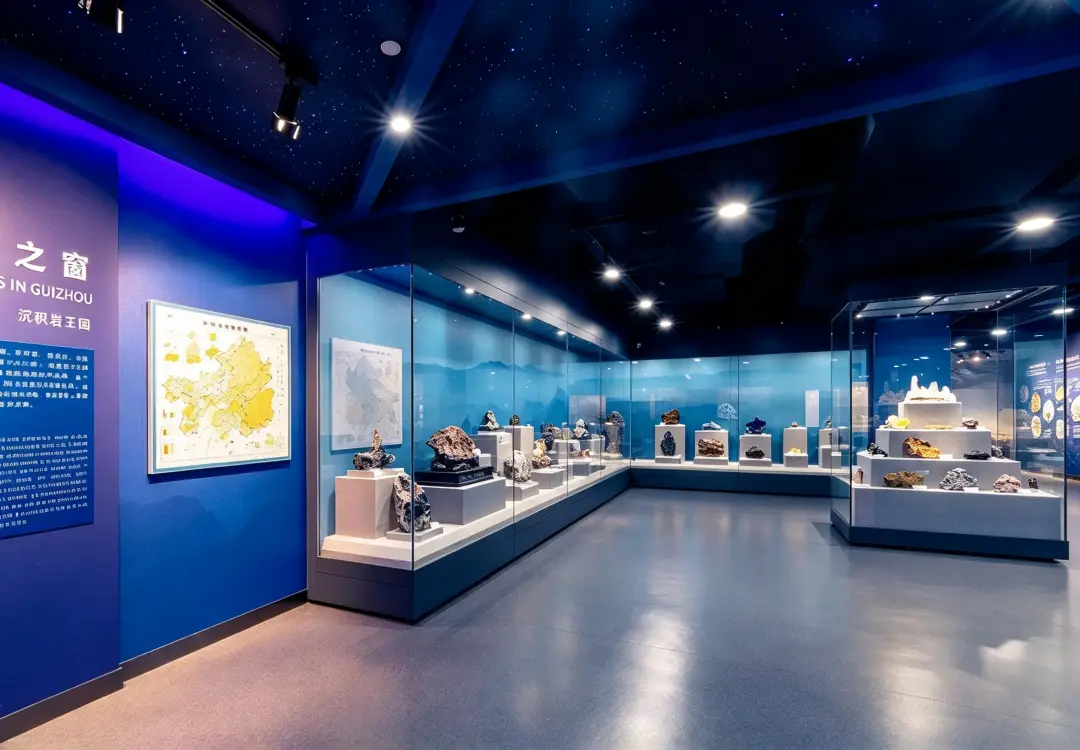
What Is a Museum Projection Display Case – and How Does It Differ from a Standard Display Case?
A standard museum display case answers three questions. How well is it sealed, how stable is the interior climate, how invisible is the glazing. A museum projection display case answers those three plus a fourth: where does the light go, and where does the heat?
In our workshop these are two-chamber builds. The artifact chamber remains a true microclimate – continuous gasket compression seals, conditioned silica gel buffering, low-iron anti-reflective glass so the projection reads clean instead of ghosting off the glazing. The projection chamber is structurally isolated: the engine sits in its own ventilated plenum, heat is dumped away from the sealed volume, and the image reaches the surface through fiber guides. When a supplier quotes a “projection case” that is really a traditional museum vitrine with a projector clamped on top, ask one question – where does the exhaust go? That single question filters out most of the market.
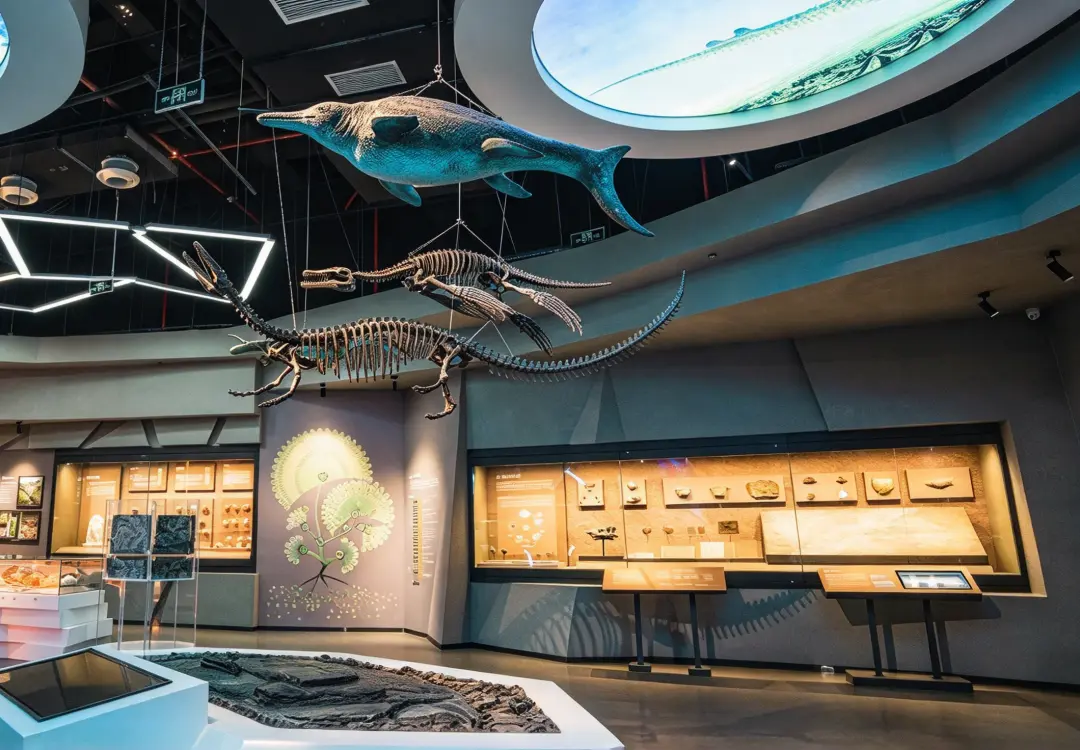
How Do You Protect Light-Sensitive Artifacts When the Whole Point Is More Light?
Here is the honest contradiction at the center of the category. Projection is illumination; conservation is illumination control. Interactive museum display concepts keep promising more light, more motion, more layered content to engage visitors – while textiles, works on paper, dyed leather and most ethnographic material sit near the 50 lux ceiling, with cumulative exposure budgeted across the exhibition run. Your conservator should set the real limits per object; treat the figure as a reference, not gospel.
The reconciliation is engineering, not luck. We model photometrics before any sheet metal is cut – throw distance, luminance at the artifact plane, duty cycle – so projection never lands hotter on physical artifacts than the lighting budget allows. Laser engines cut UV to near zero, but infrared still warms the projection surface, so the thermal path gets analyzed separately. Content helps: scheduled dark periods and motion-triggered sequences hold cumulative lux down without dulling the visitor experience. One client’s silver hoard runs a 90-second projection cycle with a 30-second rest – museum visitors still get the immersive experience, and the objects see less light than under a badly aimed halogen.
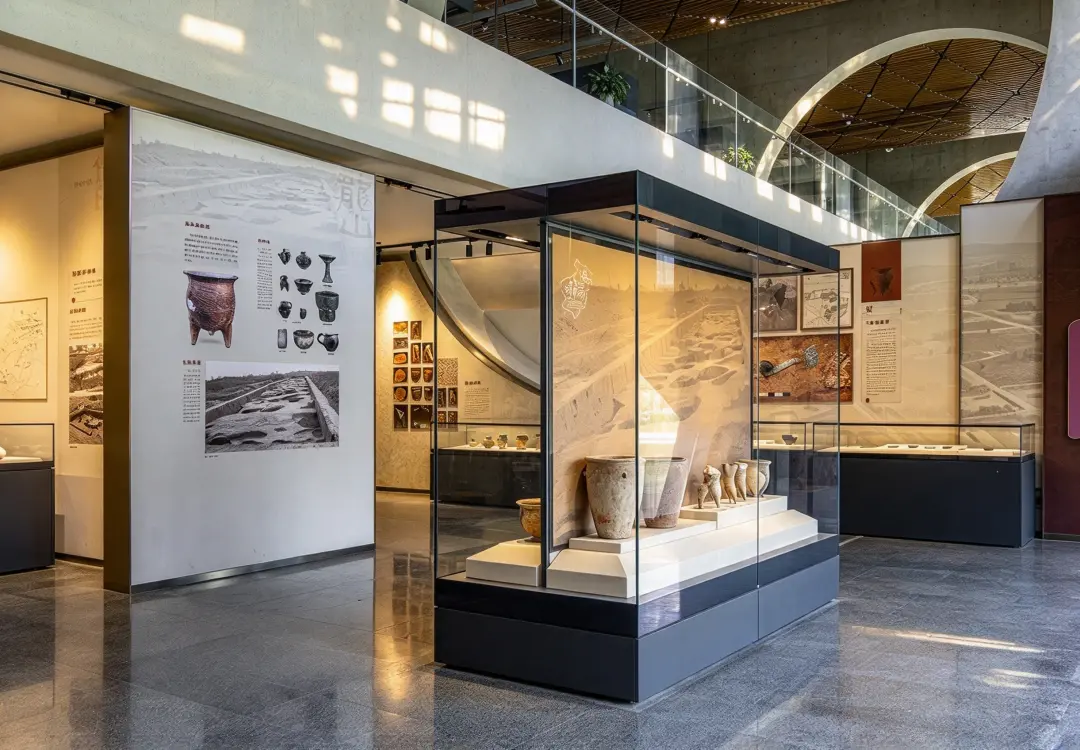
Which Display Technologies Belong Inside the Case – and Which Belong Outside It?
Technology selection in a museum exhibition is ultimately a conservation decision dressed up as an AV decision. Of the immersive technologies now competing for gallery budgets, only some belong inside the glass. Our rule, after enough projects to have opinions: put the drama inside the case only when the artifact can take it.
Rear-projection onto the case backdrop or deck is the workhorse. It delivers large-scale digital storytelling around substantial objects – armor, sculpture, taxidermy – without projecting onto the artifact. Our Projeção integrada Estojo independente is built for this configuration: engine, plenum and cables are engineered into the plinth, so the vitrine above stays a clean, sealed volume a registrar can log without touching the AV system.
Projection mapping onto the artifact itself is the most spectacular option – and the most conservation-sensitive. It demands conservator sign-off on cumulative exposure and a photometric model that survives contact with reality. Stone, metal and ceramic can carry it. Works on paper cannot.
Transparent OLED and mixed reality sit on the other side of the glass. I don’t recommend transparent OLED for large-format exhibits – seams, brightness limits and heat dumped into a sealed volume make it a poor trade against a properly engineered projection chamber. Mixed reality museum installations increasingly allow visitors to use their own devices or loaned headsets, which is the correct instinct: MR is where digital and physical meet on the visitor’s terms, your digital archives drive the layer, and the case keeps doing its job for museum collections – sealing, buffering, protecting cultural heritage. For visitors of all ages, the strongest museum experience stacks the layers: real object in a sealed vitrine, projection ambience around it, a separate interactive display or digital signage panel for digital information. Visitor engagement holds because the interface never competes with the object.

What Should Museum Professionals Verify Before Accepting Delivery?
Whatever supplier you use, the acceptance checklist is non-negotiable – these are the failure points we see in other factories’ work on site. Fourteen-day RH logging inside the closed case, with drift inside the band your conservator set. Photometric verification at the artifact plane, not at the projection surface. Glazing transmission checked against EN 410 methodology rather than a glass brochure. Welded corners re-inspected after finishing – we hold 0.2 mm flatness on visible seams, because a wavy corner under projection light throws a shadow you cannot un-see. Seal and dust-ingress testing on every closure. Service access that reaches the projector and filters without breaking the microclimate.
Ask for log sheets, not verbal assurance. At Museo, the QC file travels with the case – we would rather lose a quote than ship a projection vitrine we cannot document.
That discipline scales across the full range of museum display cases Museo builds – freestanding, wall, table and archive vitrines – with integrated projection, microclimate and lighting systems documented to that standard. The Projeção integrada Estojo independente exists because enough curators asked for projection without surrendering the seal; if your exhibition needs a custom light path instead, that is the engineering conversation we enjoy most.
FAQs
Can a projection display case hold a stable microclimate for sensitive artifacts?
Yes – provided the engine sits in an isolated, ventilated chamber and the artifact volume keeps its own buffering and seals. Passive silica gel conditioning covers most volumes; active climate control is added for larger cases or stricter setpoints.
Will projection light fade textiles or works on paper?
Cumulative exposure is what degrades them – the arithmetic is lux × hours. Light-sensitive objects need a photometric model, scheduled dark periods and conservator sign-off, the same discipline as fiber-optic lighting design.
How often does projection hardware inside a case need service?
Laser engines commonly run 20,000 hours before major service. The question is access: filters and connectors should sit behind panels that don’t break the seal, so museum staff never need a conservator in the room.
Is projection better than transparent screens for an interactive museum display?
For large artifacts and dramatic storytelling, yes – projection scales cheaper and reads cleaner through low-iron anti-reflective glazing. Transparent OLED suits small vitrines and short-run digital exhibitions where seams and heat load are tolerable.
Can projection be retrofitted into existing museum display cases?
Sometimes. It depends on the seal design, glazing type, and whether a heat path can be added without cutting the enclosure open. In major museum renovations we assess each case individually; often a rebuild costs less than a compromised retrofit.